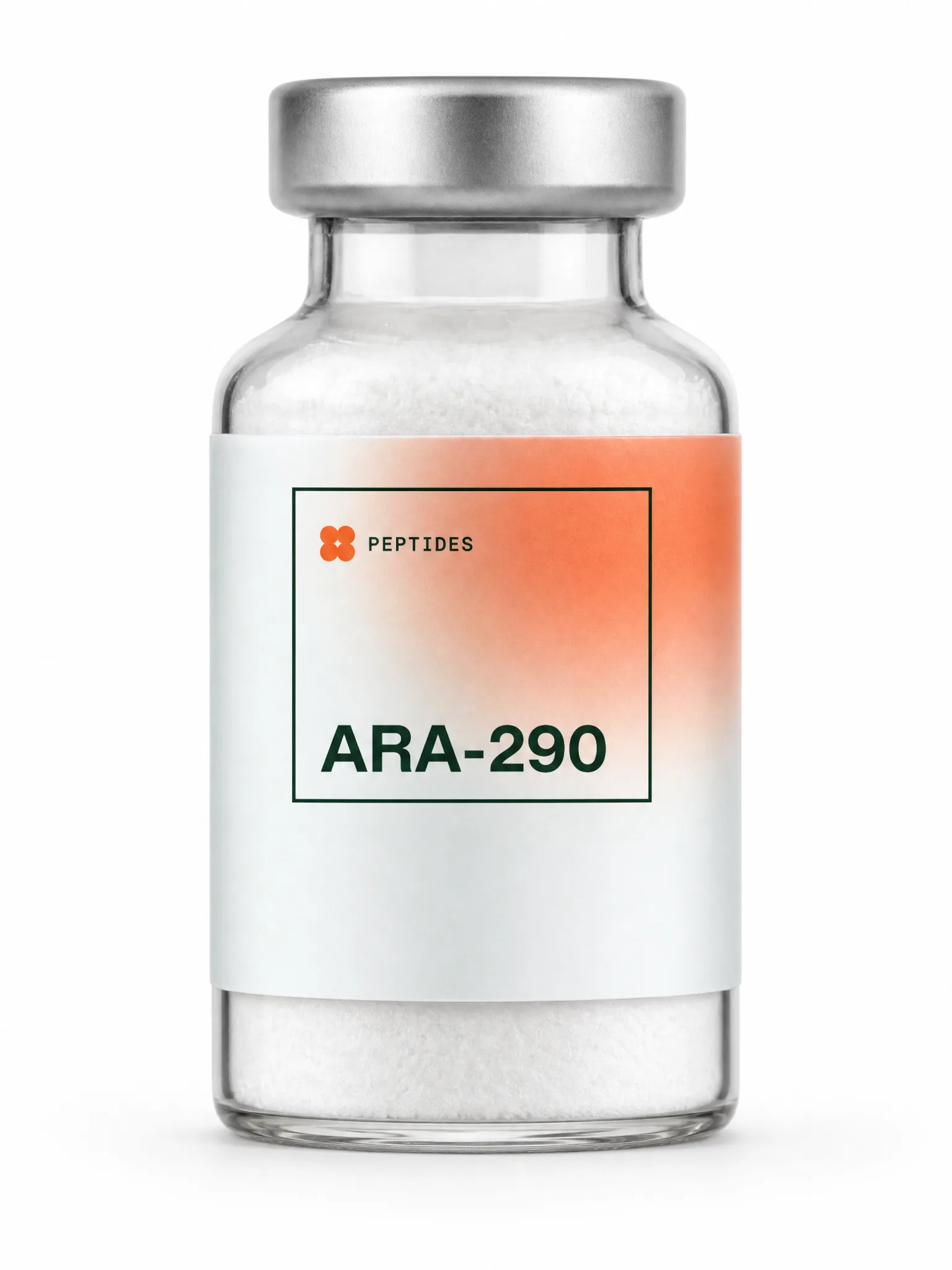
ARA-290
ARA-290 (Cibinetide)
Also called ARA-290, cibinetide, cibinitide, helix B surface peptide
EPO's repair signal, without the blood effects
ARA-290 is a fragment of EPO, the hormone athletes dope with, with the blood-building part deliberately left out. What remains is the tissue-protective half. It has been through real trials in people with small-fibre neuropathy, the nerve damage that causes burning feet, and it is one of the better-studied compounds in this catalogue.
An 11-amino-acid peptide derived from erythropoietin (EPO) that activates the innate repair receptor — the tissue-protective arm of EPO signaling — without raising red blood cell count. ARA-290 is studied mainly for neuropathic pain and inflammation, working by switching cells from an inflammatory state toward repair.
- Half-life
- ~2–4 min (signal outlasts)
- Route
- Subcutaneous injection
- Typical dose
- Research-dependent
- Availability
- Research-only
Human trials published, with more underway
What people use ARA-290 for
Reported uses, roughly in order of how often they are the reason someone goes looking. Whether it works for any of them is a separate question, answered under each one.
- Nerve pain and small-fibre neuropathy
- Its main use and where the trials are. People with sarcoidosis or diabetes-related nerve damage reported less pain and, notably, measurable regrowth of small nerve fibres in the skin.
- Tissue protection generally
- The broader theory behind it: the same receptor is involved in protecting tissue under stress, which is why it has been explored beyond nerves.
Mechanism of Action
How ARA-290 works
ARA-290 engages the tissue-protective branch of EPO signaling:
- Innate repair receptor activation — binds the EPO-receptor/β-common-receptor (CD131) heterocomplex that mediates tissue protection, distinct from the classic EPO receptor that drives red blood cell production.
- Anti-inflammatory shift — dampens pro-inflammatory cytokine signaling and promotes a pro-resolution, repair-oriented cellular state.
- Neuroprotective signaling — supports small-nerve-fiber repair, the basis for its study in neuropathic pain and small-fiber neuropathy.
- No erythropoiesis — because it avoids the classic EPO receptor, it doesn't raise hematocrit, separating tissue protection from the blood-thickening risk of EPO.
ARA-290 dosage calculator
Enter what is in your vial, how much water you added, and the dose you are using. It works out where to pull the plunger to.
How much is in the vial?
Printed on the label, in milligrams
How much water did you add?
Bacteriostatic water, in millilitres
What dose are you taking?
The dose you already intend to use
Which syringe?
Barrel size, printed on the wrapper
Draw to
10 units
on a 0.5 mL insulin syringe (0.1 mL)
- Strength once mixed
- 5 mg/mL
- Doses in the vial
- 20
10 mg in 2 mL makes 5 mg/mL. A 500 mcg dose is 0.1 mL of that, which is 10 units.
This is arithmetic, not advice. It converts a dose you already have into a mark on a syringe. It does not tell you what dose to take, and ARA-290 is not prescribed by us. Dosing belongs with a qualified clinician.
ARA-290 side effects: what people reported
Well tolerated in trials, and the important thing is what it does not do: unlike EPO it does not thicken your blood, which is the entire reason it was designed this way.
What people report
- Injection-site reactions
- Headache
- Mild fatigue
Worth knowing
- It does not raise red blood cell count, which is the point of the modification and the reason it is not an EPO substitute
- Improvement in nerve trials was gradual over weeks rather than immediate
Source: Phase 2 trials in sarcoidosis-related neuropathy. This is a summary of published findings, not a complete safety profile and not medical advice. ARA-290 should only be considered with a qualified clinician who knows your history.
Your Genetics & ARA-290
The genes involved in how ARA-290 works
ARA-290 works through the receptors these genes build, and the genes vary from person to person. Researchers have linked some of that variation to differences in how people respond. A DNA report tells you which versions you carry.
TNF · ••
The −308 G/A promoter variant sets baseline TNF-alpha output. Since ARA-290 works largely by calming inflammatory signaling, your TNF tone influences how much benefit there is to gain.
IL6 · ••
The −174 G/C variant shapes IL-6 expression. High-inflammatory genotypes may respond more noticeably to ARA-290's pro-resolution, anti-inflammatory action.
SOD2 · ••
The Ala16Val variant affects how efficiently mitochondrial superoxide is neutralized. Oxidative-stress genetics shape the tissue background on which ARA-290's repair signaling acts.
NOS3 · ••
The Glu298Asp variant influences endothelial nitric-oxide production and microvascular function, relevant to the nerve and tissue repair ARA-290 supports.
The dots after each gene are where your own result goes. Your report fills them in with the two letters you carry at that position.
Which variants do you carry?
Upload your DNA data, or get tested through our partner, to find out.
Commonly combined with
What ARA-290 is most often paired with, and why:
BPC-157
Nerve & Tissue Repair StackModerate EvidenceBody Protection Compound 157
BPC-157 is the peptide people reach for when something will not heal. Tendons, ligaments, a gut that has been irritated by painkillers, an injury that has stalled. It is a short chain of amino acids copied from part of a protein your stomach already makes, and the animal research on it is unusually consistent for this category: across a lot of separate rat studies, injured tissue healed faster than it did without it. The gap is that this has largely not been repeated in people, and it is not an approved medicine, so nobody is checking what is in the vial you buy.
3
Gene variants
19+
Studies
Sourcing & access
Where to buy ARA-290
ARA-290 is sold as a research compound, not a licensed medicine, so quality and legal status vary widely by country and vendor. If you're sourcing it, treat independent purity testing as non-negotiable.
- Insist on a recent third-party Certificate of Analysis (COA) for the exact batch — labs like Janoshik verify purity and identity.
- Check the legal status where you live before ordering — it differs from country to country.
- Reconstitute correctly with bacteriostatic water and start at a conservative dose.
ARA-290
EPO's repair signal, without the blood effects
Save 10% at checkout with code tcwisiiu
Before you buy: see whether your DNA actually responds to ARA-290, and at what dose. Analyze my DNA — $99 →
Educational information only, not medical advice. Some outbound links are affiliate links (disclosed, at no extra cost to you). Most peptides are not FDA-approved — consult a qualified professional and check your local laws before purchasing.
Worth knowing before you consider ARA-290
Interactions and situations where there is a specific reason to be careful. Where the honest answer is that nobody has studied something, it says so and says what that leaves open.
- It is not EPO and will not act like it
- People occasionally look at it hoping for the endurance effect. The blood-building half was removed on purpose.
- Nerve pain deserves a diagnosis
- Burning or numb feet have causes worth identifying, several of them treatable, and the trials here were in people with a known diagnosis.
Last updated
Frequently Asked Questions
How is ARA-290 related to EPO without affecting blood?
EPO signals through two routes: the classic receptor that makes red blood cells, and a separate tissue-protective 'innate repair receptor.' ARA-290 is engineered to activate only the repair route, so it delivers EPO's anti-inflammatory and neuroprotective effects without raising hematocrit or thickening the blood.
What is ARA-290 mainly studied for?
Its primary research focus is neuropathic and small-fiber nerve pain, along with inflammatory conditions. It works by shifting cells from an inflammatory state toward repair, which is why people with higher baseline inflammation may notice more from it.
Does genetics affect ARA-290 response?
Yes. Inflammatory genotypes (TNF −308, IL6 −174) set how much inflammation there is to resolve, while SOD2 and NOS3 shape the oxidative and microvascular background for tissue repair. A genetic peptide report profiles these for you.
Your next move
Two ways forward with ARA-290.
Not sure it's for you?
How does ARA-290 relate to your genes?
Your report scores ARA-290 against your receptor, pharmacogene and pathway variants and shows the genetic markers relevant to it, with commonly cited dosing information to review with a clinician.
Analyze my DNA — $99Already decided?
Get ARA-290 from Swiss Chems.
A US research-chemical supplier with third-party Certificates of Analysis. Sold for research use only — check your local laws before ordering.
Buy at Swiss Chems →Save 10% at checkout with code tcwisiiu