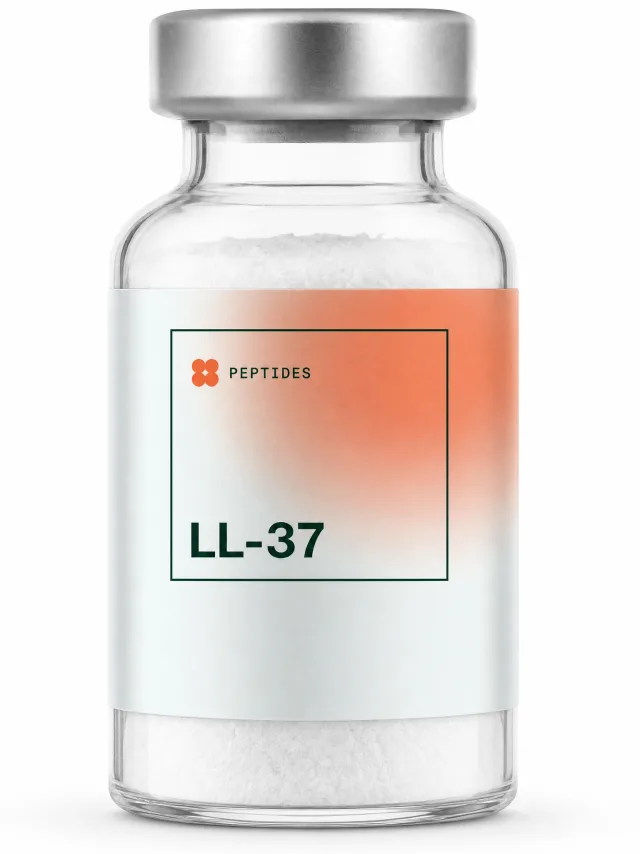
LL-37
LL-37 (Human Cathelicidin Antimicrobial Peptide)
Also called LL-37, cathelicidin, hCAP18, CAP-18
The antimicrobial peptide
LL-37 is one of your body's own antibiotics. Your immune cells make it and release it where bacteria are, and it kills them by punching holes in their membranes rather than by interfering with their chemistry, which is why bacteria struggle to develop resistance to it. People use it for stubborn infections and biofilms.
The body's own broad-spectrum antimicrobial peptide — the active fragment of human cathelicidin (the CAMP gene), part of innate immune defense against bacteria, viruses and biofilms. Here's the key insight: your body makes LL-37 in a vitamin-D-dependent way, so for most people the smarter lever is correcting vitamin D to restore endogenous LL-37, rather than injecting an experimental exogenous version with thin safety data.
- Typical dose
- 50–100 mcg 2–3x/week
- Availability
- Research-only
Early research, mostly in the lab so far
What people use LL-37 for
Reported uses, roughly in order of how often they are the reason someone goes looking. Whether it works for any of them is a separate question, answered under each one.
- Biofilms and stubborn infections
- The main reason people look it up. Biofilms are bacterial colonies wrapped in a protective layer that ordinary antibiotics struggle to penetrate, and LL-37 works by physically disrupting membranes rather than getting inside.
- Wound healing
- It does more than kill bacteria: it also signals for repair and new blood vessels, which is why it turns up in wound-care research.
- Gut
- Used alongside gut protocols on the reasoning that it targets unwanted bacteria without the collateral damage of a broad antibiotic. Reasoning rather than trial evidence.
Mechanism of Action
How LL-37 works
LL-37 is a front-line innate-immune effector:
- Direct antimicrobial action — disrupts bacterial and viral membranes and breaks down biofilms across a broad spectrum of pathogens
- Immune modulation — recruits immune cells and tunes the inflammatory response, bridging innate and adaptive immunity
- Vitamin-D dependence — the CAMP gene that produces cathelicidin/LL-37 is switched on by active vitamin D via the vitamin D receptor; a low vitamin-D axis means low endogenous LL-37
- Correct-the-cause logic — for a genetically low vitamin-D axis, restoring vitamin D rebuilds your own LL-37 production, which is safer and better-evidenced than injecting the experimental peptide
LL-37 dosage calculator
Opens at 50 mcg, from the doses reported for LL-37. Change any box to match your own vial. It works out where to pull the plunger to.
How much is in the vial?
Printed on the label, in milligrams
How much water did you add?
Bacteriostatic water, in millilitres
What dose are you taking?
The dose you already intend to use
Which syringe?
Barrel size, printed on the wrapper
Draw to
1 units
on a 0.5 mL insulin syringe (0.01 mL)
That lands under 2 units, which is very hard to draw accurately by eye. Adding more water spreads the same dose over more of the barrel.
- Strength once mixed
- 5 mg/mL
- Doses in the vial
- 200
10 mg in 2 mL makes 5 mg/mL. A 50 mcg dose is 0.01 mL of that, which is 1 units.
Want a rounder number? Adding 20 mL instead would put this dose at exactly 10 units, which is easier to draw accurately.
This is arithmetic, not advice. It converts a dose you already have into a mark on a syringe. It does not tell you what dose to take, and LL-37 is not prescribed by us. Dosing belongs with a qualified clinician.
LL-37 side effects: what people reported
The most consistently reported problem is the injection site, and it is worse here than with most peptides, because the same membrane-disrupting action that kills bacteria irritates your own tissue.
What most people notice
- Injection-site pain, redness and swelling, more pronounced than with most peptides
- Flu-like aching in the first day
- Fatigue
- Headache
Worth keeping an eye on
- It is pro-inflammatory as well as antimicrobial. In people with an inflammatory or autoimmune condition it can push the wrong way
- Killing bacteria quickly can produce a rough day or two as debris is cleared, which people often mistake for the compound not agreeing with them
Dose matters. Site reactions scale with dose and concentration, which is why people dilute it more than they expect to need to.
Source: Reported use and the pharmacology; no large human trial of injected LL-37. This is a summary of published findings, not a complete safety profile and not medical advice. LL-37 should only be considered with a qualified clinician who knows your history.
Your Genetics & LL-37
The genes involved in how LL-37 works
LL-37 works through the receptors these genes build, and the genes vary from person to person. Researchers have linked some of that variation to differences in how people respond. A DNA report tells you which versions you carry.
VDR · ••
The vitamin D receptor switches on the CAMP gene that makes LL-37. Reduced-function VDR variants lower endogenous LL-37 production — which argues for optimizing vitamin D to restore your own LL-37 before considering the exogenous peptide.
GC · ••
The GC gene sets vitamin-D-binding-protein levels and free vitamin D availability. Lower-availability genotypes feed a weaker vitamin-D → LL-37 axis, the same correctable bottleneck.
CAMP is the gene that encodes LL-37 itself. Expression-affecting variants set how much cathelicidin you produce in response to a given vitamin-D level.
The dots after each gene are where your own result goes. Your report fills them in with the two letters you carry at that position.
Which variants do you carry?
Upload your DNA data, or get tested through our partner, to find out.
Commonly combined with
What LL-37 is most often paired with, and why:
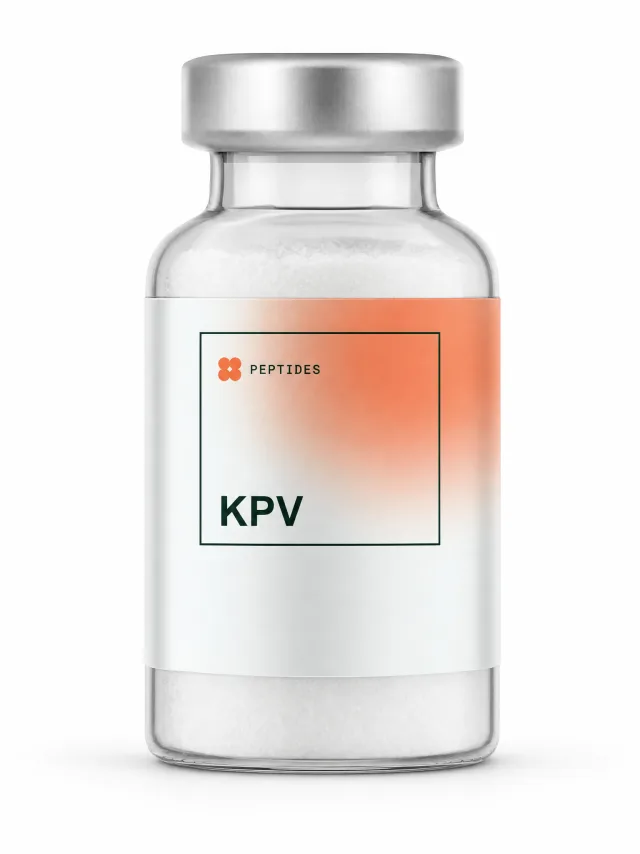
KPV
Anti-inflammatory StackEmerging EvidenceKPV (Lys-Pro-Val)
A three-amino-acid fragment snipped off the end of a hormone your body already makes. Almost every page describes it as switching on a melanocortin receptor; the research fairly clearly says it does not. What it appears to do instead is more interesting, and it is why nearly all the good data is about the gut rather than skin.
4
Gene variants
15+
Studies
Sourcing & access
Where to buy LL-37
LL-37 is sold as a research compound, not a licensed medicine, so quality and legal status vary widely by country and vendor. If you're sourcing it, treat independent purity testing as non-negotiable.
- Insist on a recent third-party Certificate of Analysis (COA) for the exact batch — labs like Janoshik verify purity and identity.
- Check the legal status where you live before ordering — it differs from country to country.
- Reconstitute correctly with bacteriostatic water and start at a conservative dose.
Before you buy: see whether your DNA actually responds to LL-37, and at what dose. Analyze my DNA — $99 →
Educational information only, not medical advice. Some outbound links are affiliate links (disclosed, at no extra cost to you). Most peptides are not FDA-approved — consult a qualified professional and check your local laws before purchasing.
Worth knowing before you consider LL-37
Interactions and situations where there is a specific reason to be careful. Where the honest answer is that nobody has studied something, it says so and says what that leaves open.
- It cuts both ways on inflammation
- Raised LL-37 is implicated in psoriasis and rosacea. Someone with an inflammatory skin condition is not an obvious candidate for adding more of it.
- An infection worth treating is worth diagnosing
- If something is stubborn enough to reach for this, it is stubborn enough to be worth identifying properly first.
Last updated
Frequently Asked Questions
What is LL-37 used for?
LL-37 is the body's natural broad-spectrum antimicrobial peptide, explored for chronic/biofilm infections and immune support. It's part of innate immunity and is produced by your own cells in a vitamin-D-dependent way.
Should I inject LL-37 or fix my vitamin D?
For most people, the genetics point to fixing vitamin D first. The CAMP/cathelicidin gene that makes LL-37 is switched on by vitamin D — so a low vitamin-D axis (VDR/GC variants) is best corrected at the source, restoring your own LL-37, which is safer and better-evidenced than the experimental injectable.
Is LL-37 legal?
LL-37 is not approved by any major regulator. Human data are thin and injectable use is experimental/research-only. Regulatory status and access vary by country.
Learn more about LL-37
peptide guides
Best Peptides for Gut Health in 2026: KPV, GLP-2, and the One That Actually Has Human Data
13 min read
comparisons
In depthKPV vs LL-37: The Two Peptides Quietly Replacing Topical Steroids
13 min read
safety
Are Peptides Legal in the US? 9 Things You Need to Know in 2026
14 min read
peptide guides
GLP-2 Gut Healing: The Forgotten GLP Peptide That Actually Repairs Your Gut Lining
11 min read
comparisons
GHK-Cu vs Retinol vs Vitamin C: Which Skin Repair Compound Wins on Clinical Trials?
13 min read
Your next move
Two ways forward with LL-37.
Not sure it's for you?
How does LL-37 relate to your genes?
Your report scores LL-37 against your receptor, pharmacogene and pathway variants and shows the genetic markers relevant to it, with commonly cited dosing information to review with a clinician.
Analyze my DNA — $99Already decided?
Get LL-37 from Swiss Chems.
A US research-chemical supplier with third-party Certificates of Analysis. Sold for research use only — check your local laws before ordering.
Buy at Swiss Chems →Save 10% at checkout with code tcwisiiu