What Ozempic & Weight Loss Drugs Really Do to the Body
A 16-minute explainer from the Institute of Human Anatomy on how semaglutide and other GLP-1 drugs work, their side effects and cost, and who the host thinks should consider them.
With Jonathan Benan
Key moments
Tap a moment to play the video from there.
- 0:00Why GLP-1 drugs need explainingBenan says the drugs work for weight loss but that there is more to understand, including side effects and who should use them.
- 1:11Ozempic, Wegovy and semaglutideHe says both brands are semaglutide at different doses, approved for type 2 diabetes and weight loss respectively. He explains receptor agonists as drugs that mimic a natural hormone.
- 3:15Insulin, glucagon and natural GLP-1Benan explains that natural GLP-1 raises insulin release and inhibits glucagon, slows gastric emptying and reduces appetite in the brain.
- 4:24Why the drug lasts longerHe contrasts the natural hormone's half-life of about 1 to 2 minutes with semaglutide's half-life of about one week.
- 6:36Possible cardiovascular benefitsHe says some of these drugs were linked to fewer strokes and heart attacks in people with existing cardiovascular conditions, and lists theories for why.
- 7:27Common and serious side effectsBenan lists nausea and other gastrointestinal effects, then pancreatitis and gallbladder issues as less common. He says thyroid cancer concerns came from preclinical studies.
- 9:22Muscle loss and costHe says some of the weight lost is muscle, which matters most for older people. He then covers the price and compounding pharmacy caveats.
- 10:31Who should consider these drugsBenan describes himself as a purist who would start with diet and exercise, and considers the drugs when lifestyle efforts fall short.
- 13:33Protein and strength trainingHe says high-quality food, enough protein and resistance training may help limit muscle loss during treatment.
- 14:44Weight regain after stoppingHe says most people regain the weight after coming off the drugs and questions their use for the last few pounds.
What the video says
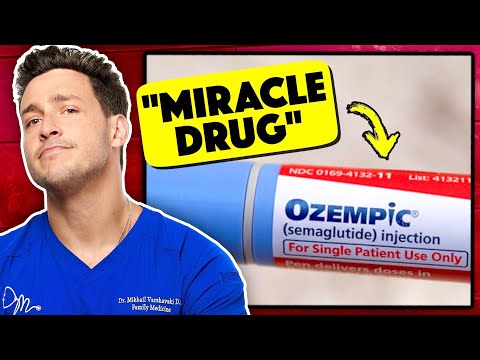
Host Jonathan Benan of the Institute of Human Anatomy explains GLP-1 receptor agonists, the drug class that includes semaglutide, sold as Ozempic and Wegovy. He starts with the naming. According to Benan, Ozempic is the lower-dose semaglutide approved for type 2 diabetes and Wegovy is the higher-dose version approved for weight loss.
The middle of the video covers the physiology. Benan describes how the body's own GLP-1 is released from the gut and brainstem after food, prompting the pancreas to release insulin, curbing glucagon, slowing stomach emptying and reducing appetite. He says the drugs mimic and extend this signal. The natural hormone lasts about 1 to 2 minutes, while he gives semaglutide's half-life as about one week. He says this explains the weight loss seen in people originally treated for diabetes, and he mentions possible cardiovascular benefits in people who already have heart disease, with the mechanism still being investigated.
Benan then turns to costs. He lists common gastrointestinal side effects, led by nausea, along with fatigue and headaches. He describes pancreatitis and gallbladder problems as less common but more serious. He says the thyroid cancer concern came from preclinical studies and has not been shown in humans. He flags muscle loss as a serious consideration, especially for older people, and says protein intake and resistance training may reduce it. He also says brand-name drugs can cost over $1,000 a month without insurance, and that compounding pharmacies, especially online ones, need careful vetting.
The last third is Benan's own view, which he labels as biased toward lifestyle change. He suggests trying diet and exercise first, and considering a GLP-1 drug if someone stays dedicated but cannot lose weight and the health risk of excess weight outweighs the drug's risks. He questions using one for the last 10 to 15 pounds, says most people regain weight after stopping, and tells viewers to decide with their healthcare provider. The closing minute promotes an in-person anatomy lab event.
On each compound
Semaglutide1:11
Benan says semaglutide is sold as Ozempic at a lower dose for type 2 diabetes and as Wegovy at a higher dose for weight loss. He describes a half-life of about one week and says it can lower blood glucose, slow gastric emptying and suppress appetite. He also covers side effects, cost and weight regain after stopping.
See how your DNA reads SemaglutideWhat this video doesn’t settle
- Benan says the reasons for the cardiovascular benefit are still being investigated, and the video does not settle whether it comes from blood glucose, weight loss or inflammation.
- The video gives no figures for how common each side effect is beyond calling the serious ones relatively uncommon.
- His advice to try diet and exercise first is a stated personal bias, not a comparison of outcomes between lifestyle change and the drugs.
Questions this video answers
What is the difference between Ozempic and Wegovy?
Benan says both are semaglutide. Ozempic is the lower-dose version approved for type 2 diabetes, and Wegovy is the higher-dose version approved for weight loss.
How do GLP-1 drugs like semaglutide cause weight loss?
According to Benan, they mimic and extend the body's natural GLP-1 signal, which slows gastric emptying and reduces appetite in the brain. He says people feel full longer and eat less.
What side effects of semaglutide does Benan mention?
He names nausea, vomiting, diarrhea or constipation, bloating, abdominal pain, fatigue and headaches as the more common effects. He describes pancreatitis and gallbladder problems as less common but serious, and he raises muscle loss as a further concern.
Do people regain weight after stopping GLP-1 drugs?
Benan says the majority of people gain the weight back after coming off these drugs. He says people who changed diet and exercise at the same time may keep some of it off.
How much do Ozempic and Wegovy cost according to this video?
Benan says they can cost over $1,000 a month without insurance. He notes that some people use compounding pharmacies at the equivalent dose and advises vetting them carefully, especially online ones.
Video by Institute of Human Anatomy on YouTube, embedded as published. The summary is written by PeptidesDNA from the video; every claim in it is the speaker’s. Not affiliated with or endorsed by the creator. Not medical advice.