

No, not on its own. Your 23andMe raw data file is a list of preselected DNA positions, roughly 640,000 on the current chip, with the two letters you carry at each one, so it can report what you carry at the positions peptide research has studied and nothing at all about positions the chip never measured. A BMJ analysis of 49,908 UK Biobank participants found chips agreed with full sequencing above 99% on common positions but confirmed only 16% of their very rare calls [[1]], and no peptide has a validated genetic dosing rule.
The 23andMe file sitting in your downloads folder is usable, and it is smaller than most people picture. It is a plain text list of preselected positions in your genome, roughly 640,000 of them on the current chip and anywhere from about 550,000 to 960,000 on older versions, with the two letters you carry at each one. There is no mention of peptides in it, no interpretation, and no dose. What it can do is tell you what you carry at the specific positions peptide research has studied, which makes it a good starting point for a conversation and a bad substitute for a clinical result.
Not one peptide discussed on this site has a validated genetic dosing rule the way the blood thinner warfarin does. Genetics narrows the shortlist and sets expectations; it does not set the dose. Most of these compounds are not approved by the US Food and Drug Administration for human use. Several are sold only as research chemicals, some are subject to FDA import alerts, and BPC-157 and TB-500 sit on the FDA's Category 2 list of bulk drug substances, which bars compounding pharmacies from using them. Legal status varies by country and changes. A genotype pulled from a consumer file is one input a clinician can weigh alongside your history, your labs and your goal, and this page is education about what that input physically contains. It is not medical advice, not a diagnosis, and not a recommendation to obtain or use any compound. PeptidesDNA does not sell, supply or endorse any compound.
What is inside the file
Unzip the download and you get a tab separated text file. The first lines are comments beginning with #, which name the reference build (GRCh37, the older map of the genome that every position number is counted against, still what consumer files use) and the date. After that come the data rows, one per measured position, four columns wide.
| Column | Example | What it means |
|---|---|---|
| rsID | rs6923761 | The catalogue name for one position. Some rows carry an internal i-number instead, which means the position has no public catalogue entry. |
| Chromosome | 6 | Which chromosome the position sits on. |
| Position | 39034072 | The base number along that chromosome on the GRCh37 map. |
| Genotype | AG | The two letters you carry there, one inherited from each parent. Two dashes mean the chip tried and failed to read that position. |
That example row is real. Position 39,034,072 on chromosome 6 is rs6923761, which sits in GLP1R, the gene for the receptor that semaglutide binds on the cells controlling appetite and insulin release. Your file states your letters there in four characters and says nothing about what they mean. Every interpretation layer, ours included, is a lookup table bolted onto rows like that one.
How accurate is a consumer chip?
Accuracy splits sharply by how common the variant is. Researchers at the University of Exeter compared chip results against full sequencing in 49,908 UK Biobank participants. For the 108,574 common positions the chips measured directly, the chips agreed with sequencing more than 99% of the time, whichever way you measure it: catching the variants that were really there, not inventing ones that were not, and being right when they said yes. For variants carried by fewer than 1 in 100,000 people, only 16% of 4,757 chip calls held up against sequencing 1. That comparison ran on the UK Biobank Axiom and BiLEVE arrays, the research versions of the same genotyping technology rather than the 23andMe product itself, and the confirmation rate for very rare calls was 16% on one array and 9% on the other 1.
SNP chips are extremely unreliable for genotyping very rare pathogenic variants and should not be used to guide health decisions without validation.Weedon and colleagues, BMJ, 2021, PMID 33589468 [[1]]
The same team looked at 21 people who had bought consumer tests and shared the data publicly. Twenty of the 21 carried at least one rare disease variant that the chip had reported and sequencing showed was not there 1. Ambry Genetics saw the same problem from the clinic's side. When 49 patients sent consumer raw data for clinical confirmation, 40% of the flagged variants could not be confirmed, and some variants that the raw data or a third-party interpretation service had labelled increased risk were classified as benign by Ambry and other clinical laboratories 2. Those 49 samples had already been referred for confirmation, so 40% is a failure rate among flagged and referred variants rather than a rate across all consumer files.
Read together, those findings are reassuring rather than damning for this particular use. The variants peptide research works with are common by construction, because a study needs enough carriers to measure anything at all. They sit in the part of the chip that performs above 99% 1. The 40% failure rate belongs to rare disease variants, which is a different category of data and a different conversation with a different specialist.
What a chip cannot measure at all
An array works by fixing a probe for a known position onto a glass surface and reading which letter sticks. That design reads single letter changes at positions someone chose in advance, so everything else in your genome stays invisible to it.
| The question | Can your raw file answer it? | Why |
|---|---|---|
| What letters do you carry at a common studied position, such as rs4680 in COMT | Yes | The position is on every major consumer chip, and chips matched sequencing above 99% for common positions they measure directly 1 |
| Do you carry a rare variant a doctor would act on | Not without confirmation | Only 16% of very rare calls survived sequencing 1, and 40% of flagged variants referred for clinical confirmation failed it 2 |
| What is your CYP2D6 metabolizer status, meaning how fast you clear a long list of everyday medicines | No | That status turns on whole genes being deleted, duplicated or fused with a neighbour, and an array reads letters, not missing or repeated genes 3 |
| How many CAG repeats does your androgen receptor gene carry | No | Repeat length is a count, and counting repeats needs sizing or sequencing rather than a yes-or-no probe |
| Anything at a position the chip does not carry | No | An array is silent about positions it was never built to read, and it reads a small fraction of your roughly 3 billion base pairs |
Consumer reports routinely blur the drug-metabolism point. CYP2D6 is the liver enzyme that breaks down a long list of everyday medicines, from some antidepressants to codeine, and metabolizer status is shorthand for whether you clear those drugs quickly, slowly or somewhere in between. It is also one of the most variable genes in the human genome, and its named versions include whole-gene deletions, duplications and hybrid genes fused with a nearby lookalike 3. That is why we do not call CYP2D6, CYP3A4, CYP1A2 or CYP2E1 from an uploaded file, and why any service that claims to has gone past what the data supports.
Pharmacogenes are simply the genes that govern how fast your body activates or clears a drug. The eight we do read are the ones a consumer array resolves from single positions: CYP2C19, CYP2C9, CYP2B6, CYP3A5, VKORC1, TPMT, SLCO1B1 and CYP4F2. Even for those eight, an array reports only the positions it carries. When no variant is detected the result defaults to the reference version, so a normal-metabolizer call is an absence of evidence rather than a clean bill, rare alleles are missed, and none of this is a clinical pharmacogenomic panel. What we return from an uploaded consumer file is educational: it is not a diagnostic result, it is not CLIA-validated, and it is not a prediction of how you will respond to any specific medication. Do not start, stop or change any prescription, including clopidogrel, warfarin, a thiopurine or a statin, on the strength of an uploaded file. Our methodology page sets out the whole 144-marker panel and how the 39 peptide scores are built from it.
Does your chip version matter?
It decides which positions were measured, which is the only question that matters. 23andMe has run several arrays since 2007, and the counts below are approximate figures from the company's own documentation rather than exact manifests.
| Chip version | Years in use | Underlying array | Roughly how many positions |
|---|---|---|---|
| v1 and v2 | 2007 to 2010 | Illumina HumanHap550 family | About 550,000 to 600,000 |
| v3 | 2010 to 2013 | Illumina OmniExpress plus custom content | About 960,000 |
| v4 | 2013 to 2017 | Custom Illumina HumanOmniExpress | About 570,000 |
| v5 | 2017 to now | Illumina Infinium Global Screening Array | About 640,000 common positions plus roughly 50,000 custom |
A bigger number is not automatically a better file for this purpose. The v3 array reads more positions than v5, while the Global Screening Array behind v5 was designed with drug-response content deliberately included. The roughly 640,000 figure used through this page is the v5 common-position count, so if you tested on an older chip your own total will differ. To find your version, open the text file and read the comment lines at the top, or check the download page in your account. If you tested between 2013 and 2017 you almost certainly have v4.
How do you use your 23andMe raw data?
- Download the file and keep a local copyLog in, open Settings, find the 23andMe Data section and request the raw data download. It arrives as a zip containing a text file, usually after an email confirmation step. Store it somewhere you control.
- Read the headerThe comment lines at the top name the reference build and let you identify the chip version, which tells you which positions were on the array in the first place.
- Search for a specific positionOpen the file in any text editor and search for the rsID you care about, for example rs6923761. You will get one row and one two-letter genotype. If the search returns nothing, that position was not on your chip.
- Find out what the letters mean before you decide they mean anythingA genotype on its own is a fact without a consequence. The published evidence for that position, its effect size and whether it was studied in people like you all sit outside the file.
- Confirm anything you would act onFor a variant that would change a medical decision, a clinician-ordered test in an accredited laboratory is the confirmation step. Consumer raw data tells you what to ask about.
Can a genotype pick a peptide for you?
No. 23andMe does not test peptides, does not mention them, and does not produce recommendations about them. It produces genotypes. An interpretation layer can score those genotypes against published research, which is what we do, and the ceiling on that is set by the research rather than by the chip.
That ceiling has a number attached. A genome-wide scan of 27,885 people taking GLP-1 receptor drugs found its strongest genetic signal at rs10305420 in GLP1R, worth about 0.76 kg of extra weight loss per copy of that letter, and you can carry none, one or two copies, one from each parent. The combined model explained about 25% of the variation in weight loss, and most of that came from non-genetic factors, with starting BMI the single largest and each additional 10 years of age costing about 0.45 kg 5. Two caveats travel with the study. The outcome was self-reported weight loss in a 23andMe research cohort, checked against health-record data in only 909 of the 27,885 participants at r = 0.57, and that cohort belongs to the same consumer genetics company whose file this page tells you to download 5. The scan also found that the alleles tied to more weight loss were tied to more nausea: the efficacy signal and the nausea signal share a probable causal variant, with a colocalization probability of 96.6% for nausea and 88.5% for vomiting 5. Which peptides should you take works the same GLP1R, COMT, BDNF and SOD2 variants into a shortlist.
The model of BMI-loss efficacy explained 25% of the variance, with most of the variance explained by non-genetic factors.
| Position in your file | What the gene does, in plain words | What the published evidence supports | What that could change for you |
|---|---|---|---|
| rs6923761 (GLP1R) | Builds the receptor that semaglutide and similar drugs bind, on the cells that govern appetite and insulin | In 112 patients on semaglutide 2.4 mg weekly, A/A carriers lost 1.64% of body weight per month against 1.04% in carriers of at least one G copy, p = 0.03, with A/A only 8% of the sample 4 | Sets a loose expectation about pace, from one small study. Dose stays a prescriber's decision |
| rs10305420 (GLP1R) | A different position in the same receptor gene, changing one amino acid near the start of the protein | The strongest signal in the 27,885-person scan, worth about 0.76 kg of extra weight loss per copy, with the same alleles tied to more nausea. Earlier literature reported the opposite direction of effect for this position 5 | Search your own file for the rsID, because whether it was on your chip depends on the version. A contested effect worth about three quarters of a kilogram is not a reason to choose or refuse a drug |
| rs4680 (COMT) | Codes the enzyme that clears dopamine out of the prefrontal cortex, the part of the brain running working memory | In a double-blind trial of tolcapone, a drug that raises prefrontal dopamine, Val/Val carriers improved on working memory tasks while Met/Met carriers got worse, so genotype set the direction of the effect 8. PeptidesDNA's why peptides can make you foggier puts it as: the Val158Met genotype explained 19% of working memory variance | In that trial the direction of response depended on genotype, so a stimulating compound producing the opposite of the intended effect is a documented possibility rather than evidence of underdosing. Whether that changes anything for a given person is a question for the clinician overseeing them |
| rs1801133 (MTHFR) | Codes an enzyme that converts folate into the form the body can use | The American College of Medical Genetics and Genomics found minimal clinical utility and recommends that MTHFR genotyping not be ordered as part of the clinical evaluation for thrombophilia or recurrent pregnancy loss, nor for at-risk relatives 6 | Very little. The result is not a diagnosis and should not drive a treatment decision, and folate intake is a dietary question to raise with a clinician. Why peptides can make you foggier explains why this variant gets blamed for far more than it causes |
If your interest is tendons, ligaments or an injury that keeps coming back rather than weight or focus, what a COL5A1 variant does and does not tell you works a single common position through end to end in the same way.
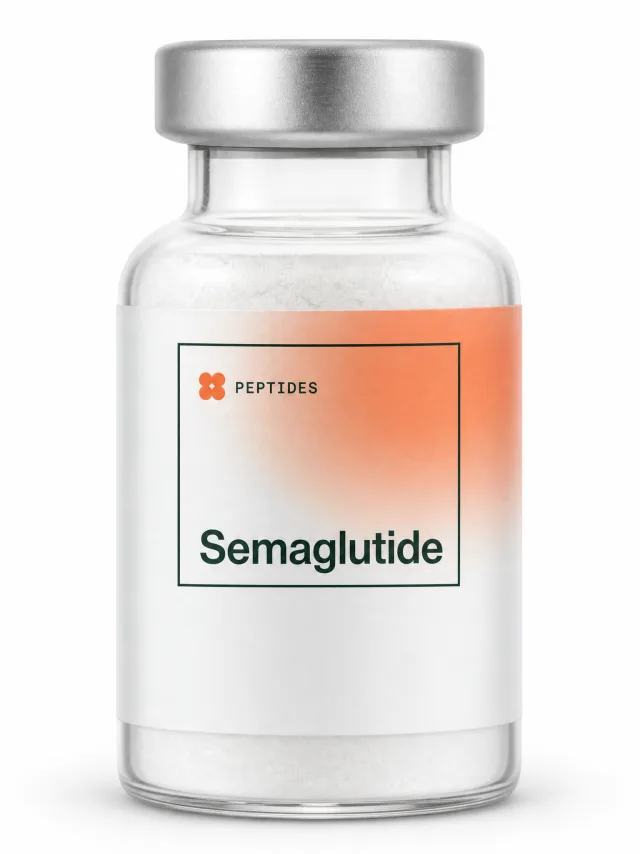
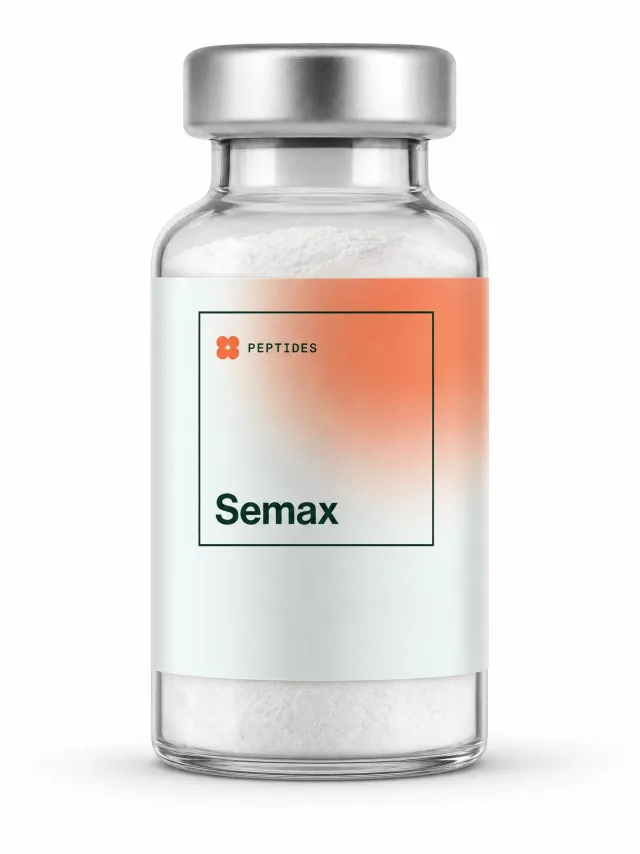
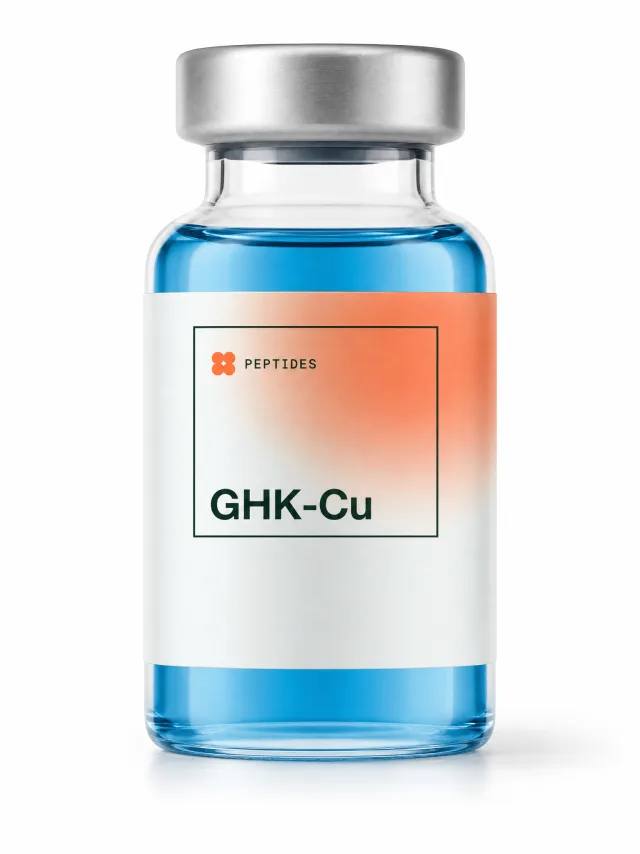
Those three compounds sit at very different evidence tiers, which matters more than any variant in the table above. Semaglutide is an approved prescription drug with large randomised trials behind it. Semax is approved in Russia and has never been through an FDA or EMA review, with most of its literature published in Russian and unreplicated in the West. GHK-Cu is well studied in skin research and not approved for injection anywhere. If you are starting from scratch rather than from a file, peptides for beginners is the better first stop. And if a vial is already in your fridge, your file will not tell you whether to use it. It can tell you what to expect and what to watch in the first week, which is a smaller claim than most reports on this topic make. Disclosure: some vendor links on PeptidesDNA are affiliate links and we may earn a commission if you buy through one, which never changes how a compound is scored or what its evidence section says.
Your existing file, or a new clinical test?
Consumer array versus clinical sequencing
If you have already had a third-party service interpret your file, our review of the SelfDecode peptide report walks through what that kind of output does and does not establish: roughly 43 peptides scored, behind an Essential+ subscription at $418 a year.
Is your data still there after the bankruptcy?
23andMe filed for Chapter 11 bankruptcy in March 2025. The bankruptcy court approved the sale of the consumer business to TTAM Research Institute, the non-profit founded by 23andMe co-founder Anne Wojcicki, for $305 million on 30 June 2025, and the acquisition completed on 14 July 2025 7. More than two dozen state attorneys general and the District of Columbia had sued to block the transfer of customer data without consent, and TTAM committed to adhering to 23andMe's existing privacy policies in perpetuity 7. Raw data downloads have stayed available through the account portal throughout.
That leaves two practical moves. If you want to keep your data, download the raw file now and store it yourself, because a download you already hold does not depend on anyone's future policy. If you want your data gone, the deletion request lives in the same account settings, and deleting the account does not delete the copy already on your own drive.
paper · BMJ, 2021Use of SNP chips to detect rare pathogenic variants: retrospective, population based diagnostic evaluationThe 49,908-person UK Biobank comparison behind the common-versus-rare accuracy split, including the 16% confirmation rate for very rare variants and the 4.2% predictive value for pathogenic BRCA calls.pubmed.ncbi.nlm.nih.govWhat to do with the file you already have
- Check the header for the chip version, so you know which positions were on the array.
- Treat common studied positions as reliable and anything rare as a question for a clinician 1 2.
- Expect a genotype to shift your expectations and your monitoring, not your dose. Dose belongs to a prescriber.
- Start from a goal rather than from a gene. The goal pages for weight loss, focus and injury recovery sort compounds by evidence first, and note where a compound is restricted or import-alerted before you assume it is legally available to you.
Curious which of the 39 peptides your own variants line up with? Upload the raw file you already have and get all 39 scored against a 144-marker panel, 8 drug-metabolism genes and 15 pathways, reviewed by a member of our team before it reaches you, within 24 hours. The report is educational, contains no doses, and is not a medical diagnosis, a prescription or a clinical test. No peptide has a validated genetic dosing rule, and for most of the 39 the genetic evidence is thin or absent, which the report states per compound.
Get your DNA report- The chip is not the bottleneck, the research is
A consumer array agrees with full sequencing above 99% exactly where peptide research lives, in common variants [[1]], so buying a better test upgrades nothing for this question. The ceiling is the science: in the best-powered study of GLP-1 response, 27,885 people, the combined model explained about 25% of the variation in weight loss and most of that was non-genetic [[5]].
- Common variants are reliable, rare ones are not
The same chip that agreed with full sequencing above 99% on common positions confirmed only 16% of its very rare calls [[1]]. Peptide research runs on common variants, so your file is trustworthy exactly where this topic needs it and untrustworthy where a rare disease finding would live.
Sources8
- Weedon MN, Jones L, Harrison JW, Ruth KS, Tyrrell J, Hattersley AT, Wright CF. Use of SNP chips to detect rare pathogenic variants: retrospective, population based diagnostic evaluation. BMJ, 2021;372:n214 (49,908 UK Biobank participants plus 21 consumer-test users).
- Tandy-Connor S et al. False-positive results released by direct-to-consumer genetic tests highlight the importance of clinical confirmation testing for appropriate patient care. Genetics in Medicine, 2018 (n = 49 samples referred for clinical confirmation).
- Nofziger C et al. PharmVar GeneFocus: CYP2D6. Clinical Pharmacology and Therapeutics, 2020;107(1):154-170.
- Phan A et al. A GLP1R gene variant and sex influence the response to semaglutide treatment in patients with severe obesity. Obesity (Silver Spring), 2025 (prospective, n = 112).
- Su QJ et al. Genetic predictors of GLP1 receptor agonist weight loss and side effects. Nature, 2026;653:770-775 (genome-wide association study, n = 27,885, self-reported weight loss in a 23andMe research cohort).
- Hickey SE, Curry CJ, Toriello HV. ACMG practice guideline: lack of evidence for MTHFR polymorphism testing. Genetics in Medicine, 2013;15(2):153-156.
- 23andMe. 23andMe receives court approval for sale to TTAM Research Institute, a non-profit public benefit corporation. Company press release, 30 June 2025 ($305 million; acquisition completed 14 July 2025).
- Farrell SM, Tunbridge EM, Braeutigam S, Harrison PJ. COMT Val(158)Met genotype determines the direction of cognitive effects produced by catechol-O-methyltransferase inhibition. Biological Psychiatry, 2012;71(6):538-544 (double-blind, placebo-controlled tolcapone trial).
This article is for informational and educational purposes only. It is not medical advice and does not diagnose, treat, cure, or prevent any disease. Consult a qualified healthcare professional before starting any peptide protocol. Individual results vary. Some outbound links are affiliate links, at no extra cost to you.

Frequently asked questions
Can 23andMe tell you which peptides to take?
No. 23andMe does not test peptides or make recommendations about them. It reports which letters you carry at preselected DNA positions, roughly 640,000 of them on the current chip, and an interpretation service can score those genotypes against published research. Even then, no peptide has a validated genetic dosing rule. The best-powered study on this question, a genome scan of 27,885 people on GLP-1 drugs, found its strongest genetic signal at rs10305420 in GLP1R worth about 0.76 kg of extra weight loss per copy, while the combined model explained about 25% of the variation and most of that came from non-genetic factors such as starting BMI, age, which drug, what dose and how long [[5]]. The weight-loss outcome in that study was self-reported. Any decision about a compound belongs with a clinician.
What does 23andMe raw data include?
A tab separated text file with comment lines at the top naming the reference build, then one row per measured position with four fields: the rsID (the catalogue name for that position), the chromosome, the base position, and your two-letter genotype. Two dashes mean the chip failed to read that position. It contains no interpretation, no health report text, and nothing for positions the chip does not carry, which is the overwhelming majority of your roughly 3 billion base pairs.
Can I use AncestryDNA or MyHeritage data instead?
Yes. All three use genotyping arrays and export the same rsID and genotype structure, with different header formats and slightly different position coverage. The limits are identical: common studied positions are read reliably [[1]], and repeat lengths, deleted or duplicated genes and most drug-metabolism star alleles, the named gene versions a pharmacy lab reports, are unreadable on any of them [[3]].
Is my 23andMe data still safe after the bankruptcy?
23andMe filed for Chapter 11 in March 2025, and its consumer business was sold to the non-profit TTAM Research Institute for $305 million, approved by the court on 30 June 2025 and completed on 14 July 2025, over the objections of more than two dozen state attorneys general and the District of Columbia, with TTAM committing to adhere to the existing privacy policies in perpetuity [[7]]. Downloads have stayed available, so the practical move either way is to download your raw file and keep a local copy, then use the account settings to delete the data if you want it removed from the platform.
This article is for informational and educational purposes only. It is not medical advice and does not diagnose, treat, cure, or prevent any disease. Consult a qualified healthcare professional before starting any peptide protocol. Individual results vary. Some outbound links are affiliate links, at no extra cost to you.