

- BPC-157 comes from a protein your stomach already makes. It is a concentrated fragment of it with powerful healing effects.
- It works four ways at once: widens blood vessels, grows new ones, boosts growth hormone receptors, and calms inflammation.
- Not everyone responds equally. Your blood vessel, collagen and inflammation genes are associated with how well BPC-157 works for you.
- Over 100 published studies as of 2026. The FDA took BPC-157 off its Category 2 safety-risk list in April 2026, but compounding pharmacies still cannot legally make it.
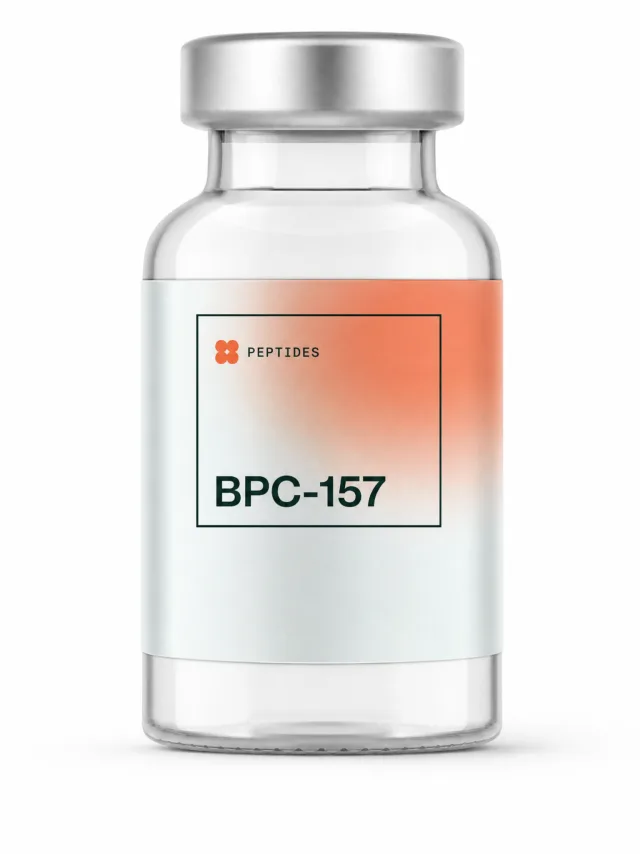
BPC-157 (Body Protection Compound-157) is a synthetic peptide derived from a naturally occurring protein in human gastric juice. It's a 15-amino-acid sequence that has shown remarkable tissue-healing properties across hundreds of animal studies and a growing body of human clinical data.
But here is what most guides will not tell you: not everyone responds to BPC-157 the same way. Your genetic profile, specifically the genes behind your nitric oxide production and your collagen, is associated with how effectively this peptide works in your body.
Your stomach naturally produces a protein called BPC (Body Protection Compound) that protects your gut lining. BPC-157 is a synthetic fragment of that protein, 15 amino acids isolated from the full sequence. Scientists found that this fragment, taken on its own, has powerful healing effects far beyond the gut.
What does BPC-157 actually do?
BPC-157 works through multiple mechanisms simultaneously, which is why it's effective for such a wide range of injuries and conditions:
Imagine a construction site. BPC-157 does four things at once: it widens the roads so more supply trucks can get in (nitric oxide), builds new roads where none existed (new vessels), upgrades the cranes on site to lift heavier loads (growth hormone receptors), and calms the neighborhood complaints so work can continue (inflammation). That is why it works for so many different injuries. It is not doing one thing, it is upgrading the entire repair system.
Why the nitric oxide route is the one that varies most between people
NOS3 is the gene for eNOS, the enzyme that makes nitric oxide inside your blood vessel walls. Some common variants of it, rs1799983 among them, are associated with lower baseline nitric oxide output. How much lower has not been measured in a way that transfers to peptide users, and no trial has tested whether carriers respond to BPC-157 any differently. The mechanistic argument is simply that if your baseline is low, BPC-157's nitric oxide effect has a bigger gap to fill.
What people actually take it for
The mechanisms above sound abstract until you match them to the problems people bring to this compound.
A fair summary of where the science stands: the mechanistic work is genuinely substantial and mostly done in animals, with a small amount of human work including a study injecting it directly into the knee joint for knee pain and an intravenous safety pilot. Every citation on the reference page is tagged so you can see what is what without digging.
Why it seems to work from anywhere
Here is something practical that falls straight out of the studies above, and almost nobody mentions it.
Those tendon, ligament and muscle results were produced by giving the compound nowhere near the injury. The transected Achilles work, the ligament work and the transected quadriceps work dosed it into the abdomen, or simply put it in the animals' drinking water, and it still worked.
That has a useful consequence: the evidence does not require you to inject close to an injury. The widespread advice to get a needle as near the problem as possible is not something these studies establish. Ordinary subcutaneous sites, rotated normally, are consistent with how the research was actually done.
The famous tendon-healing results came from dosing the belly or the water bottle. So you do not have to contort yourself to inject into a shoulder or a knee.
Why does BPC-157 work differently for different people?
Three people can take the same dose of BPC-157 and get three different results. Part of that traces back to the genes behind the systems BPC-157 acts on:
Think of it this way: BPC-157 amplifies the repair system you already have. If that system is genetically tuned high (good collagen genes, strong nitric oxide production, low inflammation), BPC-157 adds a modest boost. If it is tuned low, there is more room for BPC-157 to make a difference.
How is BPC-157 typically used?
BPC-157 is sold as a freeze-dried powder that has to be mixed with bacteriostatic water before use.
| Route | Common Use | Notes |
|---|---|---|
| Under the skin (tissue repair) | Tendon, joint and muscle repair | The most common route. Ordinary sites, rotated normally: the tendon studies dosed the abdomen, not the injury. |
| Under the skin (gut and whole-body) | Gut healing, body-wide inflammation | Abdominal injection, which is what much of the gut research used. |
| Oral (capsules) | Gut conditions (ulcers, inflammatory bowel disease, painkiller damage) | Less of the dose reaches the bloodstream. How much more you would need to make up the difference has not been measured in people. |
Important: Dosing is individual. Body weight, injury severity and your genetic profile all factor into the right approach, and that conversation belongs with a clinician.
What does the published research show?
Published studies on BPC-157 as of 2026. Mostly animal models, with a small amount of human work. The FDA's April 2026 reclassification removed a safety designation; it did not authorise compounding.
Key findings across the literature include:
- Faster tendon-to-bone healing in rat models (Achilles, rotator cuff)
- Protection of the gut lining and faster ulcer healing
- Protective effects on brain cells in the dopamine and serotonin systems
- Counteraction of gut damage from anti-inflammatory painkillers
- Faster wound healing in skin and muscle tissue
The FDA removed BPC-157 from Category 2 of the 503A bulk substances interim list, effective April 22 to 23, 2026. Removal from Category 2 is not the same as being added to Category 1: it is no longer designated a safety risk, but it still cannot be legally compounded. The agency's Pharmacy Compounding Advisory Committee, the outside panel that advises on which substances pharmacies may use, reviewed it on July 23 to 24, 2026, and its recommendations are advisory rather than binding on the FDA.
What your genetics change about BPC-157
Your nitric oxide, collagen and inflammation gene variants are associated with whether BPC-157 is moderately helpful or makes a real difference for you. A genetic report identifies those factors before you start, so you know what to expect and what to discuss with a clinician.
What happens after you inject it
BPC-157 clears from the blood remarkably fast, in well under an hour, which is the first thing people find confusing: how can something with that short a half-life do anything over weeks?
The answer is that clearance and effect are different clocks. The compound is a signal, and what it sets off, new blood vessel growth, fibroblast activity, collagen laid down, carries on long after the molecule itself is gone. This is also why the dosing convention is daily rather than hourly.
We went through the sequence in detail in what happens in the four hours after an injection, and the clearance numbers alongside TB-500 in how long they stay in your system.
Oral or injected?
BPC-157 is unusual among peptides in that oral is a real question rather than a marketing one. It derives from a protein found in gastric juice, so the argument made is that it survives the stomach better than a typical peptide would.
The practical split: if the target is the gut lining itself, oral has a coherent rationale and much of the older research is gut research. If the target is a tendon, the injectable route is what the connective tissue studies used. Oral versus injectable goes through the trade-off properly.
The rest of our BPC-157 coverage
This page is the overview. For a specific part of it:
- The reference page for the full citation list, dosing ranges and marker data.
- Dosage for how much people actually take and how to work out your units.
- The four hours after an injection for the sequence in detail.
- Gut and leaky gut, where the oldest research sits.
- Tendon healing, and why some people report nothing.
- Oral versus injectable.
- Versus TB-500, and the Wolverine stack guide if you are running both.
- Brain injury and neuroprotection.
Frequently asked questions
Does genetics affect how BPC-157 works?
Yes. NOS3 gene variants affect the nitric oxide pathway that BPC-157 activates, and COL1A1 variants influence the collagen synthesis it acts on. A genetic peptide report can identify these factors before you start.
Is BPC-157 legal?
BPC-157 came off the FDA's Category 2 list in April 2026, but it was never added to Category 1, so compounding is not authorised. The agency's Pharmacy Compounding Advisory Committee voted narrowly in July 2026 to recommend adding it, against the FDA's own reviewers, and that recommendation is not binding on the agency. In the EU, it is sold as a research compound.
How long does BPC-157 take to work?
Nobody has measured this properly in people, so any timeline you read online is anecdote rather than data. What the published work does tell you is that the animal studies dosed daily over weeks, not days, which is where the daily dosing convention comes from.
Can I take BPC-157 with other peptides?
BPC-157 is commonly combined with TB-500 (the 'Wolverine Stack') for tissue repair. There is no published human trial of the combination, so the pairing rests on the separate animal literature for each compound. Discuss any combination with a clinician.
What is BPC-157 derived from?
BPC-157 is a synthetic 15-amino-acid fragment of Body Protection Compound, a protein naturally found in human gastric juice. Your body already produces the parent protein; BPC-157 is an isolated, concentrated fragment of it.
This article is for informational and educational purposes only. It is not medical advice and does not diagnose, treat, cure, or prevent any disease. Consult a qualified healthcare professional before starting any peptide protocol. Individual results vary. Some outbound links are affiliate links, at no extra cost to you.