

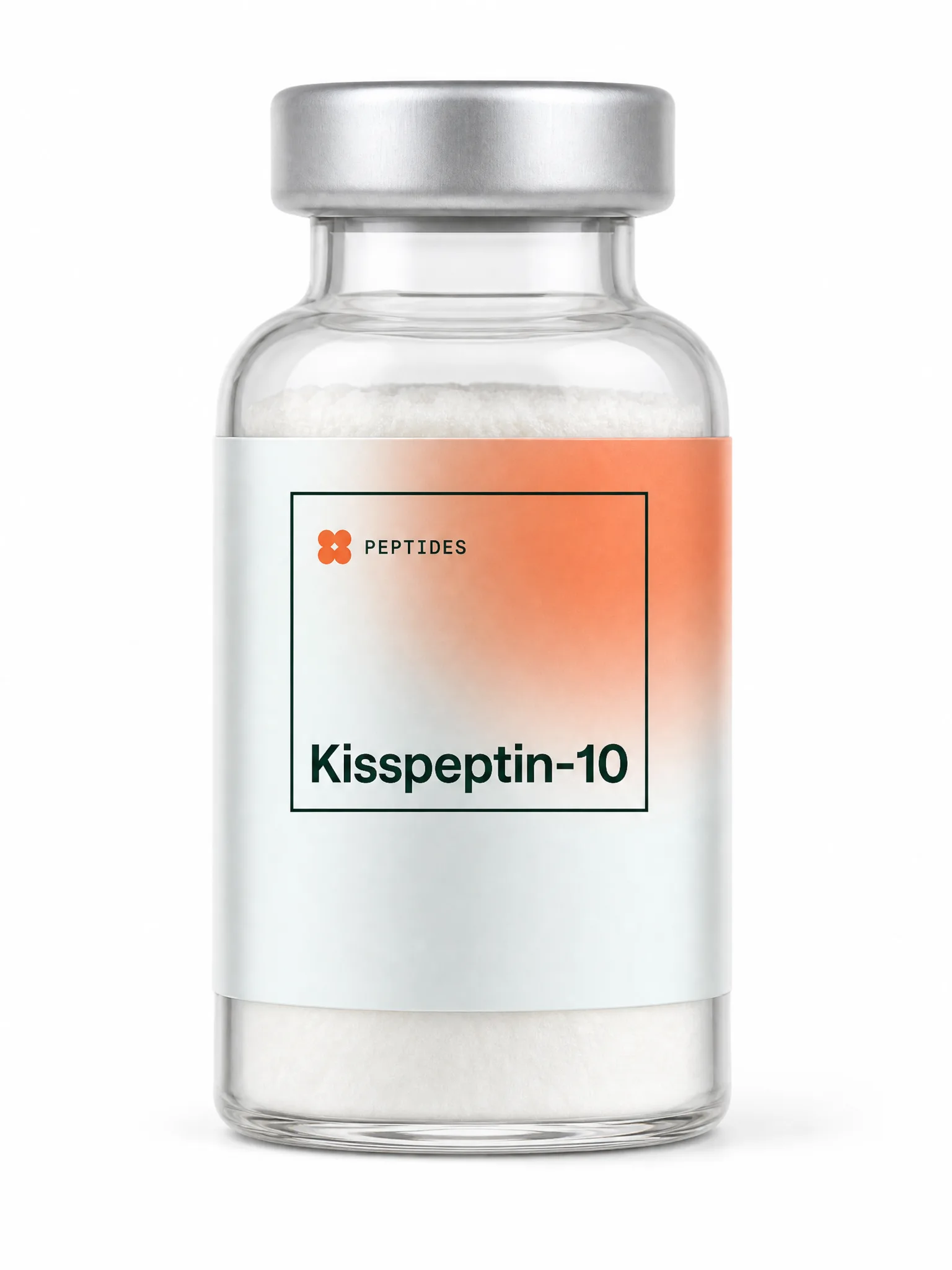
- Kisspeptin-10 is among the few peptides with Phase 2 human data showing testosterone restoration through LH pulse stimulation, without suppressing your HPG axis. It works by telling your hypothalamus to fire GnRH. The whole downstream chain handles the rest.
- A 2011 study in the Journal of Clinical Endocrinology and Metabolism found sustained KP-10 infusion raised testosterone from 16.6 to 24.0 nmol/L, a 45 percent increase, while LH nearly tripled.
- The catch: twice-daily continuous dosing produces tachyphylaxis within 14 days. The KISS1R receptor internalizes when persistently stimulated, and LH returns to pretreatment baseline. Daily use defeats the mechanism.
- The correct protocol uses intermittent pulsed dosing, not continuous. Twice-weekly subcutaneous injections may preserve receptor sensitivity far longer than daily administration.
- As of mid-2026, kisspeptin-10 is blocked from US compounding pharmacies by the FDA's Category 2 list. It is not DEA scheduled. Research-grade supply is commercially available, but the licensed access channel closed in October 2024.
Kisspeptin-10 raised testosterone 45 percent in a controlled human study. Researchers then ran the same peptide twice daily for two weeks and watched testosterone drop back to exactly where it started. The peptide worked. The protocol destroyed the effect.
Most kisspeptin-10 articles skip this. They explain the mechanism, list the benefits, and hand you a daily dosing guide that will stop working inside two weeks by pharmacological law. This article explains what actually happens to KISS1R during continuous dosing, what a correct pulsed protocol looks like, who this peptide is actually for, and what the 2025 human RCT data adds to the picture.
Testosterone increase from sustained kisspeptin-10 infusion in a landmark 2011 human study by Jayasena et al. (Journal of Clinical Endocrinology and Metabolism, PMID 21632807). LH nearly tripled in the same window. This is controlled human data, not animal models.
Kisspeptin-10 is the shortest biologically active fragment of kisspeptin-54, a 54-amino-acid peptide encoded by the KISS1 gene. Both isoforms bind KISS1R receptors on GnRH neurons in the hypothalamus. When that receptor fires, it triggers a GnRH pulse. That GnRH pulse tells the pituitary to release LH and FSH. LH then hits the Leydig cells in the testes and drives testosterone production.
The whole mechanism runs through your natural hormone axis. Kisspeptin-10 does not deliver testosterone. It does not suppress your HPG axis. It tells your own system to turn the signal back on. That is the core reason it has attracted serious research attention for men coming off TRT and for fertility protocols in both men and women.
Think of kisspeptin-10 as the starting gun. Your hypothalamus hears it and fires GnRH. Your pituitary hears GnRH and releases LH. Your testes hear LH and produce testosterone. The gun fires. The chain runs. Your body does the work. The problem is what happens when someone fires the gun every 12 hours for two weeks. Eventually, the hypothalamus stops listening.
Why does kisspeptin-10 stop raising testosterone after 2 weeks?
KISS1R internalizes rapidly under persistent agonist stimulation. The receptor gets pulled inside the cell within minutes of continuous exposure, removing it from the cell surface where kisspeptin-10 needs to bind. This is agonist-induced receptor internalization, and it is a basic feature of G protein-coupled receptor pharmacology, not a product quality issue.
The Imperial College London research group documented this in controlled human subjects. Twice-daily subcutaneous kisspeptin-54 produced normal LH and FSH stimulation on day one. By day 14, LH pulse frequency had returned to pretreatment baseline. The receptor had desensitized completely, not partially. Men showed faster and more complete tachyphylaxis than women on identical protocols, suggesting the female HPG axis retains KISS1R sensitivity differently under continuous stimulation.
"Intravenous KP-10 infusion at 4 micrograms per kilogram per hour raised mean serum testosterone from 16.6 to 24.0 nmol/L over 22.5 hours. LH increased from 5.2 to 14.1 IU/L in the same window. Single bolus doses at 3 nmol/kg did not significantly outperform 1 nmol/kg, suggesting a pituitary ceiling on acute LH response."
Jayasena et al., Journal of Clinical Endocrinology and Metabolism, 2011 (PMID 21632807)
The tachyphylaxis finding is not an artifact of using kisspeptin-54 instead of kisspeptin-10. KISS1R does not distinguish between isoforms at the internalization level. Both trigger rapid receptor recycling under continuous stimulation. The shorter fragment does not escape this pharmacology.
What does this mean for your protocol?
Daily or twice-daily kisspeptin-10 use is pharmacologically self-defeating. The receptor that produces the LH pulse gets removed from the cell surface faster than it can be replenished. You are putting the right compound in the right system and then dosing it in a way that shuts the system down.
The answer the literature points toward is pulsatile administration. Shorter, less frequent doses that allow receptor recycling between exposures. This matches how endogenous kisspeptin actually functions in the body: in short bursts coordinated with the GnRH pulse generator, not as a continuous background signal. If you have already run a continuous peptide protocol and lost the effect, this is the receptor mechanism that explains it.
What does a kisspeptin-10 dosing protocol that avoids tachyphylaxis look like?
No published human RCT has tested intermittent pulsatile subcutaneous kisspeptin-10 in men with the primary goal of sustained testosterone restoration. The data gap is real. Phase 2 trials are currently enrolling (NCT04648969 and others), but results have not yet been published. What exists is pharmacokinetic inference from receptor biology combined with early dose-finding human data.
The most reasonable working framework, drawn from receptor biology and the Jayasena 2011 JCEM dose-finding data, looks like this:
| Goal | Dose | Frequency | Route | Evidence basis |
|---|---|---|---|---|
| LH pulse induction | 50-100 mcg | Twice weekly | Subcutaneous | Inferred from PK data |
| Post-TRT restart | 50-100 mcg | 3x weekly | Subcutaneous | Community protocol |
| Acute LH pulse (diagnostic) | 1 nmol/kg IV | Single dose | IV | Phase 1 human data (Jayasena 2011) |
| Intranasal (research setting) | 12.8 nmol/kg (KP-54) | Once or twice daily | Nasal spray | 2025 EBioMedicine RCT |
A 2025 randomized, double-blind, crossover, placebo-controlled trial from King's College London, published in EBioMedicine (The Lancet group), tested intranasal kisspeptin-54 in healthy men, healthy women, and women with hypothalamic amenorrhoea. In healthy men, intranasal KP-54 at 12.8 nmol/kg raised LH by 3.1 IU/L above placebo (P = 0.002), with zero adverse events recorded. In women with hypothalamic amenorrhoea, the LH response was even larger at +4.3 IU/L. The peptide remained stable refrigerated for up to 60 days, confirming a non-IV delivery route is pharmacologically viable.
The intranasal route offers a shorter receptor exposure window per dose compared to subcutaneous injection, which may be pharmacologically favorable for reducing tachyphylaxis risk. This is untested in a head-to-head subcutaneous vs intranasal tachyphylaxis comparison, but the receptor biology supports the hypothesis.
Can kisspeptin-10 replace testosterone replacement therapy?
Not for most men considering it, and not in the way TRT works. TRT delivers testosterone directly. Kisspeptin-10 tells your body to make more of its own. That distinction matters more than it sounds for choosing the right tool.
If your HPG axis is already suppressed by exogenous testosterone, kisspeptin-10 has nothing meaningful to work with. The GnRH neurons it targets need to be functional. Severely suppressed axes from years of TRT may not respond to kisspeptin alone. The comparison between peptides and testosterone therapy always comes down to mechanism fit, not which option is better in the abstract.
Kisspeptin-10 is most relevant in three specific situations. First: men who want to preserve testicular function and LH pulse output while on TRT, used alongside rather than instead of. Second: men coming off TRT who want to accelerate HPG axis recovery without hCG. Third: men with functional hypogonadotropic hypogonadism, where the hypothalamic GnRH signal is reduced but the downstream axis remains intact.
Kisspeptin-10 has the best fit when:
- Your HPG axis is intact but underactive
- You are doing a post-TRT restart and want to preserve fertility
- You want LH and FSH stimulation without testicular atrophy
- You are willing to dose twice weekly or less (not daily)
Kisspeptin-10 is the wrong tool when:
- You carry a KISS1R loss-of-function variant
- Your HPG axis is fully suppressed by long-term TRT
- You need predictable daily testosterone levels
- You plan to dose it daily (receptor downregulation makes this self-defeating)
Do your genetics predict whether kisspeptin-10 works for you?
KISS1R is the gene that matters most. Loss-of-function KISS1R variants cause idiopathic hypogonadotropic hypogonadism. These are men and women who lack normal LH pulse patterns from birth, because the receptor that kisspeptin needs to bind is nonfunctional. In this population, kisspeptin-10 cannot produce an LH response regardless of dose. The same principle that explains why some people cannot respond to ipamorelin at any dose applies here: if the receptor is broken, the signal never fires.
On the opposite end: activating KISS1R mutations cause central precocious puberty. The receptor becomes constitutively active. This genetic extremes evidence confirms that KISS1R function is the primary variable driving kisspeptin response, far more than downstream LH receptor sensitivity or Leydig cell function.
FSHB promoter polymorphisms affect baseline FSH levels independently of LH. Since kisspeptin stimulates both through GnRH release, men with reduced FSHB expression may see disproportionate LH responses relative to FSH. This asymmetry matters more for fertility applications (where FSH drives spermatogenesis) than for testosterone optimization.
Your genetics also influence how quickly KISS1R recycles after internalization. Faster receptor turnover produces less severe tachyphylaxis patterns. If you can map your receptor signaling genetics before running any hormone-axis peptide, kisspeptin response is one of the outcomes that shifts meaningfully based on what you find.
What the 73 live births show about kisspeptin's mechanism
The strongest controlled human evidence for kisspeptin is in fertility, not testosterone optimization. Imperial College London's reproductive endocrinology group ran the definitive IVF oocyte trigger trials. Instead of using hCG to trigger egg maturation before retrieval, they substituted kisspeptin-54.
Live births from kisspeptin-54 used as an IVF oocyte trigger at Hammersmith Hospital, Imperial College London (published data through 2022, Frontiers in Endocrinology). Zero cases of ovarian hyperstimulation syndrome in the treated group. OHSS affects 1 to 5 percent of IVF cycles with standard hCG triggers.
The Lancet published the original proof-of-concept in 2014. A 2024 study in Fertility and Sterility confirmed the mechanism extends to synthetic KISS1R agonists in high-OHSS-risk patients. The clinical application is not yet standard of care, but the biological mechanism has been replicated at multiple independent research centers.
For men: the same LH-pulse mechanism that drives oocyte maturation is the mechanism kisspeptin uses to restore testosterone production. The IVF data is not irrelevant to male applications. It confirms, under controlled conditions, that kisspeptin reliably triggers the hypothalamic-pituitary-gonadal axis in humans. George et al., writing in Clinical Endocrinology in 2013, extended this finding to men with type 2 diabetes-related central hypogonadism: KP-10 infusion raised LH pulse frequency from 0.6 to 0.9 pulses per hour and increased pulsatile LH secretion area under the curve by approximately fourfold. The HPG axis responded even in a metabolically compromised state.
Is kisspeptin-10 legal in the US right now?
Kisspeptin-10 is not DEA scheduled. It is not a controlled substance. But as of October 2024, it is blocked from the US compounding pharmacy channel. The FDA's Pharmacy Compounding Advisory Committee (PCAC) voted against adding kisspeptin-10 to the 503A Bulks List, citing insufficient safety characterization, immunogenicity risk from injectable peptide use, and the existence of approved alternatives for hypogonadism. The FDA placed it on the Category 2 list ("Bulk Drug Substances That Raise Significant Safety Risks"), prohibiting licensed compounding pharmacies from preparing it.
A July 2026 PCAC review of Category 2 peptides was scheduled. Industry analysts assessed the odds of kisspeptin clearing that review as low, given the standing objections, though the outcome had not yet been determined at the time of writing. The compounding landscape for peptides in 2026 is shifting rapidly, and kisspeptin is currently on the restricted side of that line.
Research-grade supply is commercially available from vendors including Sigma-Aldrich, BiotechPeptides, and Nationwide Peptides under research-use-only labeling. Anyone sourcing kisspeptin-10 outside a clinical trial is operating outside the licensed US pharmacy channel.
To check whether your genetic profile aligns with kisspeptin-10 or whether a different approach to LH pulse restoration better fits your receptor genetics, the PeptidesDNA report covers KISS1R function alongside the rest of the relevant hormone-axis panel.
Verdict: Kisspeptin-10 has the strongest human mechanistic evidence of any peptide for LH pulse restoration without HPG axis suppression. A 45 percent testosterone increase in a controlled infusion trial and 73 confirmed IVF live births are real numbers. But the mechanism only works pulsed. Daily dosing produces full tachyphylaxis within 2 weeks by receptor internalization, which no dose adjustment can overcome. The correct protocol uses twice-weekly or less frequent administration, allows KISS1R recycling between doses, and is most useful for men with functional but underactive HPG axes. If you are considering kisspeptin for testosterone recovery or fertility, read the peptide cycling guide for receptor reset principles, then upload your genetic data or order a kit to confirm KISS1R status before your first dose.
Frequently asked questions
What is kisspeptin-10 and how does it raise testosterone?
Kisspeptin-10 (KP-10) is a 10-amino-acid fragment of kisspeptin-54. It binds KISS1R receptors on GnRH neurons in the hypothalamus, triggering a GnRH pulse that tells the pituitary to release LH and FSH. LH then signals the testes to produce testosterone. A 2011 human infusion study found sustained KP-10 raised testosterone by 45 percent and nearly tripled LH output without suppressing the HPG axis.
How long does kisspeptin-10 take to raise testosterone?
LH rises within minutes of IV or intranasal administration. Meaningful total testosterone elevation requires sustained signaling over hours to days. A single subcutaneous bolus produces a detectable LH spike but typically does not move total testosterone significantly in a short bloodwork window. Multi-day pulsed protocols are needed to see testosterone trend upward on lab results.
Why does kisspeptin-10 stop working after 2 weeks?
KISS1R internalizes rapidly under continuous agonist stimulation. When the receptor gets pulled inside the cell, kisspeptin-10 has no surface target to bind. Imperial College London researchers documented LH returning to pretreatment baseline by day 14 on twice-daily dosing protocols. The receptor desensitizes, not the peptide loses potency. This is pharmacological tachyphylaxis, not a product quality issue.
What is the correct kisspeptin-10 dosage and protocol?
Twice-weekly subcutaneous dosing at 50 to 100 mcg is the most pharmacologically defensible framework for avoiding tachyphylaxis, based on receptor biology and dose-finding data from the Jayasena 2011 JCEM study. The 2025 EBioMedicine RCT confirmed that intranasal kisspeptin-54 at 12.8 nmol/kg raised LH significantly in healthy men with no adverse events. No weight-adjusted subcutaneous dosing table has been validated in a completed Phase 2 testosterone restoration RCT.
Can kisspeptin-10 replace testosterone replacement therapy?
No. TRT delivers exogenous testosterone directly. Kisspeptin-10 stimulates your body to produce its own via LH signaling. These are different mechanisms for different clinical scenarios. Kisspeptin is most useful for men with intact but underactive HPG axes: post-TRT restart, fertility preservation during TRT, or functional hypogonadotropic hypogonadism. For men with completely suppressed axes from long-term TRT, kisspeptin alone is typically insufficient.
Is kisspeptin-10 legal to buy in the US?
Kisspeptin-10 is not DEA scheduled. But since October 2024, the FDA has placed it on the Category 2 bulks list, blocking licensed US compounding pharmacies from preparing it. Research-grade supply from vendors like Sigma-Aldrich and BiotechPeptides remains commercially available under research-use-only labeling. A July 2026 PCAC regulatory review was scheduled but results had not yet been published at the time of writing.
Does kisspeptin-10 work for women?
Yes, with different primary applications. In fertility, kisspeptin-54 was used as an IVF oocyte trigger at Hammersmith Hospital, yielding 73 live births with zero cases of ovarian hyperstimulation syndrome. The 2025 EBioMedicine RCT found a +4.3 IU/L LH response in women with hypothalamic amenorrhoea, larger than the response seen in healthy men. Women also showed less complete tachyphylaxis than men on identical twice-daily protocols.
This article is for informational and educational purposes only. It is not medical advice and does not diagnose, treat, cure, or prevent any disease. Consult a qualified healthcare professional before starting any peptide protocol. Individual results vary. Some outbound links are affiliate links, at no extra cost to you.