

SelfDecode sells its Response to Peptides report as a standalone one-time purchase. Their shop page listed it at $99 against a $199 list price when we checked on 26 September 2026, with no subscription or membership mentioned, which is roughly what our own report costs and nothing like the $418 a year an earlier version of this page quoted. Their public pages name about 36 compounds across six categories and publish no total peptide count, no marker count and no evidence grading. One limit applies to all of these reports. Clinical pharmacogenomics, the field that matches drug dosing to a person's genes, has 29 published dosing guidelines and not one covers a peptide, so no peptide DNA report on the market, SelfDecode's or PeptidesDNA's, predicts how you will respond to a compound.
SelfDecode's Response to Peptides report is a real product from an established genetics company, sold on its own for $99 with no subscription attached. Like every peptide DNA report sold today, including ours, it is built on an evidence layer that does not yet exist for most of the compounds it scores. Clinical pharmacogenomics, the field that matches drug dosing to a person's genes, has a standards body called CPIC, and CPIC has published 29 dosing guidelines, not one of which covers a peptide 1. That single fact decides what any of these reports, SelfDecode's, ours or anyone's, can honestly be used for, and it is the first thing to settle before you spend money on one.
What is SelfDecode's Response to Peptides report?
SelfDecode sells a consumer genetics platform whose peptide report page links to a catalogue it labels "View All 1500+ Reports", and Response to Peptides is one report inside that catalogue, also sold on its own 9. Their page organises peptides under six headings: cognition and mood, muscle growth and tissue repair, weight management and energy metabolism, inflammation and immune modulation, sexual and reproductive health, and anti-aging and longevity 9. The report is described as an exploration of "how your body may respond to key therapeutic peptides" through "genetic predispositions across multiple peptide categories" 9.
The compounds their pages name include BPC-157, TB-500, GHK-Cu, semaglutide, tirzepatide, Semax, MOTS-c, CJC-1295, ipamorelin and Epitalon, alongside two dozen more ranging from melanotan II to FOXO4-DRI. We counted 36 named on their main report page and 16 on the shop listing 98. They publish no total count and no marker count for this report on any public page we could reach, so we are not going to invent one for them.
How much does the SelfDecode peptide report cost in 2026?
It is sold in three shapes: as a standalone one-time report, bundled with a DNA collection kit, and as part of an upload package for people bringing a file from another company. On 26 September 2026 the shop listing carried a $99 price against a $199 list price in the page's own product data, and mentioned no subscription or membership anywhere 8. Their main report page showed the same report at $198 and a bundle including a kit at $1,199 reduced to $899 9. The upload package was listed at $319 10. In short: if you only want the peptide report, $99 standalone was the cheapest route we saw, and if you need a collection kit as well you are into the several-hundred-dollar bundles.
Why no peptide DNA report predicts how you will respond
Clinical pharmacogenomics has a standards body. The Clinical Pharmacogenetics Implementation Consortium, CPIC, is a group of researchers and clinicians who take gene and drug pairs where the published evidence is strong enough, grade it, and issue a guideline saying what a clinician should do with a given genotype 2. That is the mechanism by which a genetic result becomes an instruction rather than a curiosity.
Their guideline list held 29 entries when we queried it in September 2026 1. The drugs on it are warfarin, clopidogrel, statins, thiopurines, several classes of antidepressant, tamoxifen, opioids, fluoropyrimidines, allopurinol, phenytoin and a handful of others. The closest any of them comes to this category is a guideline covering peginterferon-alfa regimens, and peginterferon alfa is a 166-amino-acid protein biologic rather than a therapeutic peptide of the kind these reports rank. No peptide appears on that list, and that includes semaglutide, which is an approved medicine with genuine pharmacogenetic literature behind it.
Established pharmacogene, or pathway association?
Consumer reports print both kinds of finding in the same typeface, so a buyer cannot tell which is which. The table below sets them side by side.
| An established pharmacogene | A peptide pathway association | |
|---|---|---|
| Worked example | CYP2C19 and clopidogrel | A GLP-1 receptor variant and semaglutide weight loss |
| How the variant is defined | An agreed, named version of the gene (a "star allele"), defined the same way by every lab that reports it 3 | One or more markers as reported in whichever study found them |
| Who graded the evidence | CPIC, in a published dosing guideline 1 | Nobody. No guideline body has graded any peptide gene and drug pair |
| Depth of human data | Decades, across large clinical populations | Often a single cohort, sometimes only preclinical work |
| What a report can honestly say | Your predicted metabolizer status, roughly how fast your body breaks that drug down, plus the guideline's recommendation | That you carry a variant a study associated with a difference in response |
| What a report cannot say | Anything beyond the guideline | What will happen to you |
Where a peptide score comes from
Are peptide DNA tests accurate?
Accuracy splits into two questions that vendors tend to answer as one. The first is whether your file is right. The second is whether there is anything true to say about the compound. Every report in this category runs out of road there.
On the file: when a clinical laboratory re-tested variants that consumers had pulled from their own raw direct-to-consumer genetic data, 40 percent of those variants came back false positives, across 49 patient samples referred for confirmation 4. Ninety-four percent of those false positives sat in cancer-related genes: rare, high-penetrance variants, which are the hardest case for a genotyping chip and the least like the common variants a peptide panel reads. That study examined single high-stakes variants sent for clinical confirmation, a different object from a pathway score, so it does not condemn every number in a wellness report. What it does establish is that no report built on a raw consumer file, ours included, should be read as a clinical result.
On whose file: genetic scores built almost entirely in European-ancestry cohorts transfer poorly to everyone else, and the researchers who quantified the gap warned that clinical use of these scores as they stand would widen health disparities 5. That finding is about polygenic risk scores, which aggregate far more variants than a peptide panel does, so it does not transfer one for one. It applies in the same direction for the same reason, because the underlying association studies come from the same European-weighted literature. If your ancestry is not European, every peptide report currently sold has thinner ground under it, and the vendor should tell you that before you pay.
Polygenic risk scores (PRS) are poised to improve biomedical outcomes via precision medicine. However, the major ethical and scientific challenge surrounding clinical implementation of PRS is that those available today are several times more accurate in individuals of European ancestry than other ancestries.Martin AR, Kanai M, Kamatani Y, Okada Y, Neale BM, Daly MJ. Nature Genetics, 2019 [[5]]
Can a report tell you how fast you clear drugs (the CYP2D6 gene) from an uploaded file?
No, and this corrects an earlier version of this page that claimed otherwise about our own product. CYP2D6, the liver enzyme gene people most often ask about, varies by whole-gene deletions, duplications and hybrid copies formed with a neighbouring lookalike gene, which is why PharmVar, the consortium that curates its naming, treats it as one of the harder pharmacogenes to characterise 3. A genotyping chip reads single positions. It cannot count how many copies of a gene you carry, and it cannot detect a hybrid. Any report that hands you a CYP2D6 metabolizer status from an uploaded 23andMe or AncestryDNA file is giving you a directional estimate, whoever is selling it.
The eight pharmacogenes a PeptidesDNA report calls are CYP2C19, CYP2C9, CYP2B6, CYP3A5, VKORC1, TPMT, SLCO1B1 and CYP4F2, against CPIC and PharmGKB allele definitions. We do not call CYP2D6, CYP3A4, CYP1A2 or CYP2E1, and our methodology page says so in public. Those eight genes matter for the statins, blood thinners and antidepressants someone might already be taking. They say nothing about how fast a peptide clears. SelfDecode's peptide pages do not state which pharmacogenes, if any, this report calls, on any public page we could reach as of 26 September 2026, and we did not have platform access, so we cannot speak to what a logged-in customer sees 9.
Where real peptide evidence exists, and where it does not
Two compounds mark the range. A systematic review published in 2025 searched PubMed, Cochrane and Embase from database inception to June 2024 for BPC-157, identified 544 articles, included 36 studies after duplicates were removed, and reported that 35 of the 36 were preclinical 6. The single clinical study was a retrospective series in which 7 of 12 patients given an intra-articular injection for chronic knee pain reported relief lasting more than six months. The same review states in one line what the rest of the field talks around: "No clinical safety data were found" 6.
At the other end, semaglutide carries the most-cited published peptide pharmacogenetics result, and it is still small. In 112 patients with grade 3 obesity taking semaglutide 2.4 mg weekly, carriers of two copies of a variant in the GLP-1 receptor gene (rs6923761) lost 1.64 percent of body weight per month against 1.04 percent in carriers of at least one of the other letter, at p = 0.03. Nine of the 112 patients, 8 percent of the cohort, carried the genotype that drove the finding 7. A second cohort found nothing. Candido and colleagues genotyped 210 adults with type 2 diabetes who had taken oral semaglutide for at least a year, found no significant association between rs6923761 and changes in HbA1c, BMI or blood pressure, and concluded that they could not show a clear benefit of GLP1R genotyping to guide treatment 12. One positive cohort and one null cohort on the same variant is what the strongest evidence in this field looks like.
For you, today, that changes nothing. No guideline body has graded this variant, and no clinician would prescribe or withhold semaglutide on the strength of it. If a report tells you that you are a good genetic fit for semaglutide, it is pointing at those two cohorts and nothing more.
When a report ranks BPC-157 for you, it is not doing what a pharmacogenomic guideline does for clopidogrel. It cannot be, because that guideline does not exist for any peptide, from any body, anywhere.
| Compound | Human evidence for the compound itself | Published gene-to-response evidence in people | US status |
|---|---|---|---|
| Semaglutide | Approved by the FDA for type 2 diabetes and for chronic weight management, with large randomised trials behind it | Two cohorts, disagreeing. In 112 people with grade 3 obesity the 9 carrying two copies of a GLP-1 receptor variant lost 1.64% of body weight per month against 1.04% for the rest, p = 0.03 7; in 210 people with type 2 diabetes on oral semaglutide the same variant showed no association with HbA1c or BMI change 12 | Prescription medicine |
| Tirzepatide | Approved by the FDA for type 2 diabetes and for chronic weight management | None that we could locate | Prescription medicine |
| BPC-157 | 1 clinical study among the 36 included in a 2025 systematic review that identified 544 articles; the other 35 were preclinical, and the review found no clinical safety data at all 6 | None published | Not approved for human use. It appears on FDA's page of bulk drug substances that may present significant safety risks, under the withdrawn-nominations heading rather than Category 2, where FDA states that compounded BPC-157 "may pose risk for immunogenicity for certain routes of administration". The withdrawal ended FDA's active consideration without clearing the compound, and it was never moved to Category 1, so it is still not eligible for compounding 11 |
| GHK-Cu | Topical skin studies; we could locate no randomised human trial of injected use | None published | Used as a cosmetic ingredient rather than an approved drug, and also named on the same FDA safety-risk page, under withdrawn nominations 11 |
SelfDecode and PeptidesDNA, row by row
| SelfDecode Response to Peptides | PeptidesDNA report | |
|---|---|---|
| What the product is for | One report inside a platform whose own navigation links to a catalogue of "1500+ Reports" covering sleep, cardiovascular risk, nutrition and much else 9 | One question only: how your DNA lines up against a set of peptides |
| Peptides ranked | Not published on their public product or shop pages as of 26 September 2026, which name about 36 compounds across six categories. We did not have platform access, so we cannot speak to what a logged-in customer sees 9 | 39 scored in every report. A separate and larger 46 are documented in the reference library, and the two numbers are not the same thing |
| Markers read | Not published for this report on their public pages as of 26 September 2026; we did not have platform access, so we cannot speak to what a logged-in customer sees 98 | A 144-marker panel, plus 8 pharmacogenes, across 15 pathways |
| Evidence labelling | Not stated on their public peptide pages as of 26 September 2026; we did not have platform access, so we cannot speak to what a logged-in customer sees 9 | Every result carries a tier: Established, Emerging, Preclinical, Mechanistic or Discredited |
| CYP2D6 or CYP3A4 status | Not stated for this report on their public pages as of 26 September 2026; we did not have platform access, so we cannot speak to what a logged-in customer sees 9 | Not offered, because a consumer array cannot resolve those genes 3 |
| If you have no DNA data | They sell their own collection kit, bundled with the report 9 | We do not sell a DNA test. You are routed to a third-party testing partner on a paid referral, which costs more and takes longer |
| If you already have a raw file | Accepted, but their own upload page describes third-party files as getting less of the product 10 | The uploaded file is the product |
| How the result reaches you | Their online platform | PDF download plus a dashboard, delivered within 24 hours after a person reviews it |
| Time in the market | Years, with a large published catalogue and a named research team | New. Launched 2026 |
| Price shape | Standalone one-time report, or bundled with a kit. No subscription mentioned on the listing. Figures move; check their page 8 | $99 one time. Cannot be purchased from the EU, EEA or UK |
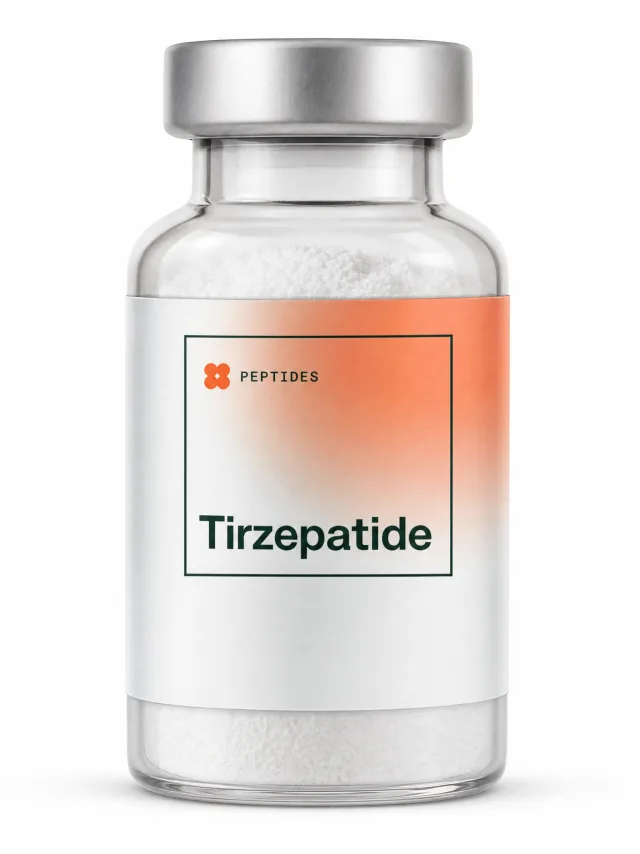
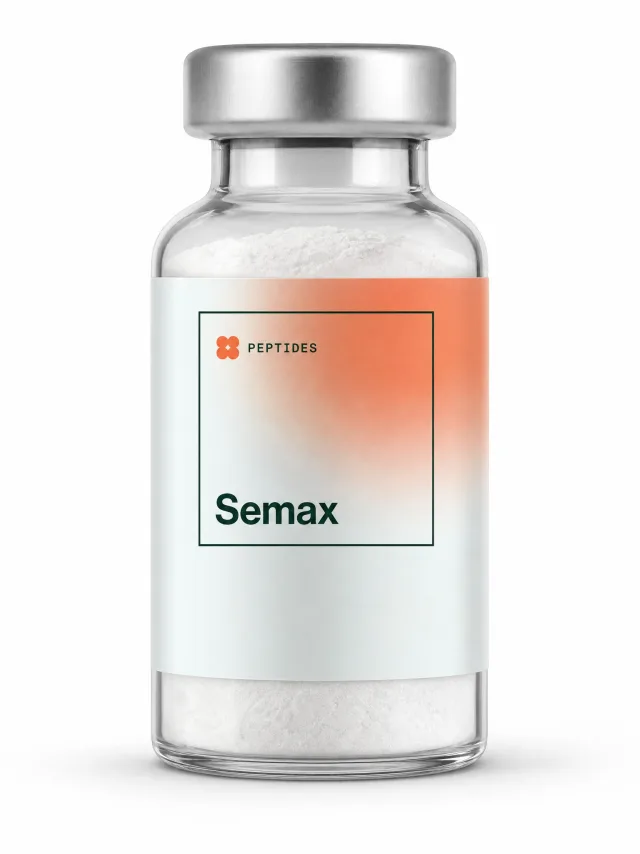
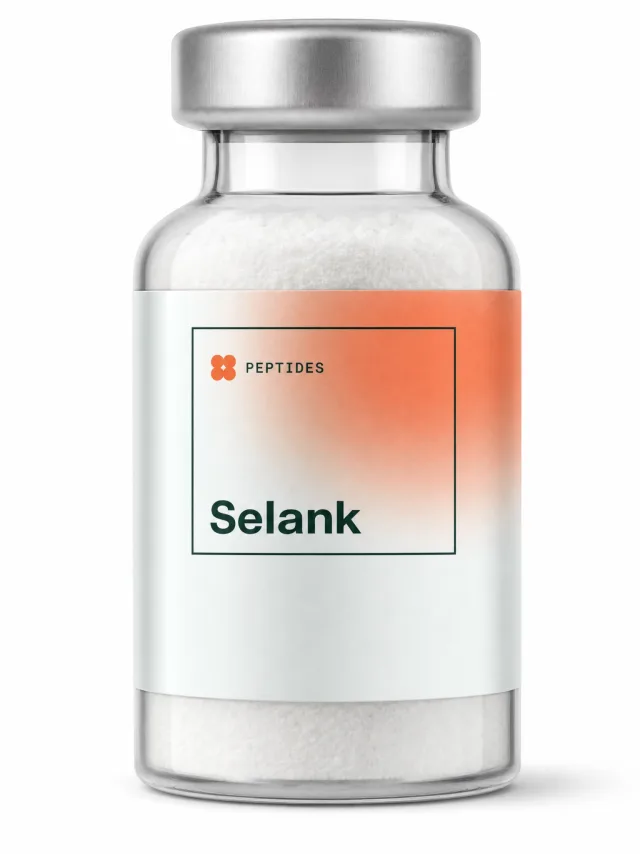
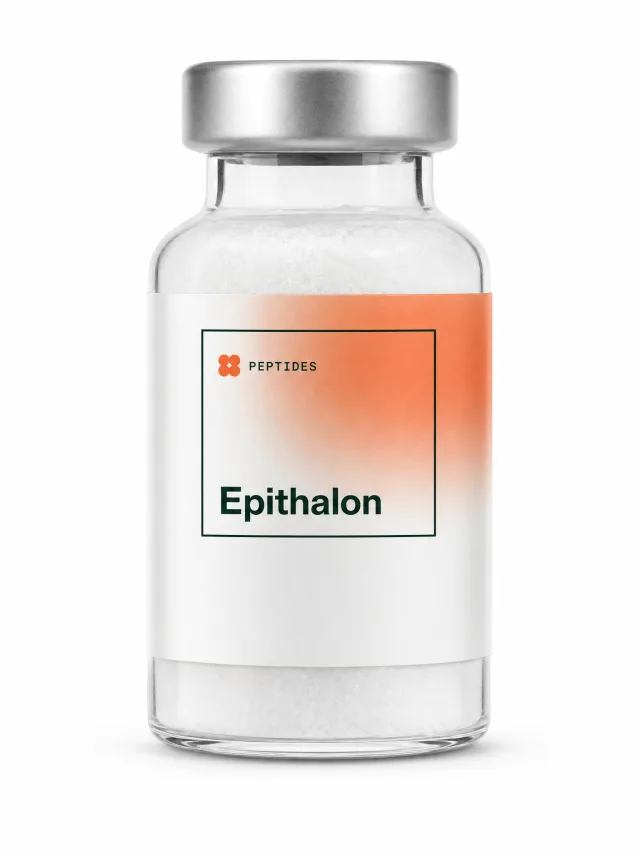
The rosters overlap heavily, which is why compound count is a weak basis for choosing between these reports. Both cover the same well-known compounds because the same compounds are what people search for.
Which one fits
Can I use my 23andMe data for a peptide report?
Yes with both companies. What each says about its own upload path differs sharply. SelfDecode accepts uploaded files, and their upload page carries this line: "Uploaded DNA files do not include all SelfDecode features and reports due to third-party DNA analysis being incomplete, less accurate, not validated and not accurately optimized using the SelfDecode advanced imputation method and lab processing" 10. That is their own wording, quoted from their upload page. The package was listed at $319 on 26 September 2026 10.
At PeptidesDNA the uploaded file is the entire product, because we do not sell a DNA test and there is no in-house version of your data for an upload to be a degraded copy of. That design has a real cost. If you hold no genetic data at all, we send you to a third-party testing partner, on a referral we are paid for, and you wait for it. What you can and cannot do with a 23andMe file covers which formats work, which chip versions carry which markers, and where a file goes quiet.
Does a DNA test tell you which peptides to take?
No. A peptide DNA report narrows a long list and puts it in an order. It does not decide anything. A PubMed search for outcome validation of peptide genetic reports returned nothing as of 26 September 2026, so no report currently on sale has been tested against what people experience on a peptide. Neither SelfDecode nor PeptidesDNA has published such a test. Any report that implies otherwise is claiming something the field cannot yet support.
What a report can honestly give you is a shorter reading list with a stated reason for the order. Where you go from there is a decision framework plus a clinician who knows your history: how to choose between compounds when the evidence is thin walks that decision, and how to read peptide bloodwork covers the questions a lab test can answer and genetics cannot. If the compound names on this page are new to you, start with what peptides are before you spend anything, and if you came here with one goal in mind, injury recovery or weight loss, those pages are a shorter way in than a DNA report. Published research protocols describe what a study administered and for how long, which is a fact about that study rather than an instruction for anyone reading it.
What to check before buying any peptide DNA report
This list works against any vendor in this category, including us. Ask them before you pay.
| Ask the vendor | A good answer looks like | Red flag |
|---|---|---|
| How many markers does the report read, and is the number published? | A stated figure you can check. Ours is a 144-marker panel plus 8 pharmacogenes | No count published anywhere on the site |
| Does it tell you which markers your file could not read? | Missing calls are disclosed and excluded from the score | Gaps are filled silently and never mentioned |
| Is every association labelled by evidence strength? | A named tier on each result, with the tiers explained | Every result presented at the same apparent confidence |
| Does it claim to predict your response to a compound? | It states plainly that it cannot, and why | Prediction or optimisation language anywhere in the marketing |
| Does it give you a CYP2D6, CYP3A4, CYP1A2 or CYP2E1 result from an uploaded file? | It explains that a consumer array cannot resolve those genes 3 | It hands you a metabolizer status for them |
| Has anyone tested whether the report matches real outcomes? | An honest no | An implied yes with no citation attached |
| Can you download and keep the result without paying again? | A file you own outright | Access tied to a live account or a recurring payment |
| Can you delete your genetic data, and can you verify it happened? | A deletion you can trigger yourself and confirm | Buried in support tickets, or absent |
| Whose ancestry was the underlying research done in? | Stated, with the limitation named 5 | Silent on it |
The one thing worth keeping
A third product in this category works differently again. Our PlexusDx comparison puts it in one line: "PlexusDx covers more compounds and adds bloodwork. PeptidesDNA reads more markers per compound and works from data you already have." Read it there rather than here. And if you have decided a report is not what you want at all, our vendor comparison is where to look at who sells these compounds.
Twenty-nine gene and drug dosing guidelines exist in clinical pharmacogenomics and none of them is about a peptide 1. Every peptide DNA report sold today, ours included, rests on published association research that no standards body has graded. For $99 that buys you a structured reading list with the uncertainty labelled on it. It is not a prescription, and no ranking inside it is a decision.
Upload the raw DNA data you already have and get all 39 peptides ranked, each with the evidence tier and the markers behind it spelled out.
Get your DNA report- No peptide has a pharmacogenomic dosing guideline, from any body, anywhere
CPIC, the group that grades gene and drug pairs and publishes what a clinician should do about them, had 29 guidelines in September 2026 and not one of them covers a peptide. So when a report ranks BPC-157 or GHK-Cu for you, it is not doing the thing pharmacogenomics does for clopidogrel or warfarin; it is reporting published associations that nobody has graded. That matters because of what it hides: a score built on an empty evidence layer looks identical to one built on a full one, so you cannot tell the strong lines from the speculative ones unless the vendor labels them.
Sources13
- Clinical Pharmacogenetics Implementation Consortium. CPIC Guidelines (full guideline list; 29 entries returned by api.cpicpgx.org/v1/guideline when queried September 2026)
- Relling MV, Klein TE. CPIC: Clinical Pharmacogenetics Implementation Consortium of the Pharmacogenomics Research Network. Clinical Pharmacology & Therapeutics, 2011
- Nofziger C, Turner AJ, Sangkuhl K, et al. PharmVar GeneFocus: CYP2D6. Clinical Pharmacology & Therapeutics, 2020
- Tandy-Connor S, Guiltinan J, Krempely K, et al. False-positive results released by direct-to-consumer genetic tests highlight the importance of clinical confirmation testing for appropriate patient care. Genetics in Medicine, 2018
- Martin AR, Kanai M, Kamatani Y, Okada Y, Neale BM, Daly MJ. Clinical use of current polygenic risk scores may exacerbate health disparities. Nature Genetics, 2019
- Vasireddi N, Hahamyan H, Salata MJ, Karns M, Calcei JG, Voos JE, Apostolakos JM. Emerging Use of BPC-157 in Orthopaedic Sports Medicine: A Systematic Review. HSS Journal, 2025
- Phan A, Carette C, Narjoz C, et al. A GLP1R gene variant and sex influence the response to semaglutide treatment in patients with severe obesity. Obesity, 2025
- SelfDecode. Peptide Response DNA Report, shop listing (page product data showing $99 against a $199 list price, and named compounds; retrieved 26 September 2026)
- SelfDecode. Response to Peptides product page (named compounds, category headings, "View All 1500+ Reports" navigation label, bundle pricing; retrieved 26 September 2026)
- SelfDecode. Upload DNA File page (third-party upload disclaimer and upload pricing; retrieved 26 September 2026)
- US Food and Drug Administration. Certain Bulk Drug Substances for Use in Compounding that May Present Significant Safety Risks (Category 2 list; content current as of 22 April 2026, retrieved 26 September 2026)
- Candido R, Toffoli B, Baccichetto G, et al. Influence of GLP1 receptor rs6923761 and rs761387 genetic variants on oral semaglutide response in patients with type 2 diabetes. Acta Diabetologica, 2026
- World Anti-Doping Agency. The Prohibited List (classes S2 peptide hormones and growth factors, and S4 hormone and metabolic modulators; retrieved 26 September 2026)
This article is for informational and educational purposes only. It is not medical advice and does not diagnose, treat, cure, or prevent any disease. Consult a qualified healthcare professional before starting any peptide protocol. Individual results vary. Some outbound links are affiliate links, at no extra cost to you.

Frequently asked questions
Is the SelfDecode peptide report worth it?
Yes, if peptides are one of several things you want from a genetics purchase. No, if peptides are the only reason you are buying, because their public pages publish no peptide total, no marker count and no evidence grading, so you cannot tell from outside how much sits behind each score. On 26 September 2026 their shop page carried a $99 price against a $199 list price in the page's own product data, with no subscription or membership mentioned, so the $418 yearly subscription figure that an earlier version of this page carried was wrong. We did not have platform access, so we cannot speak to what a logged-in customer sees.
Are peptide DNA test reports worth buying at all?
As a reading list with the uncertainty labelled, yes, for around $99. As a way to find out which peptide will work for you, no, and not from any vendor. Clinical pharmacogenomics has 29 published dosing guidelines and not one covers a peptide, so every report on the market is ranking published associations that no standards body has graded. If you buy one, run the pre-purchase checklist on this page against it first, and take the result to a clinician rather than acting on the ranking.
Are peptide DNA tests accurate?
Accuracy has two separate parts and only the first is measurable. Reading the genome works well for common variants in well-studied ancestries, though a clinical laboratory found 40 percent of variants consumers pulled from raw direct-to-consumer data were false positives on confirmation testing, with 94 percent of those in cancer-related genes. Genetic scores built in European-ancestry cohorts also transfer poorly to other ancestries. The second part is whether any published human study links a gene to a response for the specific compound, and for most peptides no such study exists. No peptide DNA report on the market has been tested against what people experience on a peptide.
How many peptides does SelfDecode cover?
SelfDecode does not publish a total on their public pages. Their Response to Peptides page names about 36 compounds across six categories, and their shop listing names 16, as of 26 September 2026. The figure of roughly 43 peptides, which an earlier version of this page used, does not appear anywhere on their site. For reference, a PeptidesDNA report scores 39 peptides, and a separate and larger set of 46 is documented in our reference library.
Do you lose access to your SelfDecode peptide report if you cancel?
Their shop page for the Response to Peptides report describes it as a one-time purchase and mentions no subscription or membership requirement anywhere on the listing, as of 26 September 2026. An earlier version of this page claimed cancelling a subscription cost you access to the peptide report, and that claim is not supported by what their product page shows today. Check their current terms before buying, since this is the kind of detail that changes.
This article is for informational and educational purposes only. It is not medical advice and does not diagnose, treat, cure, or prevent any disease. Consult a qualified healthcare professional before starting any peptide protocol. Individual results vary. Some outbound links are affiliate links, at no extra cost to you.