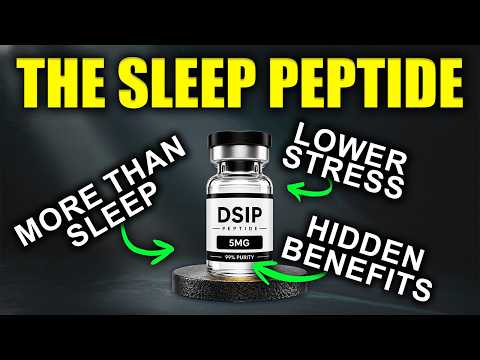
DSIP Peptide: Revolutionizing Sleep, Stress, and Pain Management in Clinical Practice
A short clinician-oriented training talk in which Dr. Adam Sewell walks through DSIP's proposed mechanisms, uses, dosing, monitoring and three case examples.
With Dr. Adam Sewell (MD)
Key moments
Tap a moment to play the video from there.
- 0:00Overview and what DSIP isSewell outlines the session and introduces DSIP as a neuropeptide discovered in the 1970s. He notes it is not FDA approved but is used in integrative and functional medicine.
- 1:12Proposed mechanisms of actionHe describes DSIP acting on the central nervous system and hypothalamus. The effects he lists are sleep, cortisol, pain modulation, neuroprotection and hormone release.
- 2:11Conditions DSIP is used forSewell lists sleep disorders, chronic stress and fatigue, pain conditions, recovery and mood problems linked to poor sleep.
- 2:49Claimed benefits and listed risksHe names improved sleep, lower cortisol, pain tolerance and hormonal regulation as potential benefits. He describes the risks as mild, with limited long-term human data.
- 3:36Alternatives he namesHe compares options by goal, including melatonin, ashwagandha, low-dose naltrexone and BPC-157.
- 4:04Dosage protocols by goalSewell gives subcutaneous dose ranges and durations for sleep, stress or fatigue, and pain or recovery. He says treatment should be individualized.
- 4:52Baseline and ongoing lab testingHe recommends a metabolic panel, cortisol levels and condition-specific tests. He also recommends tracking sleep with logs or devices.
- 5:30Three clinical case examplesHe presents a shift worker with insomnia, a woman with elevated evening cortisol and a woman with fibromyalgia. He reports improvement in each.
- 7:06Conclusion and course promotionSewell calls DSIP an adjunct to lifestyle measures and promotes a free peptide certification course.
What the video says
Dr. Adam Sewell, an MD who makes educational content for practitioners, presents a compact training session on delta sleep inducing peptide (DSIP). He describes it as a naturally occurring neuropeptide first discovered in the 1970s and named for its link to deep, delta wave sleep. He notes that it is not FDA approved, and says it is widely used in integrative and functional medicine practices.
Sewell then lists the mechanisms he attributes to DSIP. These are effects on sleep regulation, on the hypothalamic-pituitary-adrenal axis and cortisol, on opioid receptors and endorphin release, on oxidative stress in the brain, and on hormones such as luteinizing hormone and growth hormone. He goes through the uses he says it has been explored for: insomnia and shift work sleep problems, chronic stress and fatigue, pain conditions including fibromyalgia, recovery after exertion or surgery, and mood problems tied to poor sleep. He lists possible benefits, then risks he calls generally mild, such as headache, dizziness, grogginess and rare allergic reactions. He also says long-term human data are limited. For alternatives he names melatonin, valerian root, cognitive behavioral therapy for insomnia, ashwagandha, phosphatidylserine, low-dose naltrexone, physical therapy, growth hormone-releasing peptides and BPC-157.
The practical middle section covers dosing and monitoring as Sewell presents them. He gives subcutaneous injection ranges of 100 to 200 micrograms before bed for sleep, 100 to 300 micrograms in the evening for stress or fatigue, and 200 to 500 micrograms daily for pain or recovery, with durations of several weeks. He recommends baseline tests such as a metabolic panel and cortisol levels, plus inflammatory markers for pain patients, and ongoing tracking of sleep.
He closes with three composite patient examples, a shift-working nurse with insomnia, a woman with high evening cortisol and a woman with fibromyalgia, each described as improving. He calls DSIP an adjunct rather than a replacement for lifestyle measures. The video ends with a promotion for his free peptide certification course.
On each compound
DSIP0:30
Sewell presents DSIP as a neuropeptide linked to delta wave sleep, cortisol, pain and hormone regulation. He gives subcutaneous dose ranges from 100 to 500 micrograms depending on goal, and says it is generally well tolerated with limited long-term human data.
See how your DNA reads DSIP“it is not a replacement for foundational lifestyle interventions”
What this video doesn’t settle
- No trials, citations or data sources are shown for the claimed mechanisms or benefits, so the evidence behind them is not established here.
- The three case studies are brief single patient accounts with no control group, so they cannot show that DSIP caused the reported changes.
- Sewell says long-term human data are limited, and the video does not give outcomes or safety figures beyond a few weeks of use.
Questions this video answers
What does DSIP do according to Dr. Adam Sewell?
Sewell says DSIP acts on the central nervous system and hypothalamus. He attributes effects on delta wave sleep, cortisol, pain sensitivity, neuroprotection, and the release of luteinizing hormone and growth hormone.
What DSIP doses does the video describe?
Sewell describes 100 to 200 micrograms injected subcutaneously 30 minutes before bed for sleep, and 100 to 300 micrograms once daily in the evening for stress or fatigue. For chronic pain or recovery he gives 200 to 500 micrograms daily for 4 to 6 weeks. These are his stated protocols, not advice.
What side effects of DSIP does Sewell mention?
He lists mild headaches or dizziness, temporary grogginess or fatigue after administration, and rare allergic reactions. He also says there are hypothetical risks because long-term human studies are limited.
Is DSIP FDA approved?
Sewell says DSIP is not FDA approved. He adds that it is widely used in integrative and functional medicine practices.
What lab tests does the video suggest around DSIP use?
Sewell suggests a comprehensive metabolic panel, morning and evening cortisol, and sleep studies where applicable. He adds four-point salivary cortisol for stress and CRP and ESR for chronic pain, with ongoing sleep tracking.
Video by Dr. Adam Sewell, M.D. | Medical Entrepreneur on YouTube, embedded as published. The summary is written by PeptidesDNA from the video; every claim in it is the speaker’s. Not affiliated with or endorsed by the creator. Not medical advice.