How To Take Dihexa
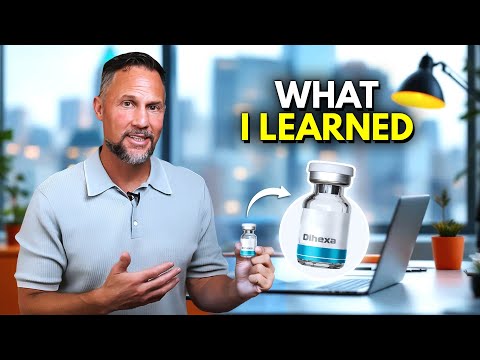
A short practitioner talk on how Regan Archibald uses dihexa, covering oral and topical use, his dosing and cycling approach, and one client case study.
Key moments
Tap a moment to play the video from there.
- 0:00Routes of use and what's coveredArchibald says dihexa can be taken orally or applied topically, and previews dosing, client stories and when to avoid it.
- 0:39Claimed mechanism and effectsHe says dihexa works on the angiotensin IV pathway, promotes neurogenesis and raises electrical activity seen on brain scans. He describes his own experience as waking things up without stimulation.
- 1:35Reasons people use dihexaHe lists memory lapses and the desire to keep cognitive sharpness as reasons. He notes it has been studied in Alzheimer's and Parkinson's but is not FDA approved for either.
- 2:45Oral capsule dosingHe suggests starting near 10 milligrams, with 20 milligrams typical and up to 30 for neurological issues. He prefers morning dosing before food.
- 4:22Morning routine and supportsHe pairs dihexa with early sunlight, exercise, methylene blue and hydration, and says omega-3s, berries and protein help. He calls sleep and nutrition the foundation.
- 5:37Cycling and a client storyHe argues oral use should be cycled, proposes a 10 then 20 milligram ramp for about 8 weeks, and describes a busy client whose recovery time dropped.
- 7:41Topical use and rotating optionsHe mentions Noopept with Alpha-GPC as something to rotate to, then covers applying dihexa to the carotid artery, wrist or inner thighs.
- 8:14Case study: post-COVID brain fogHe describes a 48-year-old executive with poor sleep and memory problems who used dihexa plus other supports. He reports gains in memory, sleep and mental endurance after 8 weeks.
What the video says
Regan Archibald, who presents alone, explains how he approaches dihexa in practice. He opens by saying it can be taken orally, which he calls the most common route, or applied topically over the carotid artery. He says the video will cover dosing, a couple of client experiences, and when not to use it. He describes dihexa as acting on the angiotensin IV pathway and says it promotes neurogenesis and better synaptic energy. He says brain scans have shown more electrical activity, and that for him it wakes things up without feeling stimulating.
On dosing, Archibald says oral capsules are generally well tolerated and that he has not seen dihexa compounded as an injection. He suggests starting at about 10 milligrams, since starting higher has led to reports of lightheadedness. He says 20 milligrams is usually the right dose, up to 30 for people with neurological issues, and that he has seen some patients go past 40 milligrams for two days a week. He prefers mornings, no later than 2 PM, and takes it before food. He pairs it with sunlight, exercise, hydration, methylene blue, omega-3s, berries and protein, and he says dihexa gives an edge only once sleep, nutrition and hydration are in place.
Archibald says oral use should be cycled because working the same pathway repeatedly reduces the effect. His outline is 10 milligrams once a week for one to two weeks, then 20 milligrams, used for about 8 weeks, before rotating to something like Noopept with Alpha-GPC. For topical use he mentions the carotid artery, wrist or inner thighs, a slight medicinal smell, and letting it dry.
He shares two stories. One is a well-known client who runs long workshops and, he says, cut his recovery time from 3 days back to 1. The other is a 48-year-old tech executive with post-COVID brain fog, poor sleep and sleep apnea, who used dihexa alongside several other supports. Archibald reports better short-term memory and sleep after 8 weeks, and says dihexa seemed to move the needle most. He ends by pointing viewers to his other video on how it is best used.
On each compound
Dihexa0:39
Archibald says dihexa acts on the angiotensin IV pathway and promotes neurogenesis. He describes oral dosing of 10 to 20 milligrams cycled for about 8 weeks, plus topical use, and attributes memory, focus and recovery benefits to it in his clients.
See how your DNA reads Dihexa“Peptides are like push-starting a car.”
What this video doesn’t settle
- The mechanism and brain scan claims are stated without any cited study or data.
- Archibald says dihexa has been studied in Alzheimer's and Parkinson's but gives no details on those studies or their results.
- The case study combined dihexa with several other peptides, supplements, sleep treatment and lifestyle changes, so the video cannot show dihexa caused the improvements.
Questions this video answers
What dose of dihexa does Regan Archibald suggest?
He suggests starting at about 10 milligrams orally, since higher starts led to reports of lightheadedness, and says 20 milligrams is generally right for most people. He says up to 30 milligrams for neurological issues and describes some patients going beyond 40 milligrams for two days a week. These are his observations, not a prescription.
When should you take dihexa according to this video?
Archibald says morning is ideal and as late as 2 PM is fine, and he avoids taking it before bed. He takes it before food because he feels more benefit that way, but says it can be taken with or without food.
How long should you cycle dihexa?
Archibald believes oral dihexa should be cycled so the same pathway is not worked constantly. He suggests 10 milligrams once a week for one to two weeks, then 20 milligrams, used for about 8 weeks before switching to something like Noopept.
Can dihexa be applied topically?
Archibald says yes, and names the carotid artery, wrist or inner thighs as places to apply it. He notes a slight medicinal odor and advises letting it dry so clothing does not absorb it.
What did the dihexa case study in this video involve?
Archibald describes a 48-year-old man with post-COVID brain fog, poor sleep and sleep apnea. He was started on dihexa at 10 milligrams, then 20, alongside other supports, and Archibald reports better memory and sleep after 8 weeks.
Video by Regan Archibald on YouTube, embedded as published. The summary is written by PeptidesDNA from the video; every claim in it is the speaker’s. Not affiliated with or endorsed by the creator. Not medical advice.