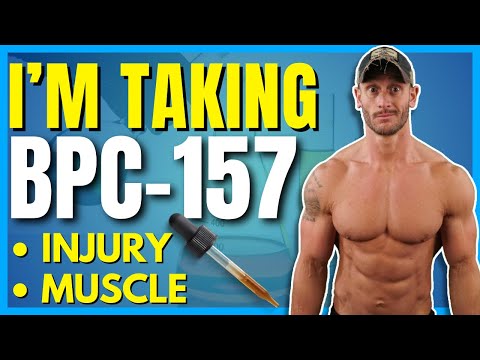
What Science ACTUALLY Says About BPC 157 Benefits
A seven-minute physician explainer on BPC-157 that covers the claimed benefits, the thin human evidence, safety and legality concerns, and why the host does not recommend it.
Key moments
Tap a moment to play the video from there.
- 0:00Framing the BPC-157 questionPeng introduces the promise of faster recovery, less pain and better function, and says he will cover the science, claimed benefits and his recommendation.
- 0:33What BPC-157 isHe describes it as a synthetic peptide based on a protein in stomach acid and explains the name and sequence number.
- 1:01Claimed healing mechanismsPeng lists preclinical findings on tendon, ligament and muscle repair, scarring, inflammation, blood vessel growth, growth factors and nitric oxide.
- 2:33Muscle loss and nerve protectionHe mentions possible effects against muscle atrophy and on nerve injury, then restates that the evidence is preclinical.
- 3:03Human evidence is almost absentPeng says he found no randomized trials and only one small retrospective study of 16 people, with 11 of 12 injected patients reporting knee pain relief.
- 4:05Safety is unconfirmed in humansHe says preclinical work has not shown clear toxicity, but human safety evidence is lacking, which he finds concerning given the signaling pathways involved.
- 4:35Sourcing and approval statusPeng notes it is not FDA approved, is sold online for research use only, and that supplement vendors often have quality and labeling problems.
- 5:06Anti-doping agency positionsHe cites WADA's prohibition and quotes USADA on the lack of a known safe dose and the unproven nature of bone and joint claims.
- 6:31Recommendation and alternativesPeng says he does not recommend BPC-157 for now, hopes for future studies, and points to other supplements he says have randomized trial support for joint pain.
What the video says
Jeffrey Peng, a physician who runs a health video channel, uses this short solo talk to ask whether BPC-157 lives up to its marketing. He describes it as a synthetic peptide derived from a protein in stomach acid, with the name standing for body protecting compound and the number referring to its sequence.
Peng first lays out what the preclinical research is said to show. He says the compound appears to support repair in muscle, tendon and ligament by increasing fibroblast activity, and that it may reduce scarring in injured muscle. He also describes anti-inflammatory effects, new blood vessel formation, influence on growth factors such as VEGF and FGF, interaction with the nitric oxide system, and possible protection against muscle loss and nerve damage. He stresses that these findings come from preclinical work.
The middle of the talk is about the human evidence. Peng says he found no randomized controlled trials in people. The one human study he located was a small retrospective report of 16 participants, in which 11 of 12 people who received knee injections reported less pain. He points out that many of them had sprains or tendon problems that often improve over time, so the result cannot be attributed to the peptide. He also cautions that marketing leans on personal success stories.
Peng then turns to safety and access. He says preclinical studies have not shown clear toxicity, but safety in humans has not been established. He notes the compound is not FDA approved, is mostly sold online as research or lab use only, and that supplement vendors often have quality and labeling problems. He adds that the World Anti-Doping Agency prohibits it and quotes the United States Anti-Doping Agency as saying no one knows whether a safe dose exists.
His conclusion is that he does not recommend BPC-157 because too much is unknown. He says he would like to see future studies, and he closes by pointing viewers to other supplements he says have randomized trial support for joint pain.
On each compound
BPC-1570:33
Peng calls it a synthetic peptide derived from a protein in stomach acid and summarizes preclinical findings on tissue repair, inflammation and blood flow. He says human evidence is limited to one small retrospective study, that safety in people is unestablished, and that he does not recommend it.
See how your DNA reads BPC-157“there are currently zero randomized control trials studying bpc 157 in humans”
What this video doesn’t settle
- The video does not establish whether BPC-157 works in people, since Peng says no randomized trials exist.
- The single human study Peng cites is small and retrospective, with no control group, so the knee pain results cannot be separated from natural recovery.
- The talk does not establish whether BPC-157 is safe in humans, and Peng says no one knows if a safe dose exists.
Questions this video answers
What does Jeffrey Peng say about BPC-157 human studies?
Peng says he found no randomized controlled trials of BPC-157 in humans. The only human study he located was a retrospective study of 16 people, where 11 of 12 given knee injections reported less pain, but he says many had conditions that often improve on their own.
Does the video say BPC-157 is safe?
Peng says preclinical studies have not shown clear toxicity or side effects. He argues the key problem is that safety has not been confirmed in humans, and he cites USADA as saying no one knows whether a safe dose exists.
Is BPC-157 legal or approved, according to this video?
Peng says it is not FDA approved for clinical use and that online vendors typically sell it for research or laboratory use only. He quotes USADA as saying there is no legal basis for selling it as a drug, food or dietary supplement, and notes WADA lists it as prohibited.
What benefits of BPC-157 are claimed in preclinical research?
Peng describes preclinical findings of faster repair in muscle, tendon and ligament, less scarring, reduced inflammation, new blood vessel formation and effects on growth factors. He adds that all of this comes from preclinical work rather than human trials.
Does Jeffrey Peng recommend BPC-157?
No. Peng says he currently does not recommend it because too much is unknown and the risk is unnecessary. He says he is interested in future studies and mentions other supplements with randomized trial support for joint pain.
Video by Jeffrey Peng MD on YouTube, embedded as published. The summary is written by PeptidesDNA from the video; every claim in it is the speaker’s. Not affiliated with or endorsed by the creator. Not medical advice.