

- MOTS-c is encoded in your mitochondrial DNA, not your nuclear genome, making it one of the only signaling peptides with a purely mitochondrial origin.
- Circulating MOTS-c drops measurably with each decade of aging and collapses in type 2 diabetes, based on a 2024 meta-analysis pooling seven human studies.
- Elite endurance athletes have lower circulating MOTS-c than moderate exercisers, suggesting the body adapts and downregulates production when training load is chronically high.
- A 27,527-person genetics study found one variant (K14Q) that breaks MOTS-c function and raises type 2 diabetes risk 65% in sedentary men. Regular exercise erases that risk entirely.
- The only human interventional data comes from CB4211, a synthetic MOTS-c analog, which showed liver enzyme reduction and glucose improvement at 4 weeks with no serious adverse events.
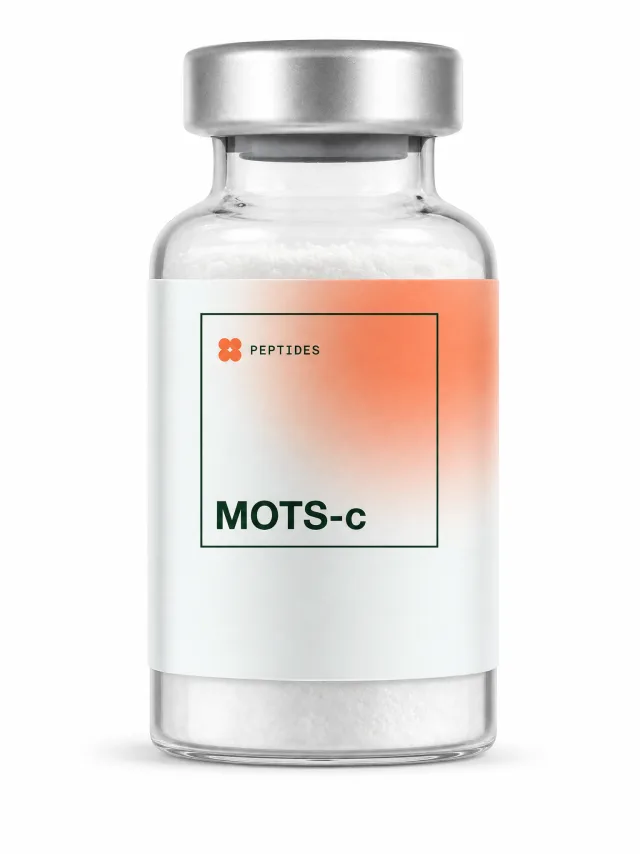
MOTS-c is encoded not in your nuclear DNA but in your mitochondrial genome, making it one of the only known signaling peptides with a purely mitochondrial origin. Every decade after 30, circulating MOTS-c drops. People with type 2 diabetes have significantly lower levels than healthy controls. And here is the part that almost every summary article buries: elite endurance athletes, the people who train the hardest, often have less circulating MOTS-c than moderate exercisers.
MOTS-c rises 11.9-fold in skeletal muscle during acute exercise, making it one of the most exercise-responsive peptides identified in human biology. It then drops back toward baseline between sessions. This is why elite athletes who train chronically hard can show lower resting MOTS-c than recreational exercisers.
The peptide was first identified in 2015 by researcher Pinchas Cohen at USC, who found it was released from muscle during exercise and drove insulin sensitivity by flipping AMPK, the switch a cell uses to sense that it is running low on fuel. What made it unusual was its source. Mitochondrial DNA is ancient, highly conserved, and encodes almost nothing other than the machinery to produce ATP. MOTS-c was an unexpected signal hiding in the most ancient part of your genome.
A 2025 study published in Free Radical Biology and Medicine (Ishida et al.) confirmed in both human marathon runners and mouse models that long-term endurance training raises skeletal muscle and serum MOTS-c while improving how much energy the mitochondria could produce, through AMPK and PGC-1 alpha, the switch that tells a cell to build more mitochondria. That same year, Kong et al. in Experimental and Molecular Medicine (Nature portfolio) found MOTS-c treatment made the insulin-producing cells of the pancreas age more slowly across three mouse models, alongside confirmation that circulating MOTS-c is lower in human type 2 diabetes patients versus healthy controls.
Think of MOTS-c as your mitochondria's way of texting the rest of your body: "We are working hard right now, route glucose here, not to fat storage." When mitochondria age or get damaged, those texts stop going out. Blood sugar management gets harder. Fat accumulates. Exogenous MOTS-c is an attempt to restore that signal when your mitochondria can no longer send it consistently.
How does MOTS-c compare to other mitochondrial peptides?
There are now roughly a dozen identified mitochondria-derived peptides, but only two have meaningful research behind them: MOTS-c and SS-31 (elamipretide). They are complementary, not competitive. SS-31 works on the inner membrane of the mitochondrion, where it cuts the energy that leaks out as damage, and it has completed Phase 2 and Phase 3 human trials for heart failure and age-related macular degeneration. MOTS-c acts more systemically, circulates in blood, and drives metabolic and anti-aging signaling at the whole-body level.
The clinical evidence base for SS-31 is deeper. The consumer interest in MOTS-c is broader, because its effects map onto outcomes most people actually want: better insulin sensitivity, more energy, and slower cellular aging. They are not interchangeable, and they are not redundant.
MOTS-c
A metabolic hormone that circulates. Improves insulin sensitivity and slows cellular ageing. Rises with moderate exercise. Produced in skeletal muscle and mitochondria. Circulating levels decline measurably with age and collapse in type 2 diabetes. No completed human trial of the natural peptide.
SS-31 (Elamipretide)
Works on the inner membrane of the mitochondrion to reduce oxidative damage and stop energy leaking away. Has completed Phase 2 and Phase 3 human trials for heart failure and macular degeneration. Narrow clinical indication with minimal consumer-facing data or interest.
If you are considering a mitochondrial stack, SS-31 has the superior clinical pedigree. MOTS-c has the broader metabolic mechanism and more directly addresses age-related decline in whole-body metabolic signaling. If your goals are metabolic (insulin sensitivity, visceral fat, energy) rather than cardiac or retinal, MOTS-c is the more relevant target.
What actually happens to your MOTS-c levels as you get older?
A 2024 meta-analysis published in Diabetology and Metabolic Syndrome pooled seven human studies covering approximately 650 participants and found MOTS-c levels were significantly lower in people with type 2 diabetes than in healthy controls (a standardised mean difference of -0.89, which is a large gap by the usual conventions). The pattern is not linear. In obesity without diabetes, MOTS-c is actually elevated above normal, suggesting the body is attempting to compensate. As diabetes develops and mitochondrial function deteriorates, the signal eventually collapses.
"MOTS-c levels showed a biphasic pattern: elevated in early metabolic dysfunction as a compensatory response, then significantly reduced as type 2 diabetes develops. This progressive collapse in circulating MOTS-c may contribute to the worsening of insulin resistance over time."
Meta-analysis, Diabetology and Metabolic Syndrome, 2024 (7 human studies, approximately 650 participants)
Cross-sectional data across three age groups (ages 18 to 30, 45 to 55, and 70 to 81) confirms plasma MOTS-c drops across each decade. Skeletal muscle MOTS-c expression is about 1.5-fold higher in older men than in young men, suggesting the muscle is still making it. The problem is that the peptide stops entering circulation effectively in older adults. Your muscle is still producing the signal. It just cannot get it out.
The size of the gap in MOTS-c between people with type 2 diabetes and healthy controls across a seven-study human meta-analysis, in standardised units, where anything past 0.8 counts as large. Even in non-diabetic adults, plasma levels drop measurably with each decade of aging starting around age 30.
The one genetic variant that changes your entire MOTS-c picture
In 2021, a study published in Nature Aging analyzed the MOTS-c gene sequence in 27,527 Japanese adults. Researchers identified a variant called K14Q, where a single amino acid substitution breaks the peptide's insulin-sensitizing function. In sedentary men carrying this variant, the risk of type 2 diabetes was 65% higher than in men with the functional version. That is a large signal for a single mitochondrial gene variant.
The K14Q variant study enrolled 27,527 people, the largest MOTS-c genetics cohort to date. Key finding: in men who exercised regularly, the entire 65% elevated diabetes risk from the broken MOTS-c variant disappeared completely.
The exercise rescue is what makes this remarkable. Carrying K14Q does not condemn you to metabolic disease if you move consistently. The broken peptide's job gets covered by parallel pathways (AMPK, PGC-1 alpha) that exercise independently activates. If you carry this variant and are sedentary, the risk is real. If you exercise, the risk vanishes. Exercise does not fix the broken peptide. It routes around it.
The broader genetic picture involves PGC-1 alpha variants, which regulate how strongly your cells respond to MOTS-c signaling. People with reduced PGC-1 alpha activity get a blunted response to both exercise and any exogenous MOTS-c. The DNA-first framework for peptide selection covers how to use PGC-1 alpha results alongside your metabolic markers to decide whether MOTS-c is likely to produce a measurable effect for you specifically.
For context on how mitochondrial haplogroup data fits into a full genetic panel, the guide to using your 23andMe data for peptide decisions explains what the K14Q variant looks like in raw export files and why standard consumer panels often miss mitochondrial variants entirely.
What does the evidence base actually support right now?
All interventional dosing data for native MOTS-c comes from animal studies. Published ranges run from 0.5 to 15 mg/kg per day, given under the skin or into the abdominal cavity. At 0.5 to 5 mg/kg for 8 to 12 weeks, mice show improved insulin sensitivity, less fat in the liver, and better physical performance. At higher doses (10 to 15 mg/kg) over 2 to 4 weeks, heart mitochondria recover in diabetic rodents, including a reversal of the heart-wall thickening that diabetes causes in a 2025 Frontiers in Physiology study.
The only human interventional data comes from CB4211, a synthetic MOTS-c analog developed by CohBar. A Phase 1a/1b double-blind, placebo-controlled trial in 65 healthy volunteers tested 25 mg subcutaneous daily for four weeks. Results: well tolerated, no serious adverse events, injection-site reactions the most common side effect. Exploratory endpoints showed significant falls in the liver enzymes ALT and AST, which is the standard blood signal that a liver is under less strain, along with lower fasting glucose, and a trend toward weight reduction. A Phase 2a trial (NCT07505745) testing native MOTS-c in approximately 120 prediabetic adults over 12 weeks is currently underway.
| Evidence source | Type | Key finding | Confidence level |
|---|---|---|---|
| 7-study meta-analysis, Diabetology and Metabolic Syndrome, 2024 | Human observational | MOTS-c significantly lower in type 2 diabetes; elevated in early obesity as compensation | Moderate (observational) |
| Marathon runner study, Free Radical Biology and Medicine, 2025 | Human observational | Trained athletes have higher MOTS-c than sedentary controls; peaks with moderate training | Moderate (observational) |
| CB4211 Phase 1, CohBar | Human interventional (analog) | Safe at 25 mg/day; liver enzyme reduction and glucose improvement at 4 weeks | Low-moderate (Phase 1, analog only) |
| Islet senescence study, Experimental and Molecular Medicine, 2025 | Animal (3 mouse models) | Insulin-producing cells aged more slowly; glucose handling improved across all three models | Preclinical |
| Cardiac study, Frontiers in Physiology, 2025 | Animal (diabetic rats) | Reversed thickening of the heart wall; restored mitochondrial oxygen use in diabetic hearts | Preclinical |
| K14Q cohort study, Nature Aging, 2021 | Human genetic (n=27,527) | Broken MOTS-c raises type 2 diabetes risk 65%; regular exercise eliminates it completely | Strong (large genetic cohort) |
This evidence profile is stronger than most research chemicals but weaker than approved therapies. The observational human data is consistent and reinforced by multiple independent groups. The causal proof in humans requires the ongoing Phase 2a results. For calibrating those expectations against a peptide with a comparable evidence timeline, the epithalon research review covers a similar situation where 30 years of data preceded the first independent Western replication.
Is MOTS-c legal to use right now?
MOTS-c is not FDA-approved and not DEA-scheduled (it is not a controlled substance). Since September 2023, it has been on the FDA's Category 2 list, meaning licensed compounding pharmacies cannot legally manufacture it for human use. It is sold online by research chemical vendors with "for research purposes only" disclaimers. No prescription is required through that channel, but human use is legally grey.
The situation is shifting. In February 2026, HHS Secretary RFK Jr. declared the 2023 compounding ban legally invalid. The FDA's Pharmacy Compounding Advisory Committee, the outside panel that advises on which substances pharmacies may use, reviewed MOTS-c on July 23 to 24, 2026, weighing whether to add it to the 503A Bulk Drug Substances List for obesity and osteoporosis indications. If approved, licensed compounding pharmacies could legally produce it again, improving both quality control and legal clarity. The current window is a grey zone: the ban is contested but not formally lifted.
MOTS-c is prohibited in competitive sport under WADA's Prohibited List (Section 4.4.1, which covers anything that flips the AMPK energy switch). No medical exemption is available. If you compete in any tested sport, this is a hard stop regardless of the compounding rules.
Who is actually a good candidate for MOTS-c?
Based on current evidence, MOTS-c makes the most sense for three profiles. First, people over 45 with declining metabolic markers such as rising fasting glucose, worsening insulin sensitivity, or increasing visceral fat, where the age-related MOTS-c decline is likely contributing. Second, people with the K14Q variant or reduced PGC-1 alpha activity whose genetic testing points to impaired natural MOTS-c function. Third, moderate exercisers rather than elite athletes: the evidence suggests injected MOTS-c is most useful when your own levels are low, which is more characteristic of sedentary or moderately active people than heavily trained athletes.
MOTS-c is less compelling for people with normal metabolic markers who are already training consistently. Research suggests circulating MOTS-c is relatively robust in that population, and the marginal benefit of supplementation is unclear. The peptide cycling framework can help structure whether adding MOTS-c to an existing protocol is warranted or whether the protocol needs restructuring first. If tissue repair and recovery are your primary goals rather than metabolic support, BPC-157 addresses a different mechanism with a more directly applicable evidence base for that goal.
Verdict: MOTS-c is the mitochondrial peptide with the most direct claim on metabolic ageing, with strong observational human evidence, consistent signals across multiple 2025 animal studies, and the only Phase 1 human data (via CB4211) showing safety and metabolic benefits at four weeks.
The gap between observational and interventional evidence is real, and the ongoing Phase 2a trial will be the definitive test. The K14Q finding is the most immediately actionable piece: if you want to know whether you carry a variant that silently raises your metabolic risk, a full genetic panel is the starting point before committing to any protocol. Upload your existing DNA data for a complete mitochondrial and metabolic peptide analysis, or order a saliva kit to start from scratch.
Frequently asked questions
What is MOTS-c and what does it do?
MOTS-c is a 16-amino-acid peptide encoded in mitochondrial DNA, not the nuclear genome. It functions as a metabolic hormone: released primarily from skeletal muscle during exercise, it circulates in blood and drives insulin sensitivity, glucose uptake and the building of new mitochondria, through the AMPK and PGC-1 alpha pathways. It also slows the ageing of the insulin-producing cells in the pancreas, which helps maintain glucose control as you age.
How do I know if my MOTS-c levels are low?
There is no widely available direct MOTS-c blood test in clinical practice. Indirect indicators include worsening metabolic markers despite reasonable lifestyle choices, age over 45, elevated fasting glucose, or a high HOMA-IR score (the insulin-resistance number your lab calculates from fasting glucose and insulin). Genetic testing that turns up the K14Q variant or low-activity PGC-1 alpha versions suggests you may be starting from a structurally impaired baseline regardless of lifestyle.
What is the typical MOTS-c dosing protocol?
All interventional dose data comes from animal studies, with published ranges of 0.5 to 15 mg/kg per day subcutaneously. The only human analog trial (CB4211, CohBar Phase 1) used 25 mg daily subcutaneous for four weeks and found it safe with glucose and liver benefits. There is no established human dose-response curve for native MOTS-c. Anecdotal protocols in the peptide community typically use 5 to 10 mg per injection two to three times weekly, but this lacks clinical backing.
Is MOTS-c safe?
The CB4211 Phase 1 trial in 65 humans found no serious adverse events at 25 mg daily for four weeks. Injection-site reactions were the most common side effect. Animal studies across multiple labs have not shown toxicity at therapeutic doses. The peptide is naturally produced in the human body, which suggests a favorable safety profile, but long-term human safety data at therapeutic doses does not yet exist.
Does MOTS-c build muscle or improve athletic performance?
MOTS-c improves metabolic efficiency and mitochondrial function, which supports performance, but it does not build tissue directly the way growth-hormone-releasing peptides do. Animal studies show improved physical capacity in aged mice after MOTS-c supplementation. In elite athletes, circulating MOTS-c is often already elevated from training, so marginal gains from supplementation are less likely. The clearest performance-adjacent benefit is in people with impaired baseline mitochondrial function or metabolic disease.
Can I stack MOTS-c with other peptides?
MOTS-c works through AMPK and PGC-1 alpha, pathways also activated by metformin, berberine, and exercise itself. Stacking with other AMPK activators may produce additive effects or redundancy depending on your baseline. It does not work through the same GH or healing pathways as BPC-157 or ipamorelin, so those combinations are not competing mechanisms. If you are managing insulin sensitivity alongside a growth-hormone-releasing protocol, MOTS-c addresses a distinct and complementary pathway.
Will MOTS-c become legal to compound in 2026?
The FDA's Pharmacy Compounding Advisory Committee reviewed MOTS-c on July 23 to 24, 2026. A recommendation to add it to the 503A Bulk Drug Substances List is what would eventually let licensed compounding pharmacies produce it, but the committee advises the FDA rather than deciding, and the rulemaking that follows takes considerably longer than the meeting. The current status is legally grey: the 2023 compounding ban has been challenged by HHS but not formally reversed. Research chemical sourcing remains the current access point, with variable product purity.
This article is for informational and educational purposes only. It is not medical advice and does not diagnose, treat, cure, or prevent any disease. Consult a qualified healthcare professional before starting any peptide protocol. Individual results vary. Some outbound links are affiliate links, at no extra cost to you.