

If you want the compound with more human evidence behind it, that is Selank. It has two published trials in patients, 62 people against one benzodiazepine and 60 against another, and neither report describes a placebo arm or any blinding [[3]][[4]]. Semax has decades of Russian hospital use after stroke and a run of laboratory papers, but no comparable patient trial for cognition [[8]][[9]]. The popular split, that Semax sharpens and Selank calms, does not survive its own founding paper. On the one measure anyone has compared them on, blocking the enzymes that destroy enkephalins (the brain's own calming peptides) in a test tube of human blood serum, Semax is the stronger blocker at 10 micromolar against Selank's 15 to 20 [[1]][[2]]. That is a test-tube potency ranking, not a measured difference in people. No published trial has ever compared the two, and no study of either has sorted responders from non-responders by any gene [[16]].
Selank has two published trials in patients and Semax has none for cognition, and no trial has ever compared the two 3416. The popular split, one compound for focus and one for calm, tracks which illness each developer chose to chase in Russia rather than any measured difference between the molecules. In a test tube of human blood serum the one sold as the stimulant is the stronger brake on the enzymes that destroy enkephalins, the brain's own calming peptides, halving their activity at 10 micromolar against Selank's 15 to 20 12. Micromolar is a concentration, and the lower the number the less of the compound was needed. That is an enzyme assay in a dish, at concentrations with no established relationship to what reaches a living brain after a nasal dose, so it undercuts the tidy split without establishing an opposite one.
What each compound was actually tested for
What each compound was put through, in whom, by whom, and what came out is the comparison that holds up. The table below is every published study on either compound, plus the three comparisons nobody has run.
| Compound | What was tested | People or laboratory | How many | Who ran it | Result |
|---|---|---|---|---|---|
| Selank | Anxiety, against medazepam (a benzodiazepine) | People with generalized anxiety disorder or neurasthenia, an ICD-10 diagnosis for exhaustion with irritability, still used in Russian practice | 62 (30 on Selank, 32 on medazepam) | Moscow network, published in Russian 3 | "The anxiolytic effects of both drugs were similar", with Selank also easing exhaustion and mildly stimulating. The report describes neither a placebo arm nor any blinding, and gives no withdrawal data |
| Selank | Anxiety, against phenazepam (another benzodiazepine used in Russia) | People with phobic-anxiety and somatoform disorders, meaning physical symptoms with no physical cause found | 60 | Same Moscow network, published in Russian 4 | Anxiety relief plus mild cognitive benefit, with the calming effect reported to last about a week after the last dose. No placebo arm or blinding described |
| Selank | Whether it changes how GABA, the brain's main calming signal, sticks to its receptor | Laboratory, cell membranes in a dish | Not applicable | Same Moscow network 5 | Acts as a positive allosteric modulator, meaning it changes how well GABA binds rather than switching the receptor on itself. It also blocked diazepam's effect, and the authors wrote the binding sites are "apparently not the same, but potentially may partially overlap". Tolerance and withdrawal were not tested |
| Selank | Whether it switches GABA-system genes on or off | Laboratory, a human nerve-tumour cell line | 84 genes examined | Same Moscow network 6 | "We found no changes in the mRNA levels of the genes studied under the effect of Selank." DRD2 was not among the genes examined |
| Semax | Brain protein changes after experimentally induced stroke | Laboratory, rats | Not applicable | Same Moscow network 8 | CREB, a switch that turns on repair and survival genes, went up in deep brain structures. MMP-9, an enzyme that breaks down the scaffolding between cells, and c-Fos, an early-response gene switched on by injury, went down in the overlying cortex, and active JNK, a stress-and-inflammation signal, went down in both. No fold-change figures given for JNK |
| Semax | Memory tests and deposits of amyloid, the protein that clumps into the plaques of Alzheimer's disease | Laboratory, mice bred to develop those plaques | Not applicable | Belgorod and Moscow groups 9 | "Improved cognitive functions" and "reduced the number of amyloid inclusions in the cortex and hippocampus". No fold-reduction figures reported, and no claim that memory returned to normal |
| Semax | Whether it pulls copper off amyloid clumps | Laboratory, test tubes and cultured cells | Not applicable | Italian group at CNR Catania, independent of Moscow 10 | Strips copper from amyloid-beta and cuts the resulting reactive-oxygen output. Chemistry in a dish, with no animal or human outcome attached |
| Semax | Recovery after spinal cord injury | Laboratory, female mice | Not applicable | Chinese group at Wenzhou Medical University, independent of Moscow 11 | Improved functional recovery, with the trail pointing at Oprm1, the gene for the mu-opioid receptor. That route does not overlap the ACTH-like or BDNF pathways Semax is usually explained by |
| Both | Semax head to head against Selank | Never done | 0 | Nobody | No published trial has ever compared the two in anyone 16 |
| Both | Either compound against a placebo outside Russia | Never done | 0 | Nobody | No Western placebo-controlled trial of either compound has been published 16 |
| Both | Whether any gene predicts who responds | Never done | 0 | Nobody | PubMed searches on 2026-09-22 returned zero results for either compound paired with four of the genes most often invoked for them (COMT, the BDNF Val66Met variant, DRD2, GABRA2) or with the word pharmacogenetic 16 |
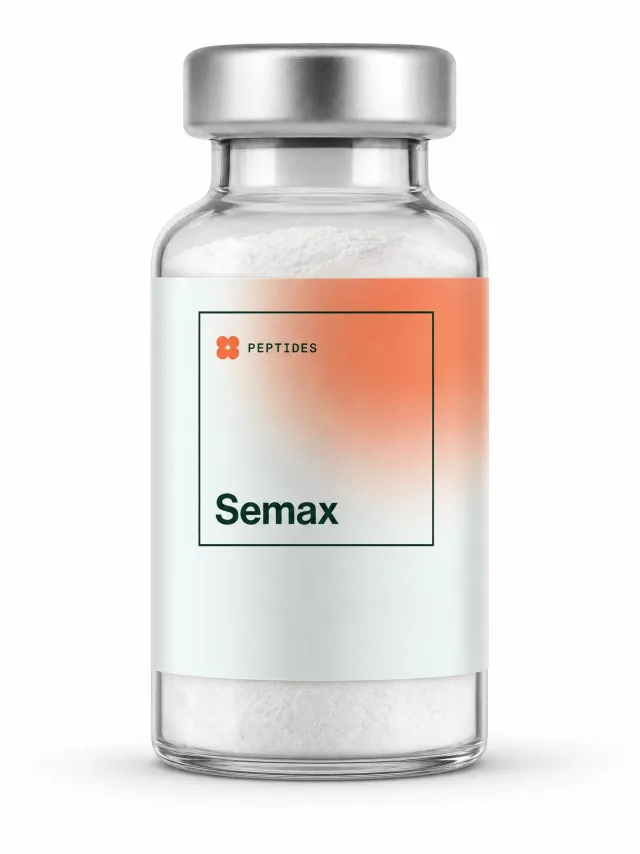
Both compounds are seven amino acids long and both end in the same three-residue Pro-Gly-Pro tail, a cap that slows how fast blood enzymes chew the molecule up. Semax is built on a fragment of ACTH, the stress hormone that tells the adrenal glands to make cortisol, and reads Met-Glu-His-Phe-Pro-Gly-Pro. Selank is built on tuftsin, a short immune-signalling peptide, and reads Thr-Lys-Pro-Arg-Pro-Gly-Pro. Both sequences are printed in the same 2001 paper that measured them side by side 1. Compound detail, reported side effects and protocol specifics live on those two pages, and Semax dosing in particular is covered in the Semax dosage guide.
The mechanism both compounds share
Your brain makes its own calming peptides, called enkephalins. They are released, they act for a few seconds, and then enzymes in the blood and tissue take them apart. In 2001 the Moscow group measured how well each compound slows those enzymes down in human blood serum, using IC50, the concentration at which a substance cuts an enzyme's activity in half. Lower means less of the compound was needed. Semax came in at 10 micromolar and Selank at 15 to 20 across two papers from the same laboratory, against puromycin, the reference blocker they compared with, at 10 millimolar 12.
How both compounds reach the same calming system
The two papers disagree, and smoothing it over would hide the size of the gap. The Kost paper reports Selank at 20 micromolar and the Zozulya paper, same laboratory, same year, reports 15 12. Either way the number for the compound sold as the calming one is higher than the number for the compound sold as the stimulating one, which makes Semax the more potent inhibitor of the two on this particular measure, in serum, in a dish.
What Semax has behind it
Semax has been used in Russian hospitals since the 1990s, mainly after stroke and other brain injury, and it is a registered medicine there. The published research supporting it is almost entirely laboratory work. A 2021 paper mapped brain protein changes in rats after experimentally induced stroke and found CREB, a switch that turns on repair and survival genes, raised in deep brain structures, with MMP-9, an enzyme that breaks down the scaffolding between cells, and c-Fos, an early-response gene switched on by injury, lowered in the overlying cortex, and active JNK, a stress-and-inflammation signal, lowered in both 8. A 2025 paper in mice bred to develop the plaques of Alzheimer's disease reported improved performance on memory tests and fewer deposits of amyloid, the protein that clumps into those plaques, in the cortex and hippocampus, without giving fold-change figures and without claiming memory returned to normal 9.
Two 2025 papers came from outside the Moscow network, the first independent laboratory work on Semax in years. An Italian group showed in test tubes and cultured cells that Semax pulls copper away from amyloid-beta clumps and cuts the reactive-oxygen output that follows, which is chemistry in a dish with no animal or human outcome attached 10. A Chinese group found Semax improved recovery after spinal cord injury in female mice, with the mechanism pointing at Oprm1, the gene for the mu-opioid receptor, a route that does not overlap the pathways Semax is usually explained by 11.
Semax has a long clinical history in one country for one indication, a set of laboratory mechanisms now partly replicated outside Moscow, and no published trial in people for focus, motivation or brain fog. If brain fog is the reason you are here, the brain fog peptide guide covers that goal and its roster properly; this page will not pretend Semax has trial evidence for it.
What Selank has behind it
Selank's case rests on two comparator trials in patients. The first enrolled 62 people with generalized anxiety disorder or neurasthenia, put 30 on Selank and 32 on medazepam, a benzodiazepine, and concluded in its own words that "the anxiolytic effects of both drugs were similar", with Selank also easing exhaustion and producing a mild stimulating effect 3. The second ran in 60 patients with phobic-anxiety and somatoform disorders against phenazepam, another benzodiazepine, and reported anxiety relief plus mild cognitive benefit, with the calming effect lasting about a week after the last dose 4. Both were published in Russian, both came from the same author network, and neither report describes a placebo arm or any blinding.
On mechanism, a 2018 membrane binding assay found Selank acts as a positive allosteric modulator of GABA binding, meaning it changes how well GABA sticks to its receptor rather than switching the receptor on itself. The same paper found Selank blocked the modulating activity of diazepam and olanzapine, and the authors concluded the binding sites are "apparently not the same, but potentially may partially overlap" 5. That is weaker than the common claim of a site completely separate from benzodiazepines, and the paper tested nothing at all about tolerance, dependence or withdrawal.
Selank has two comparator trials in patients, both from the inventors' own network and neither describing a placebo arm or any blinding, one mechanism assay that is more hedged than it is usually reported to be, and a documented boundary on its proposed mechanism, since the enkephalin finding held in generalized anxiety and not in panic disorder or agoraphobia 2345. For the anxiety goal as a whole and the other compounds in it, see peptides for anxiety and the anxiety comparison guide.
Why the focus-versus-anxiety split does not hold up
They share a Pro-Gly-Pro tail, a designer and the enkephalin-preserving mechanism, on which the supposedly stimulating one is the stronger inhibitor 1. And a two-fold gap in one serum enzyme assay, from the compounds' own laboratory, in two papers that disagree with each other, does not make Semax a sedative either. So the claim that holds up is narrower than a reversal. The split has never been measured, because no study has ever put these two compounds in the same room, in anyone, for anything 16.
The developers chose indications, not personalities. Semax went into stroke and brain-injury work, so the Semax literature is full of neuroprotection and recovery. Selank went into anxiety clinics, so the Selank literature is full of anxiety scales. Readers then reverse-engineered a pharmacological story from two publication histories. The 2008 trial even reports Selank producing a mild stimulating effect alongside anxiety relief 3, which sits awkwardly in a taxonomy where Selank is the sedating one.
The compounds sold as opposites share a mechanism, a designer and a three-residue tail. What differs is which clinic each one was walked into.
How much the published studies gave
The dosing numbers circulating online for both compounds are more confident than the published record supports. Here is what the papers themselves pin down. Anything framed as a starting dose, a titration schedule or a split-dose protocol is not coming from these studies. Why confident-looking numbers with no source behind them go wrong is covered in peptide dosing mistakes.
| Published study | Dose reported | Route | Duration |
|---|---|---|---|
| Selank against medazepam, 62 patients with generalized anxiety or neurasthenia 3 | Not stated in the abstract | Not stated in the abstract | Not stated in the abstract |
| Selank against phenazepam, 60 patients with phobic-anxiety and somatoform disorders 4 | Not stated in the abstract | Not stated in the abstract | Calming effect reported to persist about a week after the last dose |
| Selank in rats under 20 days of social stress, sensory-contact confrontation model 12 | 100 micrograms per kilogram of body weight per day, a rat dose, not a human one | Injected into the abdomen | 20 days |
Two of the three published studies do not state a dose, a route or a duration anywhere in their abstracts. Every confident milligram-and-microgram protocol circulating for these two compounds descends from that blank. There is also no published human figure for how much of either compound reaches the bloodstream through the nose, despite how often a precise-looking percentage is quoted for Selank. Absorption across routes is covered in oral and non-injectable peptide bioavailability, and the Semax dosage guide and the Selank compound page own the protocol ground; this page does not print individual doses.
Can you take Semax and Selank together?
People do combine them, and the combination is sold as a stack. No published study has tested the two together in anyone, so there is no evidence on whether the combination adds anything, and no safety data on the pair 16. There is also a practical cost that has nothing to do with pharmacology: starting both at once makes it impossible to attribute any change to either one, which matters more than usual with compounds whose effects are subtle and whose published evidence is this thin.
If you already have one of them in hand, the version of this that is at least interpretable is one compound, one route, one dose held steady, nothing else changed, and a note of what you are trying to measure written down before you start, after you have told a clinician what you are taking. Why single-variable changes beat simultaneous ones is set out in peptide stacking 101.
Why results differ so much between people
Reported experiences with both compounds range from nothing at all to obvious. Before reaching for genetics, the ordinary explanations account for most of that spread, and they are ranked here roughly by how often they are the answer. Our brain fog peptide guide puts the same point bluntly: "Upstream gut inflammation, poor sleep, and post-viral damage block every brain fog peptide. Fix the upstream cause first, or no peptide cycle will work."
- What was in the vial. A Belgian state medicines-control laboratory analysed seized preparations containing both peptides and documented what the unregulated supply chain looks like in practice 7. Nothing downstream of that is interpretable if the contents did not match the label.
- The route and whether it was absorbed. No published human figure exists for how much of either peptide crosses the nasal lining into the blood, so two people using the same nasal spray may be absorbing very different amounts.
- How long it was used and against what. The published patient work ran in people carrying a diagnosis, not in healthy adults chasing sharper focus, and a compound tested in one population routinely does less in another 34.
- Everything else going on. Sleep, alcohol, caffeine, thyroid status, an untreated mood or anxiety condition and any prescribed medicine all move the same outcomes these compounds are judged on, usually harder than the compounds do.
- Expectation. Neither compound has been tested against placebo outside Russia, and the two patient trials that exist compared against an active drug, with no placebo arm and no blinding described in either report 3416.
Genetics comes after all of that, and on these two compounds it comes up empty. No trial of Semax or Selank has ever sorted responders from non-responders by any genetic variant. PubMed searches run on 2026-09-22 returned zero results for either compound paired with COMT (the enzyme that clears dopamine out of the thinking part of the brain), with the BDNF Val66Met variant (a common one-letter difference in a gene that helps neurons form new connections), with DRD2 (a dopamine receptor gene), with GABRA2 (part of the receptor for the brain's main calming signal), or with the word pharmacogenetic. The exact query is in citation 16 if you want to run it yourself. The variants named around these two compounds across the internet are inferences from what the compounds are thought to do to neurotransmitters, not findings about either compound.
Treat any genotype-based recommendation between Semax and Selank, from any source, as an untested hypothesis rather than a result, and do not let it override a plain single-variable trial with a clinician's input. If COMT and BDNF are what brought you here, those variants are covered honestly for brain fog in brain fog, COMT, BDNF and MTHFR. Where DNA data does carry weight in choosing among peptides generally is covered in the DNA decision framework.
What is in the vial, and why the FDA flagged both
The biggest practical risk with both compounds is what ends up in the vial. In 2020 Sciensano, the Belgian federal medicines-control laboratory, identified Selank and Semax in two seized pharmaceutical preparations and noted the compounds are freely sold online as freeze-dried powder for injection and as nasal sprays 7.
These samples contained the assumedly cognitive enhancing research peptides Selank and Semax, which, to our knowledge, have not completed any clinical trials.Vanhee C, Francotte A, Janvier S, Deconinck E. Drug Testing and Analysis 2020;12(3):371-381 (Sciensano, Belgian federal medicines-control laboratory)
That sentence and this page's own finding sit together once you read "completed" strictly. The two Selank reports are small comparator studies published in Russian by the compound's own network 34, and neither compound has been through the registration-grade development programme that an approval in Europe or the United States would require. That is the bar the Belgian authors were writing about, and it is the bar neither compound has cleared.
The side effects reported in the Russian literature and on the compound pages are mild and mostly local: nasal irritation and a runny nose from sprays, a metallic taste running down the back of the throat, headache, mild drowsiness with Selank at higher doses, and trouble sleeping with Semax taken late in the day. Read that as what was reported, not as a safety profile. None of the published work collected adverse events systematically, neither published patient trial reported tolerability or withdrawal data in its abstract, and neither compound is under pharmacovigilance anywhere outside Russia. Long-term safety in people is unstudied for both, and neither has been studied in pregnancy, in breastfeeding, in anyone under 18, or alongside psychiatric medication. Neither has a lawful route to a US consumer for human use either: what is sold online is sold for laboratory research, and the Belgian analysis above is what that supply chain looks like when someone tests it 7.
Are Semax and Selank legal in the US?
Neither peptide is FDA-approved for any US indication and neither is scheduled by the Drug Enforcement Administration. Both appear on the FDA's list of bulk substances whose compounding nominations were withdrawn by the nominators, which is why neither may lawfully be compounded from bulk substance today 13. In Russia both are registered medicines. Our US legality guide makes the individual-level point this page will not repeat at length: "Possessing or using any of these peptides is not a federal crime for individuals. The law targets manufacturers and distributors, not personal users."
A withdrawn nomination does not close the file, and Semax was back before the advisory committee in 2026. The Pharmacy Compounding Advisory Committee met on 23 and 24 July 2026, with an agenda covering BPC-157, KPV, TB-500, MOTS-c, emideltide and DSIP, Semax and Epitalon, and Semax discussed for cerebral ischemia (reduced blood flow to the brain), migraine and trigeminal neuralgia (severe facial nerve pain). Selank was not on the agenda 14. According to the National Community Pharmacists Association, the committee voted to recommend six peptides including Semax for the 503A bulks list 15. That recommendation does not bind the FDA, no rule has issued, and nothing about either compound's legal status has changed as a result.
article · US Food and Drug AdministrationCertain bulk drug substances for use in compounding that may present significant safety risksThe primary source for both listings, including the withdrawn nominations and the immunogenicity language quoted above. Content current as of 22 April 2026.fda.govIf you are choosing between the two
Semax and Selank on what is known
If you want the option with more published human data, that is Selank, and the size of that advantage is two small comparator trials with no placebo arm rather than anything like a modern evidence base. If neuroprotection after brain injury is the goal, Semax is the one with the clinical history, in a country whose trials nobody outside it has replicated. Either way the decision to make first is whether to use an unapproved compound at all, and that decision belongs with a clinician who knows your history and your current medicines.
No genetic test can tell you which of these two will work for you, because nothing has been published that would let one try. What a marker panel can do is rank a whole catalogue against your pathway variants. Upload the raw DNA data you already have and get all 39 peptides ranked against a 144-marker panel covering 15 pathways and 8 pharmacogenes, reviewed by a human before it reaches you.
Get your DNA report- The focus-versus-anxiety split is a product of which illness each developer chased, not of the chemistry
Semax and Selank are both seven amino acids long, both end in the same Pro-Gly-Pro tail, and were designed by the same people. The Moscow group took Semax down the stroke and brain-injury route and Selank down the anxiety route, and the whole internet taxonomy of one-for-focus, one-for-calm is downstream of that choice. The paper most often cited for the split shows Semax to be the stronger inhibitor of the enzymes that destroy the brain's own calming peptides, 10 micromolar against Selank's 15 to 20, measured in a test tube of human serum [[1]][[2]]. That undercuts the tidy split without establishing an opposite one, because no study has ever put the two compounds side by side in anyone [[16]].
Sources16
- Kost NV, Sokolov OIu, Gabaeva MV, Grivennikov IA, Andreeva LA, Miasoedov NF, Zozulia AA. Semax and selank inhibit the enkephalin-degrading enzymes from human serum. Bioorganicheskaia Khimiia 2001;27(3):180-3.
- Zozulya AA, Kost NV, Sokolov OYu, Gabaeva MV, Grivennikov IA, Andreeva LN, Zolotarev YA, Ivanov SV, Andryushchenko AV, Myasoedov NF, Smulevich AB. The inhibitory effect of Selank on enkephalin-degrading enzymes as a possible mechanism of its anxiolytic activity. Bulletin of Experimental Biology and Medicine 2001;131(4):315-7.
- Zozulia AA, Neznamov GG, Siuniakov TS, Kost NV, Gabaeva MV, Sokolov OIu, et al. Efficacy and possible mechanisms of action of a new peptide anxiolytic selank in the therapy of generalized anxiety disorders and neurasthenia. Zhurnal Nevrologii i Psikhiatrii imeni S.S. Korsakova 2008;108(4):38-48.
- Medvedev VE, Tereshchenko ON, Israelian AIu, Chobanu IK, Kost NV, Sokolov OIu, Miasoedov NF. A comparison of the anxiolytic effect and tolerability of selank and phenazepam in the treatment of anxiety disorders. Zhurnal Nevrologii i Psikhiatrii imeni S.S. Korsakova 2014;114(7):17-22.
- Vyunova TV, Andreeva L, Shevchenko K, Myasoedov N. Peptide-based anxiolytics: the molecular aspects of heptapeptide Selank biological activity. Protein and Peptide Letters 2018;25(10):914-923.
- Filatova E, Kasian A, Kolomin T, Rybalkina E, Alieva A, Andreeva L, Limborska S, Myasoedov N, Pavlova G, Slominsky P, Shadrina M. GABA, Selank, and olanzapine affect the expression of genes involved in GABAergic neurotransmission in IMR-32 cells. Frontiers in Pharmacology 2017;8:89.
- Vanhee C, Francotte A, Janvier S, Deconinck E. The occurrence of putative cognitive enhancing research peptides in seized pharmaceutical preparations: an incentive for controlling agencies to prepare for future encounters of the kind. Drug Testing and Analysis 2020;12(3):371-381.
- Sudarkina OY, Filippenkov IB, Stavchansky VV, Denisova AE, Yuzhakov VV, Sevan'kaeva LE, et al. Brain protein expression profile confirms the protective effect of the ACTH(4-7)PGP peptide (Semax) in a rat model of cerebral ischemia-reperfusion. International Journal of Molecular Sciences 2021;22(12):6179.
- Radchenko AI, Kuzubova EV, Apostol AA, Mitkevich VA, Andreeva LA, Limborska SA, et al. The potential of the peptide drug Semax and its derivative for correcting pathological impairments in the animal model of Alzheimer's disease (APPswe/PS1dE9/Blg transgenic mice). Acta Naturae 2025;17(4):110-120.
- Tomasello MF, Di Rosa MC, Naletova I, Sciacca MFM, Giuffrida A, Maccarrone G, Attanasio F. Semax, a copper chelator peptide, decreases the Cu(II)-catalyzed ROS production and cytotoxicity of Abeta by metal ion stripping and redox silencing. Bioinorganic Chemistry and Applications 2025;2025:4226220.
- Liu R, Chen Y, Huang H, Li X, Lv J, Jiang L, et al. Semax peptide targets the mu opioid receptor gene Oprm1 to promote deubiquitination and functional recovery after spinal cord injury in female mice. British Journal of Pharmacology 2025;182(22):5489-5516.
- Leonidovna YA, Aleksandrovna SM, Aleksandrovna TA, Aleksandrovna BO, Fedorovich MN, Aleksandrovna AL. The influence of Selank on the level of cytokines under the conditions of "social" stress (rats, sensory-contact confrontation model, 100 mcg/kg/day intraperitoneally for 20 days). Current Reviews in Clinical and Experimental Pharmacology 2021;16(2):162-167.
- US Food and Drug Administration. Certain bulk drug substances for use in compounding that may present significant safety risks (content current as of 22 April 2026).
- US Food and Drug Administration. 23-24 July 2026 meeting of the Pharmacy Compounding Advisory Committee.
- National Community Pharmacists Association. FDA advisory committee nominates six peptides for pharmacies to compound (31 July 2026).
- PubMed searches run 2026-09-22 against the genotype literature for both compounds. The combined query (semax[tiab] OR selank[tiab]) AND (COMT OR Val158Met OR rs4680 OR Val66Met OR rs6265 OR DRD2 OR GABRA2 OR pharmacogenetic* OR pharmacogenomic*) returns zero records. Run individually, semax[tiab] AND COMT, selank[tiab] AND COMT, semax[tiab] AND (Val158Met OR rs4680), semax[tiab] AND (Val66Met OR rs6265), selank[tiab] AND (Val66Met OR rs6265), selank[tiab] AND DRD2, selank AND GABRA2, and (semax[tiab] OR selank[tiab]) AND pharmacogenetic* each also return zero. Note the boundary: selank AND BDNF is NOT zero (3 records), because Selank has been studied for its effect on BDNF expression; what is absent is any study of a BDNF genotype against response.
This article is for informational and educational purposes only. It is not medical advice and does not diagnose, treat, cure, or prevent any disease. Consult a qualified healthcare professional before starting any peptide protocol. Individual results vary. Some outbound links are affiliate links, at no extra cost to you.
Frequently asked questions
What is the difference between Semax and Selank?
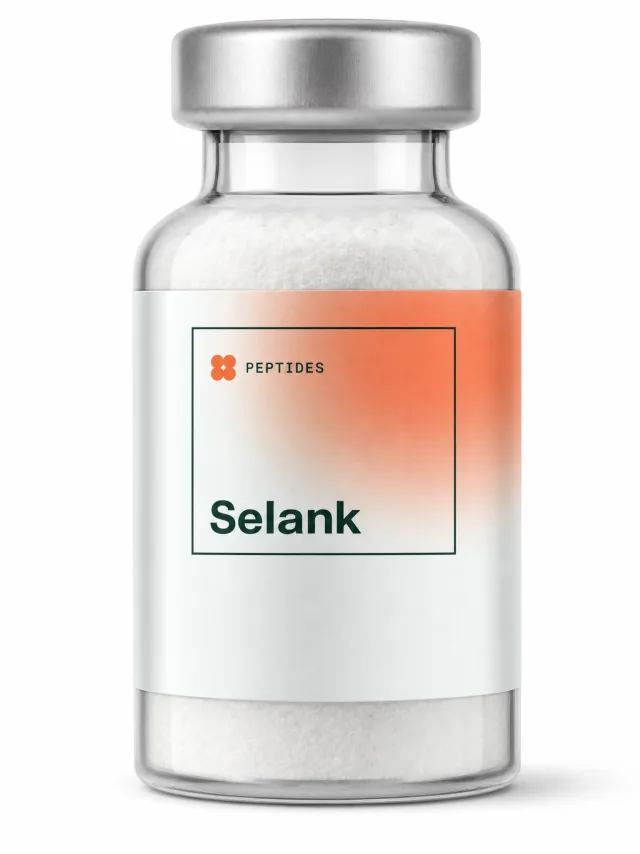
Semax is built on a fragment of ACTH, the stress hormone that tells the adrenal glands to make cortisol, and has been used in Russian hospitals after stroke since the 1990s [[8]]. Selank is built on tuftsin, a short immune-signalling peptide, and has two published trials in patients with anxiety disorders [[3]][[4]]. Both are seven amino acids long, both end in the same Pro-Gly-Pro tail, and both came from the same Moscow research network [[1]]. In the one measurement that compared them, human blood serum in a test tube, Semax is the stronger blocker of the enzymes that destroy the brain's own calming peptides, at 10 micromolar against Selank's 15 to 20 [[1]][[2]]. The popular claim that one stimulates and one calms does not survive it, though a serum enzyme assay is not a measurement of how either behaves in a person. The evidence base is where the two genuinely differ.
Which is better for anxiety, Semax or Selank?
Selank is the one with published human evidence in anxiety. A 62-patient trial compared Selank against medazepam, a benzodiazepine, in generalized anxiety disorder and neurasthenia and reported that the anxiolytic effects of both drugs were similar, and a second trial in 60 patients compared it against phenazepam with similar conclusions [[3]][[4]]. Neither report describes a placebo arm or any blinding, and both came from the compound's own research network. Semax has no published patient trial for anxiety, and no study has compared the two compounds to each other [[16]]. Neither is approved or lawfully compoundable from bulk substance in the United States [[13]], and anxiety that is interfering with your life is worth taking to a clinician rather than an unapproved peptide.
Can you take Semax and Selank together?
No published study has tested the two together in anyone, so there is no evidence on whether the combination does more than either alone and no safety data on the pair; that is an absence in the literature, not a finding of safety [[16]]. Neither has been studied alongside prescription anxiety medicines, antidepressants or sedatives, so interactions are unknown rather than ruled out. Selank has been reported to cause mild drowsiness and acts on the GABA-A receptor in the one binding study available [[5]], so do not combine either compound with alcohol or sedating medicines, and do not drive until you know how it affects you. Starting both at once also makes it impossible to tell which one did anything. Never stop or change a prescribed medicine to try a research peptide.
Is Semax or Selank better for brain fog?
Neither has been tested for brain fog in people. Semax is the one usually suggested for it, but its published research is laboratory work on stroke in rats, amyloid in mice, copper chemistry in a dish and spinal cord recovery in mice, plus Russian hospital use after brain injury, with no trial in healthy adults for attention or mental clarity [[8]][[9]][[10]][[11]]. Selank's two patient trials measured anxiety, with mild cognitive benefit reported as a secondary finding [[3]][[4]]. Brain fog also has common causes worth ruling out first, including sleep debt, thyroid problems, anaemia and untreated anxiety. The [brain fog peptide guide](/learn/best-peptides-for-brain-fog) covers that goal and its roster properly.
Are Semax and Selank legal in the US?
Neither is FDA-approved for any US indication and neither is a controlled substance. Both were nominated for the FDA's compounding bulks list and then withdrawn by the nominators, having previously sat in category 2 of the interim policies, so neither may lawfully be compounded from bulk substance today [[13]]. The Pharmacy Compounding Advisory Committee met on 23 and 24 July 2026 and discussed Semax, among six peptides it voted to recommend for the 503A bulks list according to the National Community Pharmacists Association [[14]][[15]]. Selank was not on that agenda. The recommendation does not bind the FDA, no rule has issued, and the legal status of both compounds is unchanged.
This article is for informational and educational purposes only. It is not medical advice and does not diagnose, treat, cure, or prevent any disease. Consult a qualified healthcare professional before starting any peptide protocol. Individual results vary. Some outbound links are affiliate links, at no extra cost to you.