Healing and repair
Wolverine Stack
Also written BPC-157 and TB-500, bpc157 tb500, BPC-157 + TB-500
The Wolverine stack is BPC-157 and TB-500 taken together, named after the comic character who heals fast. People use it for tendon, ligament and muscle injuries. Both are research compounds rather than approved medicines, and the doses quoted for them come from convention rather than from any published study.


It is the best known pairing in the repair category, and its origin is traceable. In May 2016 Ben Greenfield published a guide to BPC-157 titled “healing the body like Wolverine”. Within days, readers in his own comment thread were pairing it with TB-500 and posting their doses. In October 2021 Jay Campbell wrote it up as “the Wolverine Healing Stack”, crediting Greenfield, and by 2023 it was on Reddit and in clinic marketing. No clinician designed it and no researcher named it: it grew out of a headline and a comment section. People reach for it after tendon and ligament injuries, for joints that have not settled, and for gut problems.
What is in it
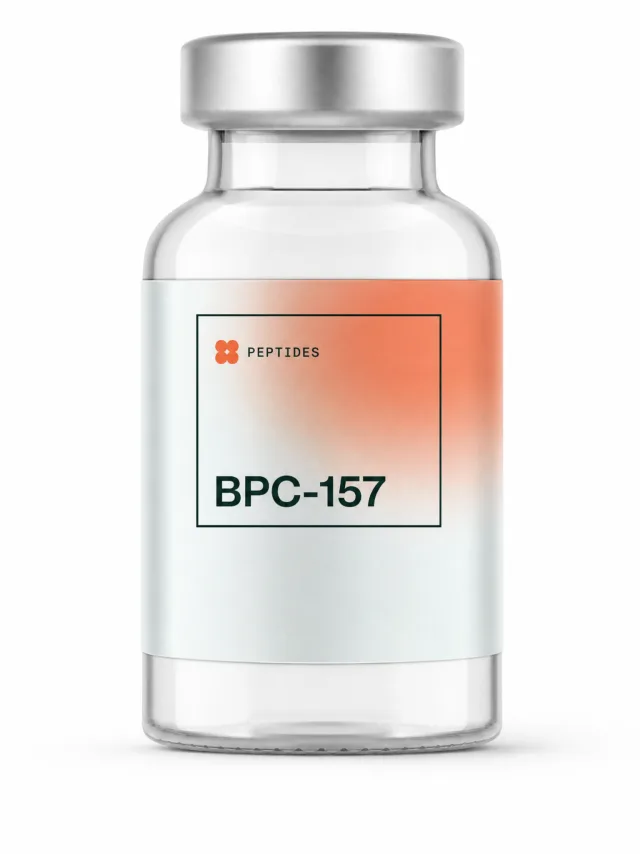
BPC-157
The one people take for injuries that will not heal
A synthetic chain based on a protein found in stomach fluid. Most of its research is about healing connective tissue and gut lining, and it is usually described as doing its work close to where it is given.
- Dose reported in research
- 250–500 mcg per day
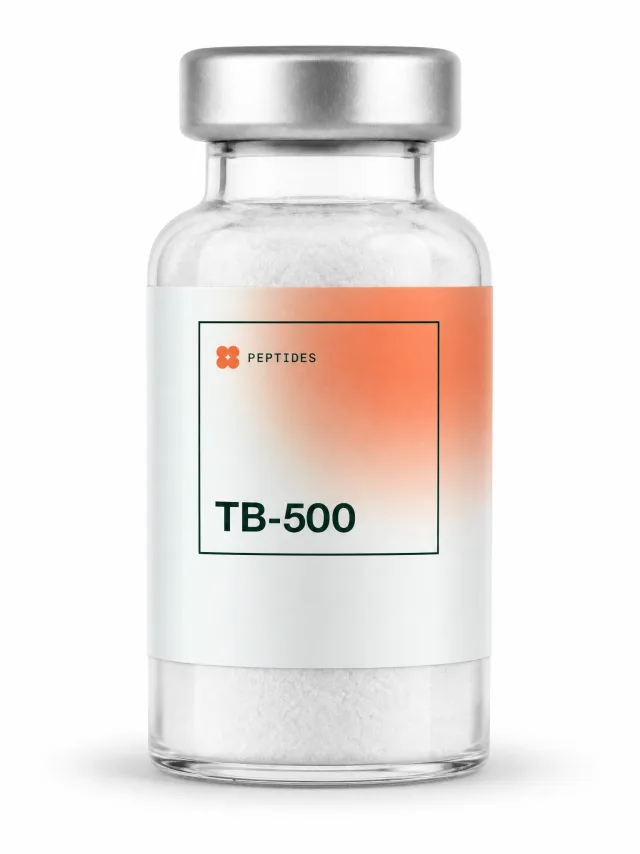
TB-500
The systemic healer
A lab-made copy of the active part of a protein your body already makes, which helps cells travel to the site of an injury. It is usually described as the more body-wide of the two.
- Dose reported in research
- 2–5 mg 2x/week
How it is thought to work
The pairing has a tidy story behind it, and the tidiness is worth examining before you spend anything.
The argument for combining them
The two are usually described as working on different halves of the same problem. BPC-157 is associated with growing blood supply into damaged tissue, which matters because tendons barely have any, and that is most of why they heal so slowly. TB-500 is associated with helping repair cells travel to where the damage is. Build the road, then move the traffic.
It is a genuinely satisfying explanation. It is also the entire case, because no study has compared the pair against either compound on its own, in an animal or in a person. Two mechanisms that sound complementary are a reasonable hypothesis, not a finding.
What the research actually is
Almost all of the tendon work on BPC-157 is rats with a surgically cut Achilles. The animals healed faster than untreated ones, repeatedly and across several groups, which is a real signal. It is also a rat, an injury inflicted in a lab, and a tendon that was cleanly severed rather than slowly worn out over two years of running.
TB-500 is the one to be careful about. There are human trials on that molecule, which sounds reassuring until you read them: they used the full-length natural protein and they were run for dry eye and for venous leg ulcers. Not one of them involved a tendon. The fragment sold under this name has animal work behind it and nothing in people for the use it is sold for.
Why people pair them
The reasoning you will see everywhere is that the two work at different scales: BPC-157 close to where you put it, TB-500 more broadly through the body, so together they cover both. It is a tidy story and it is why the pairing spread. It is also, as far as we can tell, backwards. The animal results people cite for BPC-157 were produced by giving it nowhere near the injury: the transected Achilles tendon, the transected knee ligament and the transected quadriceps studies all dosed it into the abdomen or simply put it in the drinking water, and it worked. Nothing published shows injecting it near the injury does more than injecting it anywhere else.
Straight answer
Where the numbers you will see actually come from.
Every page quoting a dose for this stack quotes it without a source, and they do not agree with each other: some say 2 to 5 mg of TB-500 a week, others say that much twice a week. The trail for the twice-weekly schedule leads to a 2011 product insert for horses, and to a bodybuilding forum. The research behind both compounds is real and mostly in animals, which is normal for this category. What is not normal is presenting a protocol as established when nobody can say where it came from.
What people are usually trying to fix
Each of these has its own guide covering every peptide studied for it, not just these two.
Worth knowing first
- Get the injury diagnosed before you treat it
- A partial tear and a full one feel similar from the outside and are managed completely differently. A full rupture is a surgical question, and no peptide changes that.
- The stack has never been tested as a stack
- Nobody has compared the two together against either alone. The complementary-mechanism story is the reason people run both, and it remains a story.
- The ibuprofen advice online is invented
- In rats, taking anti-inflammatories every day made tendons heal worse. What has never been measured, in any species, is what happens when they are taken alongside a peptide, so any percentage you see quoted for that interaction came from nowhere. Never stop a prescribed medicine on the strength of a website.
- Neither is approved, and both are banned in sport
- These are research chemicals with no pharmaceutical manufacturing standard behind them, so what is actually in the vial is its own risk. Both sit on the prohibited list at all times.
The evidence behind Wolverine Stack
No study has tested BPC-157 and TB-500 together, in people or in animals. The healing results this stack is famous for come from rat studies of one compound at a time. The single human safety report below involved two people.
Studied in people
1 of 1The only kind that directly answers whether it works in humans.Studied in animals
2 of 2Results in animals do not automatically hold in people.Journal of Applied Physiology · 2011
AnimalThe promoting effect of pentadecapeptide BPC 157 on tendon healing involves tendon outgrowth, cell survival, and cell migration
Chang C-H, Tsai W-C, Lin M-S, Hsu Y-H, Pang J-HS
The most-cited result behind the stack's reputation. In rat tendon, BPC-157 increased cell survival, migration and outgrowth. Rat tendon, one compound, no comparison with TB-500 and no combination arm.
The promoting effect of pentadecapeptide BPC 157 on tendon healing involves tendon outgrowth, cell survival, and cell migration — source for Wolverine Stack (opens in a new tab)Read the paperJournal of Orthopaedic Research · 2010
AnimalPentadecapeptide BPC 157 (PL 14736) improves ligament healing in the rat
Cerovecki T, Bojanic I, Brcic L, et al.
Transected knee ligament in rats, followed for 90 days, with improved healing on several measures. One of the longer-running animal studies and part of why the compound is associated with connective tissue specifically.
Pentadecapeptide BPC 157 (PL 14736) improves ligament healing in the rat — source for Wolverine Stack (opens in a new tab)90 days
Read the paper
Every source behind this page63 more
- Thymosin beta4: actin-sequestering protein moonlights to repair injured tissuesGoldstein AL, Hannappel E, Kleinman HK · Trends in Molecular Medicine · 2005Review
- Injectable Peptide Therapy: A Primer for Orthopaedic and Sports Medicine PhysiciansMayfield CK, Bolia IK, Feingold CL, et al. · American Journal of Sports Medicine · 2026Review
- Safety and Efficacy of Approved and Unapproved Peptide Therapies for Musculoskeletal Injuries and Athletic PerformanceMendias CL, Awan TM · Sports Medicine · 2026Review
Everything we cite for Wolverine Stack, including animal work and early research. Each link goes to the source itself, so you can judge it rather than take our word for it.
Questions people ask
What is the Wolverine stack?
BPC-157 and TB-500 used together, named after the comic character known for healing quickly. People use it for tendon, ligament and muscle injuries. Both are research compounds rather than approved medicines, and the evidence behind them is mostly animal studies.
Is the Wolverine stack proven to work?
The research on each compound is mostly in animals, which is where most of this category sits, and no study has tested the two together. So it has not been demonstrated the way an approved treatment has. That is worth knowing, not worth panicking about, and it is the same answer you would get for most peptides.
How is each one dosed in the research?
The figures usually quoted are 250 to 500 mcg a day for BPC-157 and 2 to 5 mg twice a week for TB-500, both as an injection under the skin. These are reported ranges from research and clinical use, not recommendations, and neither compound has an approved dose because neither is an approved medicine.
Can you take BPC-157 and TB-500 at the same time?
People do, and that is what the stack refers to. What we cannot tell you is whether that is a good idea for you specifically, because no trial has tested the combination and interactions have not been studied. That is a conversation for a clinician who knows your history.
Is it legal?
Neither is an approved medicine, so neither is sold as one. Both are widely sold as research chemicals, and the rules differ by country. We do not sell either, and we cannot buy them for you.
Which of these suits you is a different question
A stack is a guess made on your behalf by someone who has never met you. The parts of it that are actually individual, how you process a compound and which of these your genes have anything to say about, are readable, and they do not change over your lifetime.
Upload data you already have from 23andMe or AncestryDNA and we score 39 peptides against your own variants, including which ones your results give no reason to bother with.