Ipamorelin
Ipamorelin Acetate
Also called NNC 26-0161, ipamorelina
The selective GH releaser
Ipamorelin tells the pituitary to release growth hormone by pressing the same switch your stomach uses when you are empty. Its selling point is selectivity: unlike older peptides in its family it largely leaves cortisol and prolactin alone. It is almost always sold blended with CJC-1295, and it is not an approved medicine.
Presses the same switch your stomach uses to say it is empty, the one that also triggers a growth hormone release, but largely without the hunger. Its selling point is what it does not do: older peptides in its family also pushed up cortisol and prolactin, and this one mostly stops at growth hormone. It is almost always sold blended with CJC-1295.
- Typical dose
- 200–300 mcg 1–3x/day
- Availability
- Research-only
Studied in people, and well studied in animals
49 papers · 2 clinical trials
What people use Ipamorelin for
Reported uses, roughly in order of how often they are the reason someone goes looking. Whether it works for any of them is a separate question, answered under each one.
Mechanism of Action
How Ipamorelin works
Your stomach has a way of telling your brain it is empty. The hormone that does it is ghrelin, and the switch it presses does two things at once: it makes you hungry, and it prompts a release of growth hormone.
Ipamorelin presses that switch, and this is the interesting part, without much of the hunger.
What selective actually means here
Earlier compounds in this family pressed the same switch but set off other things too. Cortisol went up, the stress hormone you do not want raised. So did prolactin. You got the growth hormone you were after along with hormonal noise nobody wanted.
Ipamorelin was the first one that largely stopped at growth hormone. That is what the word selective means on every page describing it, and it is the entire reason this compound rather than its predecessors ended up in the blends people buy.
It is also why it is paired with CJC-1295 so often. The two press different switches on the same gland, so together they produce a bigger release than either alone. That reasoning is sound, though nobody has tested the pair.
The gap worth knowing
Two human trials exist. Neither studied muscle, fat or sleep. One measured how fast it appears and clears; the other tested whether it could restart the bowel after abdominal surgery, and that development did not continue.
Everything about body composition is reasoned from what growth hormone does rather than shown for this compound. That is a chain of logic, not a result, and it is worth holding the distinction.
Ipamorelin dosage calculator
Opens at 200 mcg, from the doses reported for Ipamorelin. Change any box to match your own vial. It works out where to pull the plunger to.
How much is in the vial?
Printed on the label, in milligrams
How much water did you add?
Bacteriostatic water, in millilitres
What dose are you taking?
The dose you already intend to use
Which syringe?
Barrel size, printed on the wrapper
Draw to
4 units
on a 0.5 mL insulin syringe (0.04 mL)
- Strength once mixed
- 5 mg/mL
- Doses in the vial
- 50
10 mg in 2 mL makes 5 mg/mL. A 200 mcg dose is 0.04 mL of that, which is 4 units.
Want a rounder number? Adding 5 mL instead would put this dose at exactly 10 units, which is easier to draw accurately.
This is arithmetic, not advice. It converts a dose you already have into a mark on a syringe. It does not tell you what dose to take, and Ipamorelin is not prescribed by us. Dosing belongs with a qualified clinician.
Ipamorelin side effects: what people reported
Ipamorelin's reputation is for being the clean one, and that is mostly deserved. It nudges growth hormone without dragging cortisol and prolactin up the way the older compounds in this family do, so it produces fewer of the effects people disliked about them.
What people report
- A brief head rush or flushing right after injecting
- Hunger for a short while after a dose, though much less than with the older ghrelin mimetics
- Mild puffiness
- Drowsiness, which is why most people take it at night
- Injection-site redness
Worth keeping an eye on
- Tingling hands if water retention builds, same mechanism as the other growth hormone peptides
- Headache
Source: Reported use plus the early pharmacology work. This is a summary of published findings, not a complete safety profile and not medical advice. Ipamorelin should only be considered with a qualified clinician who knows your history.
Your Genetics & Ipamorelin
The genes involved in how Ipamorelin works
Ipamorelin works through the receptors these genes build, and the genes vary from person to person. Researchers have linked some of that variation to differences in how people respond. A DNA report tells you which versions you carry.
GHSR · ••
Variants in the growth hormone secretagogue receptor gene affect receptor density and signaling efficiency. Reduced GHSR expression means fewer targets for Ipamorelin, potentially blunting the GH pulse amplitude response.
GHR · ••
The GHR exon 3 deletion (d3-GHR) increases downstream GH sensitivity. d3 carriers convert Ipamorelin-induced GH pulses into greater IGF-1 output, potentially achieving results at lower doses.
GHRL · ••
Variants affecting ghrelin gene expression alter baseline ghrelin levels. Since Ipamorelin competes at the same receptor, high endogenous ghrelin producers may experience different dose-response dynamics.
Somatostatin puts the brakes on GH release. Variants increasing somatostatin tone may partially counteract Ipamorelin's GH pulse, requiring timing optimization (evening dosing when somatostatin is naturally lower).
The dots after each gene are where your own result goes. Your report fills them in with the two letters you carry at that position.
Which variants do you carry?
Upload your DNA data, or get tested through our partner, to find out.
Commonly combined with
What Ipamorelin is most often paired with, and why:
CJC-1295
GH Synergy StackModerate EvidenceCJC-1295 (Modified GRF 1-29)
A copy of the brain signal that tells the pituitary to release growth hormone, rewritten so the enzyme that normally destroys it in minutes cannot. Before you read any dose, check which version you have: with DAC it keeps growth hormone up for days, without DAC it produces a short pulse, and nearly every blend sold with ipamorelin contains the second one.
4
Gene variants
30+
Studies
BPC-157
Injury Recovery StackModerate EvidenceBody Protection Compound 157
BPC-157 is the peptide people reach for when something will not heal. Tendons, ligaments, a gut that has been irritated by painkillers, an injury that has stalled. It is a short chain of amino acids copied from part of a protein your stomach already makes, and the animal research on it is unusually consistent for this category: across a lot of separate rat studies, injured tissue healed faster than it did without it. The gap is that this has largely not been repeated in people, and it is not an approved medicine, so nobody is checking what is in the vial you buy.
3
Gene variants
19+
Studies
GHK-Cu
Anti-Aging StackModerate EvidenceGlycyl-L-Histidyl-L-Lysine Copper Complex
A naturally occurring copper-binding tripeptide, studied mainly for wound healing and skin. It carries copper into tissue, where copper is the cofactor the enzyme that cross-links collagen cannot work without. Most of the evidence is topical or in rats; the widely quoted gene-expression claims rest on far less than they appear to.
Common Stacks
One of these pairings has a name people search for, and a page of its own.

Muscle and body composition
CJC-1295 + Ipamorelin
10 mg vialThe growth-hormone pairing, and the one that has real logic behind it

Weight and metabolism
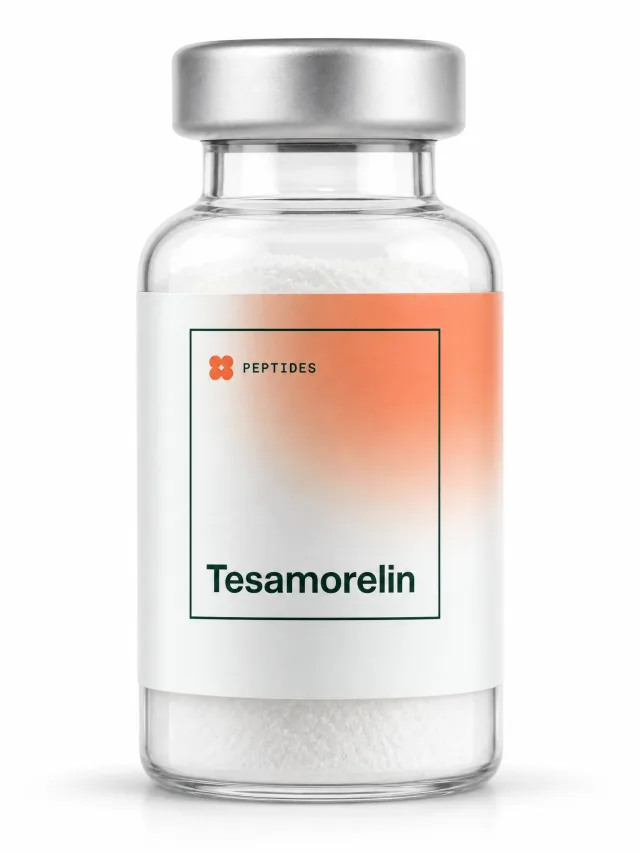
Tesamorelin + Ipamorelin
10 mg vialAn approved drug for belly fat, paired with a growth-hormone releaser
Sourcing & access
Where to buy Ipamorelin
Ipamorelin is sold as a research compound, not a licensed medicine, so quality and legal status vary widely by country and vendor. If you're sourcing it, treat independent purity testing as non-negotiable.
- Insist on a recent third-party Certificate of Analysis (COA) for the exact batch — labs like Janoshik verify purity and identity.
- Check the legal status where you live before ordering — it differs from country to country.
- Reconstitute correctly with bacteriostatic water and start at a conservative dose.
Before you buy: see whether your DNA actually responds to Ipamorelin, and at what dose. Analyze my DNA — $99 →
Educational information only, not medical advice. Some outbound links are affiliate links (disclosed, at no extra cost to you). Most peptides are not FDA-approved — consult a qualified professional and check your local laws before purchasing.
Worth knowing before you consider Ipamorelin
Interactions and situations where there is a specific reason to be careful. Where the honest answer is that nobody has studied something, it says so and says what that leaves open.
- The evidence is for hormone release, not for the outcomes
- Trials and animal work show growth hormone rising. No trial has shown that ipamorelin specifically builds muscle, reduces fat or improves sleep in humans. That gap is the single most important thing to know about it.
- Not currently compoundable in the US
- Ipamorelin was not among the substances removed from FDA Category 2 in April 2026, and it is not on the 503A positive list. Pages telling you a pharmacy can prepare it are wrong on the current position.
- Banned in sport at all times
- Growth hormone secretagogues are prohibited under WADA rules both in and out of competition.
The evidence behind Ipamorelin
Two human trials exist, and neither tested what people buy it for. One modelled how it behaves in the body; the other was a Phase 2 trial for restarting the bowel after abdominal surgery. Development for that use did not continue. Everything about muscle, fat and ageing is extrapolated from rat studies plus what growth hormone itself is known to do, which is a chain of reasoning rather than a result.
The literature, counted
Counted in PubMed on 3 August 2026 for ipamorelin. Every figure links to the search that produced it, so you can re-run it. “Tagged human” is not the same as a human trial: that tag also covers work on human cells and reviews discussing people, which is why the trial count is given separately.
Studied in people
2 of 2The only kind that directly answers whether it works in humans.International Journal of Colorectal Disease · 2014
HumanProspective, randomized, controlled, proof-of-concept study of the Ghrelin mimetic ipamorelin for the management of postoperative ileus after partial bowel resection
Beck DE, Sweeney WB, McCarter MD
The main human trial, and worth knowing it was about getting the bowel moving again after surgery, not about muscle or ageing. A multicentre, double-blind, placebo-controlled study using intravenous infusions. Development for this indication did not proceed.
Prospective, randomized, controlled, proof-of-concept study of the Ghrelin mimetic ipamorelin for the management of postoperative ileus after partial bowel resection — source for Ipamorelin (opens in a new tab)Phase 2
Read the paperPharmaceutical Research · 1999
HumanPharmacokinetic-pharmacodynamic modeling of ipamorelin, a growth hormone releasing peptide, in human volunteers
Gobburu JV, Agersø H, Jusko WJ, Ynddal L
The only other human study: how quickly it appears, clears, and how the growth hormone response tracks the dose. Useful for understanding timing, and it says nothing about long-term effects.
Pharmacokinetic-pharmacodynamic modeling of ipamorelin, a growth hormone releasing peptide, in human volunteers — source for Ipamorelin (opens in a new tab)Read the paper
Studied in animals
1 of 2Results in animals do not automatically hold in people.Every source behind this page52 more
- The growth hormone secretagogue ipamorelin counteracts glucocorticoid-induced decrease in bone formation of adult ratsSvensson J, Lall S, Dickson SL, et al. · Growth Hormone & IGF Research · 2001Animal
- Injectable Peptide Therapy: A Primer for Orthopaedic and Sports Medicine PhysiciansMayfield CK, Bolia IK, Feingold CL, et al. · American Journal of Sports Medicine · 2026Review
Everything we cite for Ipamorelin, including animal work and early research. Each link goes to the source itself, so you can judge it rather than take our word for it.
Last updated · literature counts verified against PubMed on
Frequently Asked Questions
What is Ipamorelin used for?
Ipamorelin is used to stimulate natural growth hormone release for body composition, recovery, sleep quality, and anti-aging. Its key advantage over other GH secretagogues is selectivity — it raises GH without spiking cortisol or prolactin, making it one of the cleanest GH peptides available.
Why is Ipamorelin paired with CJC-1295?
Ipamorelin increases GH pulse amplitude (how high each pulse goes) while CJC-1295 extends pulse duration (how long each pulse lasts). Together they produce synergistic GH elevation through two different receptor pathways — GHRH receptor and ghrelin receptor — typically yielding 2-3x the output of either alone.
Does genetics affect Ipamorelin response?
Yes. GHSR variants determine how many ghrelin receptors Ipamorelin can activate. The GHR d3/fl polymorphism affects downstream GH sensitivity. Somatostatin gene variants influence how strongly your body counteracts GH pulses. A genetic peptide report identifies these factors for dose optimization.
Learn more about Ipamorelin
47 guides mention Ipamorelin→stacking
Peptide Stacking 101: The Rules, the Risks, and the Science
13 min read
stacking
How to Build a Peptide Stack: A DNA-Guided Approach
13 min read
safety
Peptides for Beginners: The Complete Starter Guide (2026)
18 min read
how it works
In depthIpamorelin Before Bed: How Your Circadian Genes Determine Whether It Improves Your Sleep
12 min read
stacking
In depthIpamorelin CJC-1295 Stack: Dosage Guide by Genotype and Bloodwork
13 min read
comparisons
In depthIpamorelin vs CJC-1295: Same Goal, Very Different Biology
12 min read
Your next move
Two ways forward with Ipamorelin.
Not sure it's for you?
How does Ipamorelin relate to your genes?
Your report scores Ipamorelin against your receptor, pharmacogene and pathway variants and shows the genetic markers relevant to it, with commonly cited dosing information to review with a clinician.
Analyze my DNA — $99Already decided?
Get Ipamorelin from Swiss Chems.
A US research-chemical supplier with third-party Certificates of Analysis. Sold for research use only — check your local laws before ordering.
Buy at Swiss Chems →Save 10% at checkout with code tcwisiiu