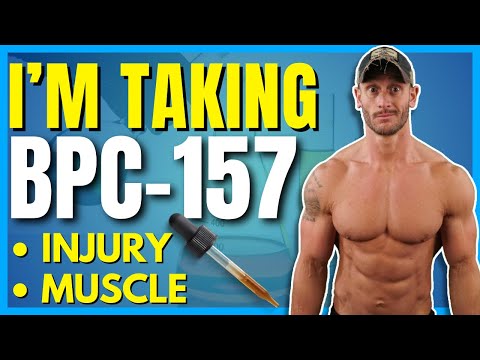
BPC 157 for tendon and ligament injury healing
A nine-minute overview from an orthopedic surgeon of what BPC-157 is, the preclinical tendon and ligament studies he cites, and its regulatory status as of early 2022.
With Dr. David Geier (Double board certified orthopedic surgeon and sports medicine specialist)
Key moments
Tap a moment to play the video from there.
- 0:00Tendon and ligament injury statisticsGeier introduces himself, states that the video is educational only, and cites about 33 million musculoskeletal injuries a year in the US, half involving tendons or ligaments.
- 1:06What peptides areHe describes peptides as short amino acid chains and signaling molecules the body makes naturally, with short half-lives that he links to safety.
- 2:02Peptide levels and agingGeier says natural peptide levels fall with age, and that this may be one reason tendon injuries are more common in people in their 40s and 50s.
- 2:46What BPC-157 isHe describes it as a synthetic 15 amino acid peptide from human gastric juice, best known for research on bowel conditions and stomach ulcers.
- 3:34Why tendons heal slowlyGeier explains that tendons and ligaments have limited blood supply, inflammatory cells and nerve supply, so repair is difficult. He then describes a preclinical Achilles tendon study.
- 4:36Ligament study and collagen alignmentHe summarizes a preclinical study of cut knee ligaments in which oral and topical BPC-157 were linked to better strength and tissue organization.
- 5:18How it might workGeier uses a pickup sticks analogy to explain collagen alignment, then stresses that most studies were preclinical and human trials are needed.
- 6:38Forms and typical dosingHe says it works as an oral pill, an injection or a topical cream, and that it is typically taken daily for three months with a one month break.
- 7:02Doping ban and legal statusGeier says BPC-157 was banned by the World Anti-Doping Agency as of January 1, 2022, is not FDA approved, and requires a prescription.
- 7:39Warning about online sourcesHe cautions that peptides bought from most online sites may contain little or no peptide and possibly harmful fillers.
What the video says
Dr. David Geier, an orthopedic surgeon and sports medicine specialist, gives a short overview of BPC-157 and its possible role in tendon and ligament injuries. He says the video is general education, not medical advice. He opens with injury figures: about 33 million musculoskeletal injuries a year in the United States, half of them ligament or tendon injuries, and about 300,000 tendon and ligament repair surgeries.
Before turning to BPC-157, Geier explains peptides as short chains of amino acids that the body makes naturally, with insulin as the familiar example. He describes them as signaling molecules with very short half-lives, which he says is why they are thought to be safe compared with steroid hormones. He adds that natural peptide levels decline with age, which he suggests is one reason tendon injuries are more common in people in their 40s and 50s. He also notes that many peptides are still considered experimental.
Geier describes BPC-157 as a synthetic 15 amino acid peptide derived from human gastric juice, best known for research on bowel conditions and stomach ulcers. For tendons and ligaments he points to two preclinical studies, one with surgically cut Achilles tendons and one with cut medial collateral ligaments of the knee. He reports that treated tissue showed better strength, function and collagen organization, and he uses a pickup sticks analogy for how collagen fibers line up during repair. He says oral, injected and topical forms were used, and that people typically take it once a day for three months with a one month break, though some say continuously.
Geier is clear that most of the evidence is preclinical and that human randomized trials are needed. He says no side effects have been reported and no lethal dose has been found. He ends with regulatory points as of January 2022: the World Anti-Doping Agency had banned it, it was not FDA approved as a human drug, and he says it requires a prescription. He warns that online products may contain little or no peptide and possibly harmful fillers. The final minute promotes his own practice.
On each compound
BPC-1572:46
Geier describes BPC-157 as a synthetic 15 amino acid peptide from human gastric juice. He cites preclinical Achilles tendon and knee ligament studies reporting improved recovery measures. He says it is thought to be very safe, but also that human studies are still needed.
See how your DNA reads BPC-157“we need more human studies”
What this video doesn’t settle
- The tendon and ligament results he cites come from preclinical studies, and the video describes no human trial of BPC-157 for these injuries.
- The safety claims (no reported side effects, no lethal dose found) are stated without any cited data, and no human safety study is discussed.
- The dosing schedule is described as what people typically do, with no source or trial behind it.
Questions this video answers
What does Dr. Geier say BPC-157 does for tendons and ligaments?
Geier cites preclinical studies in which treated tendons and ligaments showed better strength, function and collagen organization. He says these studies suggest it might help recovery in humans, but he stresses that human trials are still needed.
What does Dr. Geier say about BPC-157 safety?
He says it is thought to be very safe, with no reported side effects and no lethal dose found. He gives no human safety data for this, and he also says many peptides are still considered experimental.
Is BPC-157 legal or banned in sport, according to this video?
Geier says it was banned by the World Anti-Doping Agency as of January 1, 2022, so athletes in tested sports could be sanctioned. He says it was not FDA approved as a human drug and was available in the US only by prescription.
How does Dr. Geier say BPC-157 is taken?
He says it can be taken as an oral pill, an injection under the skin, or a topical cream. He says people typically take it once a day for three months with a one month break, though some say it can be taken continuously.
Video by Dr. David Geier on YouTube, embedded as published. The summary is written by PeptidesDNA from the video; every claim in it is the speaker’s. Not affiliated with or endorsed by the creator. Not medical advice.