Skin and appearance
KLOW
Also written KLOW peptide, KLOW 80, klow80
KLOW is a pre-mixed vial of four peptides: GHK-Cu, KPV, BPC-157 and TB-500, usually 50 mg, 10 mg, 10 mg and 10 mg in an 80 mg vial. It is the GLOW blend with KPV added. People use it for skin, healing and inflammation. It is a supplier's blend rather than a studied protocol.


KLOW is the four-peptide version of GLOW, and the letters are the compounds: KPV, then the same three that make up GLOW. It sells as an 80 mg vial where GLOW is 70 mg, and the extra 10 mg is the KPV. People reach for it over GLOW when inflammation is part of what they are dealing with, whether that is skin that stays irritated or a gut problem alongside. You will also see it written as KLOW 80, klow80, or just KLO, which are all the same thing.
What is in it
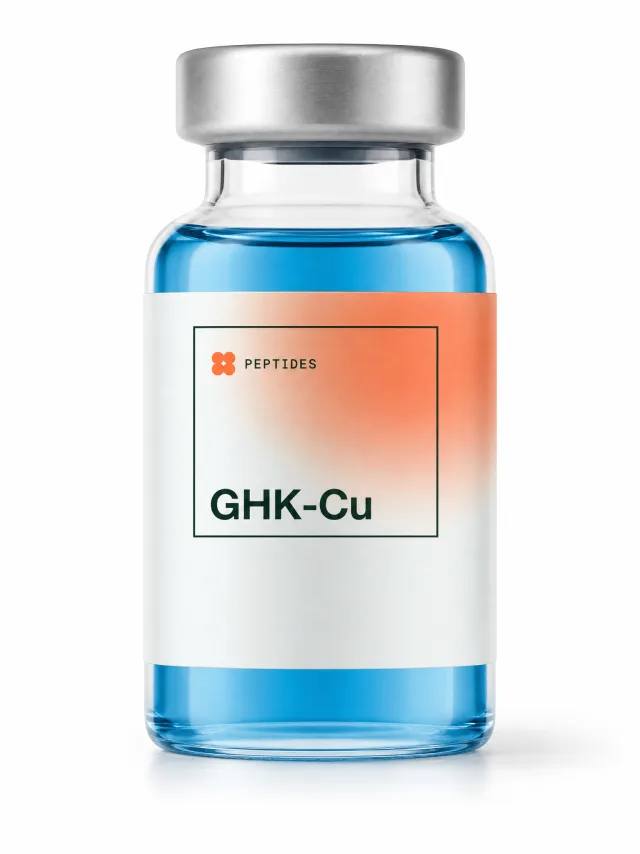
GHK-Cu
The regeneration peptide
The bulk of the vial, and the reason the blend is aimed at skin. A copper-carrying peptide your body makes less of with age, studied for its part in building collagen.
- Dose reported in research
- 1–3 mg/day
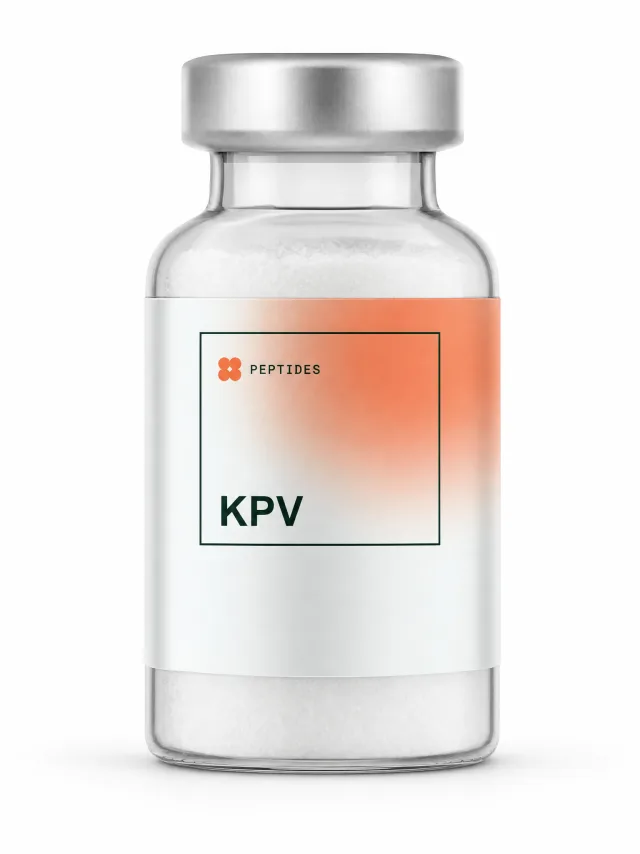
KPV
The gut anti-inflammatory
The addition that makes this KLOW rather than GLOW. A three-amino-acid fragment of a hormone your body already makes, studied mostly for calming inflammation in the gut.
- Dose reported in research
- 200–500 mcg/day
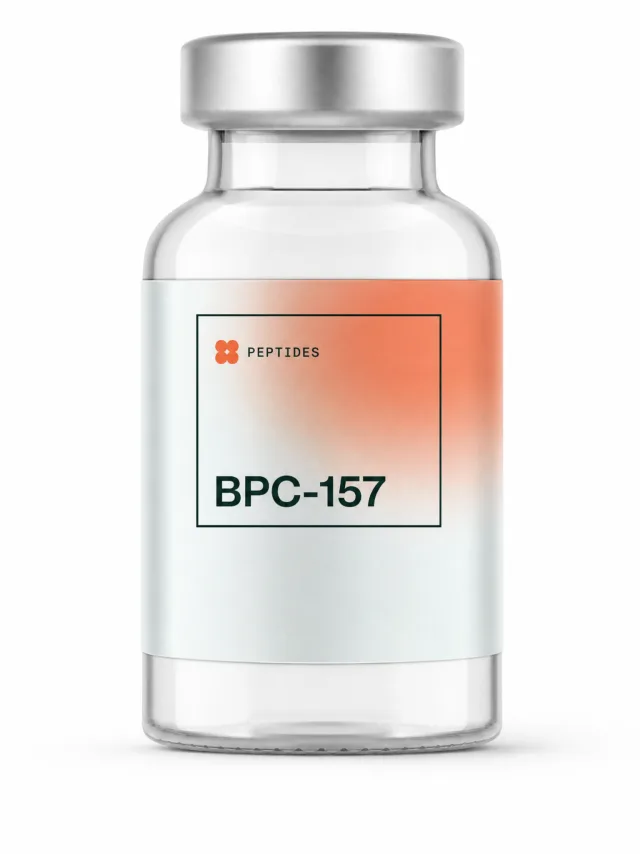
BPC-157
The one people take for injuries that will not heal
The repair component, researched mainly around connective tissue and gut lining.
- Dose reported in research
- 250–500 mcg per day
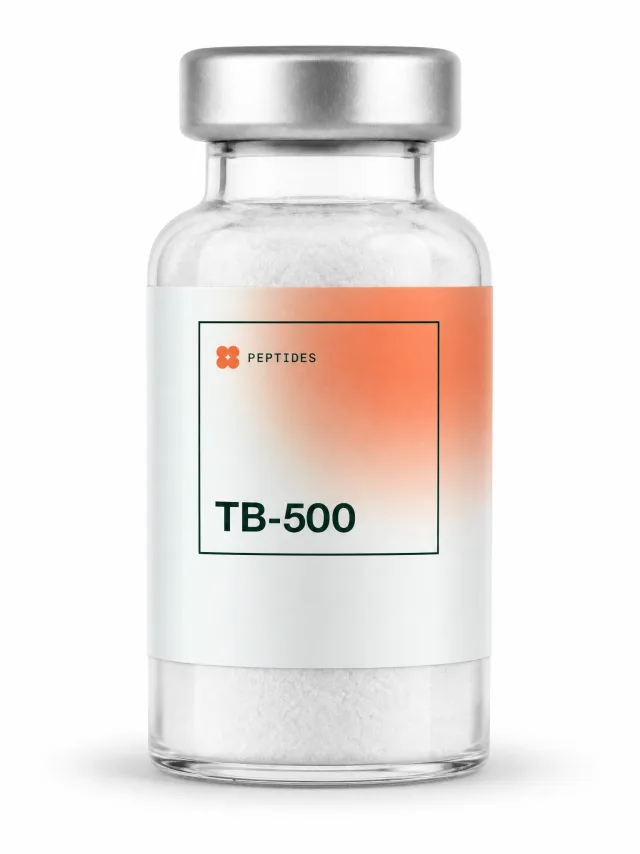
TB-500
The systemic healer
The second repair component, a short fragment associated with helping cells reach damaged tissue.
- Dose reported in research
- 2–5 mg 2x/week
How it is thought to work
Two of the four are covered on their own pages. What is worth explaining here is the copper peptide that makes up most of the vial, and the one ingredient that separates KLOW from GLOW.
GHK-Cu: the copper is the point
Skin is constantly being torn down and rebuilt. The interesting thing in the animal work is that GHK-Cu does not simply tell cells to make more collagen; it appears to tip that demolition-and-rebuild cycle toward rebuilding, and to change the kind of tissue that results.
In rats, it raised decorin while lowering biglycan. Decorin is what organises collagen into neat parallel bundles, and that organisation is roughly the difference between scar tissue and normal skin. So the claim is not only more collagen, it is better-arranged collagen. That is a specific, checkable finding rather than a vague one.
The copper is not decoration either. Your body uses an enzyme called lysyl oxidase to cross-link collagen and elastin, which is what gives skin its spring, and that enzyme cannot work without copper. Loose copper in the bloodstream is a problem: it drives reactions that damage tissue. GHK holds copper in a stable grip and carries it, which is a coherent story about delivering a cofactor safely to where it is used.
The honest limit: the research showing tissue remodelling injected it directly into a wound site in rats. Every human study of GHK-Cu on skin has been a cream.
KPV: the popular explanation is wrong
Almost every page describes KPV as switching on a melanocortin receptor, because it is a fragment of a hormone that does exactly that. The research says otherwise: the part of that hormone which binds those receptors is not in KPV, and when researchers blocked those receptors, or used mice whose receptor does not work, KPV kept working anyway.
What it appears to do instead is more interesting. KPV is small enough to be carried into cells by the transporter your gut uses to absorb protein fragments from food. Once inside, it interferes with inflammation at the point where the master switch, NF-kB, would normally move into the cell nucleus and start issuing orders. Rather than shutting the alarm off at source, it stops the messenger reaching the control room.
That is also why the research on KPV is mostly about the gut rather than the skin.
Why people pair them
KLOW exists because someone added KPV to GLOW, and the reasoning is the same one you would use yourself: the skin peptide does the visible work, the two repair peptides are the category's defaults, and KPV is there because inflammation sits underneath a lot of what people are trying to fix. The 50/10/10/10 ratio is near-identical across suppliers, which tells you they are copying a SKU rather than each reaching a considered formula.
Straight answer
Four peptides in one vial, and one of them is why it costs more than GLOW.
KLOW is GLOW plus 10 mg of KPV. That is the entire difference, and it is worth knowing before you pay a premium for the longer acronym. No study has tested the four together, which is normal for a blend nobody designed as a protocol. Be careful with the composition, too: at least one page ranking for KLOW says it is KPV and BPC-157 only, which does not match any vial actually sold.
What people are usually trying to fix
Each of these has its own guide covering every peptide studied for it, not just these two.
Worth knowing first
- You are injecting copper, and the usual limits do not apply
- GHK-Cu is about 15.8% copper by weight, so an 80 mg KLOW vial holds roughly 7.9 mg of elemental copper. The familiar daily limits for copper are set for what you eat, where your gut decides how much to absorb and refuses the rest. Injecting skips that control entirely, and nobody has set a limit for copper given this way.
- Wilson's disease or any copper-handling disorder
- The same reasoning, sharpened. If your body already struggles to clear copper, injecting a copper complex is the wrong direction, and there is no dose that has been established as safe in that situation.
- Ten units is not the same dose twice
- Vials sold as GLOW come as 35, 42 and 70 mg with different ratios, and KLOW comes as 80 and 90 mg. Reconstitution volume is not standard either. The same ten units off two different vials can differ nearly twofold in what it delivers, so a dose copied from a forum tells you very little.
- Vitamin C at the same time
- Ascorbic acid reduces copper and can break the complex apart. It is a good reason to keep topical vitamin C and copper peptides at different times of day. This one is straightforward chemistry rather than speculation.
The evidence behind KLOW
No study has tested KLOW. Nothing below is a trial of the blend, or of any two of its four parts together: every entry studies one compound on its own, and the two human entries both used a cream rather than an injection. That gap is the honest headline, so it is stated before the list rather than after it.
Studied in people
2 of 2The only kind that directly answers whether it works in humans.Archives of Facial Plastic Surgery · 2006
HumanEffects of topical copper tripeptide complex on CO2 laser-resurfaced skin
Miller TR, Wagner JD, Baack BR, Eisbach KJ
The best-designed independent facial study of GHK-Cu, and it was negative. A randomised controlled trial found no significant difference in redness, wrinkles or skin quality by computer analysis or blinded assessors. Only the patients' own questionnaire favoured it. Marketing pages for copper peptides almost never mention this one.
Effects of topical copper tripeptide complex on CO2 laser-resurfaced skin — source for KLOW (opens in a new tab)n=13 · 12 weeks
Read the paperWound Repair and Regeneration · 1994
HumanEnhanced healing of ulcers in patients with diabetes by topical treatment with glycyl-L-histidyl-L-lysine copper
Mulder GD, Patt LM, Sanders L, et al.
The strongest positive human result for GHK-Cu: a randomised, placebo-controlled trial in diabetic foot ulcers reporting substantially better closure and a lower infection rate. It was a topical gel on open wounds, which is a long way from injecting a cosmetic blend into healthy skin.
Enhanced healing of ulcers in patients with diabetes by topical treatment with glycyl-L-histidyl-L-lysine copper — source for KLOW (opens in a new tab)Read the paper
Studied in animals
2 of 2Results in animals do not automatically hold in people.Journal of Investigative Dermatology · 2000
AnimalExpression of glycosaminoglycans and small proteoglycans in wounds: modulation by the tripeptide-copper complex glycyl-L-histidyl-L-lysine-Cu(2+)
Siméon A, Monier F, Emonard H, et al.
The finding behind the claim that GHK-Cu rebuilds skin rather than merely thickening it. In rats it raised decorin and lowered biglycan. Decorin is what organises collagen into ordered bundles, which is broadly the difference between scar tissue and normal skin. The peptide was injected into the wound itself, not given systemically.
Expression of glycosaminoglycans and small proteoglycans in wounds: modulation by the tripeptide-copper complex glycyl-L-histidyl-L-lysine-Cu(2+) — source for KLOW (opens in a new tab)Read the paperInflammatory Bowel Disease · 2008
AnimalMelanocortin-derived tripeptide KPV has anti-inflammatory potential in murine models of inflammatory bowel disease
Kannengiesser K, Maaser C, Heidemann J, et al.
KPV still worked in mice whose melanocortin receptor does not function, which is the cleanest evidence that the popular receptor explanation for KPV is wrong. Note the model: this is colitis, not skin.
Melanocortin-derived tripeptide KPV has anti-inflammatory potential in murine models of inflammatory bowel disease — source for KLOW (opens in a new tab)Read the paper
Every source behind this page84 more
- PepT1-mediated tripeptide KPV uptake reduces intestinal inflammationDalmasso G, Charrier-Hisamuddin L, Nguyen HTT, et al. · Gastroenterology · 2008Review
- Regenerative and Protective Actions of the GHK-Cu Peptide in the Light of the New Gene DataPickart L, Margolina A · International Journal of Molecular Sciences · 2018Review
- Structure of the glycyl-L-histidyl-L-lysine-copper(II) complex in solutionFreedman JH, Pickart L, Weinstein B, et al. · Biochemistry · 1982Review
- Injectable Peptide Therapy: A Primer for Orthopaedic and Sports Medicine PhysiciansMayfield CK, Bolia IK, Feingold CL, et al. · American Journal of Sports Medicine · 2026Review
Everything we cite for KLOW, including animal work and early research. Each link goes to the source itself, so you can judge it rather than take our word for it.
Questions people ask
What does KLOW stand for?
The compounds in it: KPV, and then the three that make up GLOW, which are GHK-Cu, BPC-157 and TB-500. You will see it written as KLOW, KLOW 80, klow80 and KLO. They all refer to the same blend; the 80 is the total milligrams in the vial.
What is the difference between KLOW and GLOW?
KPV, and nothing else. GLOW is GHK-Cu, BPC-157 and TB-500 in a 70 mg vial. KLOW is the same three plus 10 mg of KPV, making 80 mg. Everything else, including the 50 mg of GHK-Cu doing most of the work, is identical. People choose KLOW when inflammation is part of the picture.
What is actually in a KLOW vial?
Typically 50 mg GHK-Cu, 10 mg KPV, 10 mg BPC-157 and 10 mg TB-500, totalling 80 mg. Some suppliers sell a 90 mg version without publishing the ratios. If a source tells you KLOW is only two peptides, it does not match what is being sold.
How is KLOW dosed?
There is no established dose. It is not an approved medicine and no study has tested the blend, so what circulates comes from suppliers and clinics rather than research. The more useful way to think about it is per component and per vial: work out what a given draw actually delivers of each of the four before deciding anything.
Is KLOW legal?
None of the four is an approved medicine, so the blend is not either. They are sold as research chemicals, and the position differs by country. We do not sell them and cannot buy them for you.
Which of these suits you is a different question
A stack is a guess made on your behalf by someone who has never met you. The parts of it that are actually individual, how you process a compound and which of these your genes have anything to say about, are readable, and they do not change over your lifetime.
Upload data you already have from 23andMe or AncestryDNA and we score 39 peptides against your own variants, including which ones your results give no reason to bother with.